
Last updated September 23, 2026
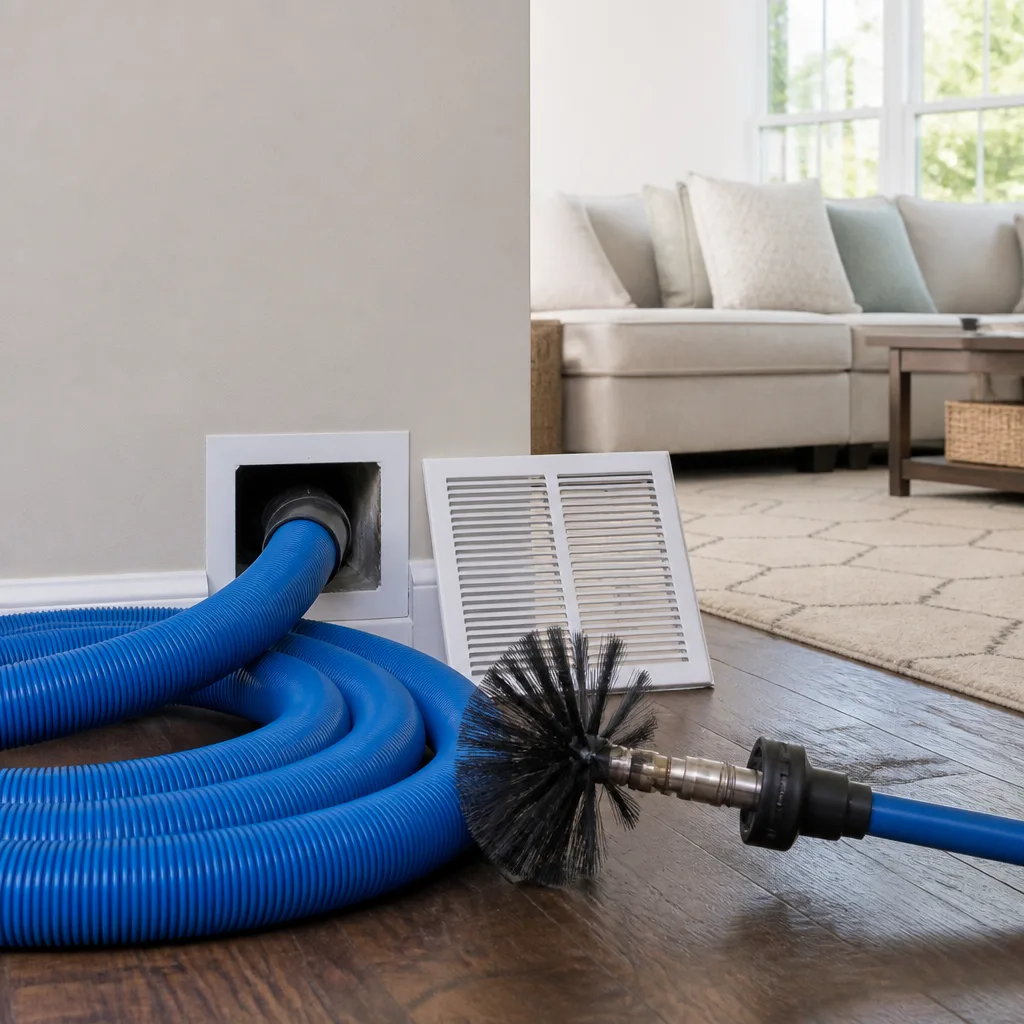
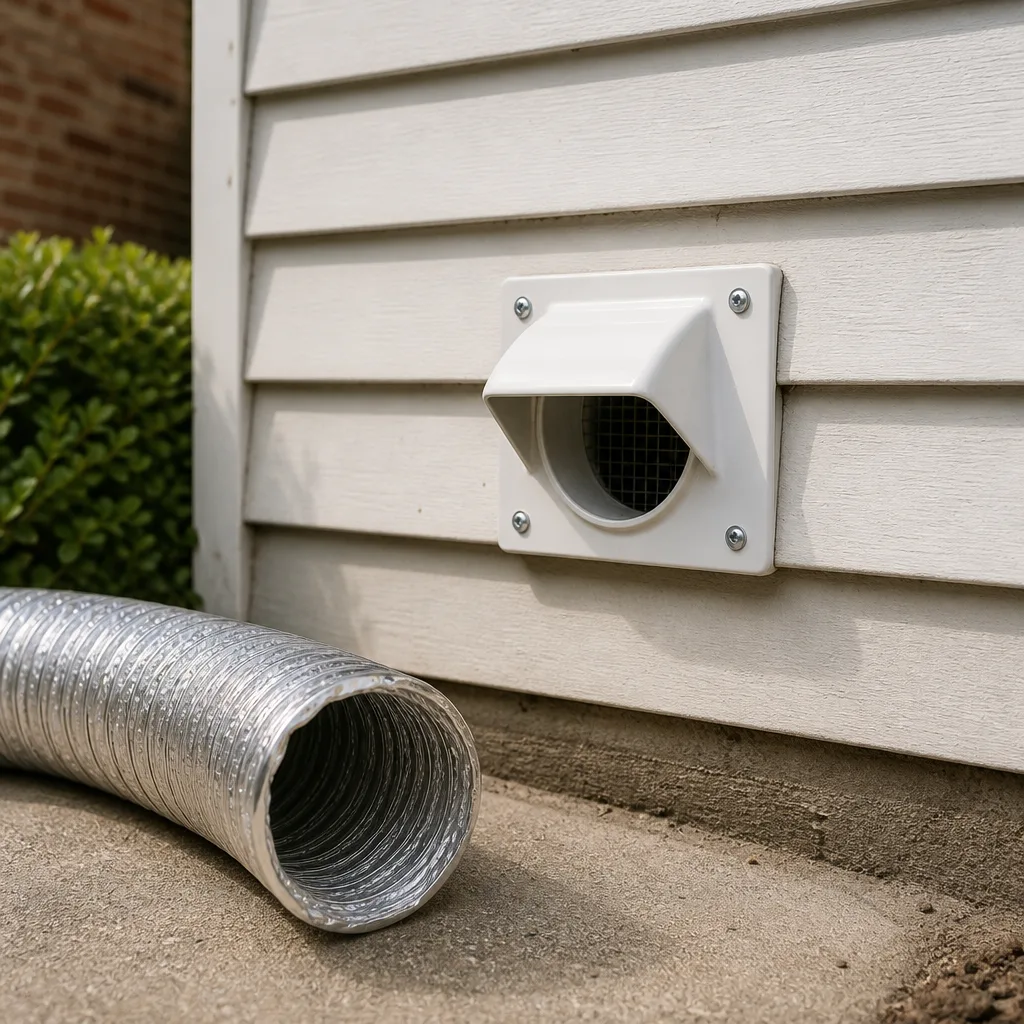
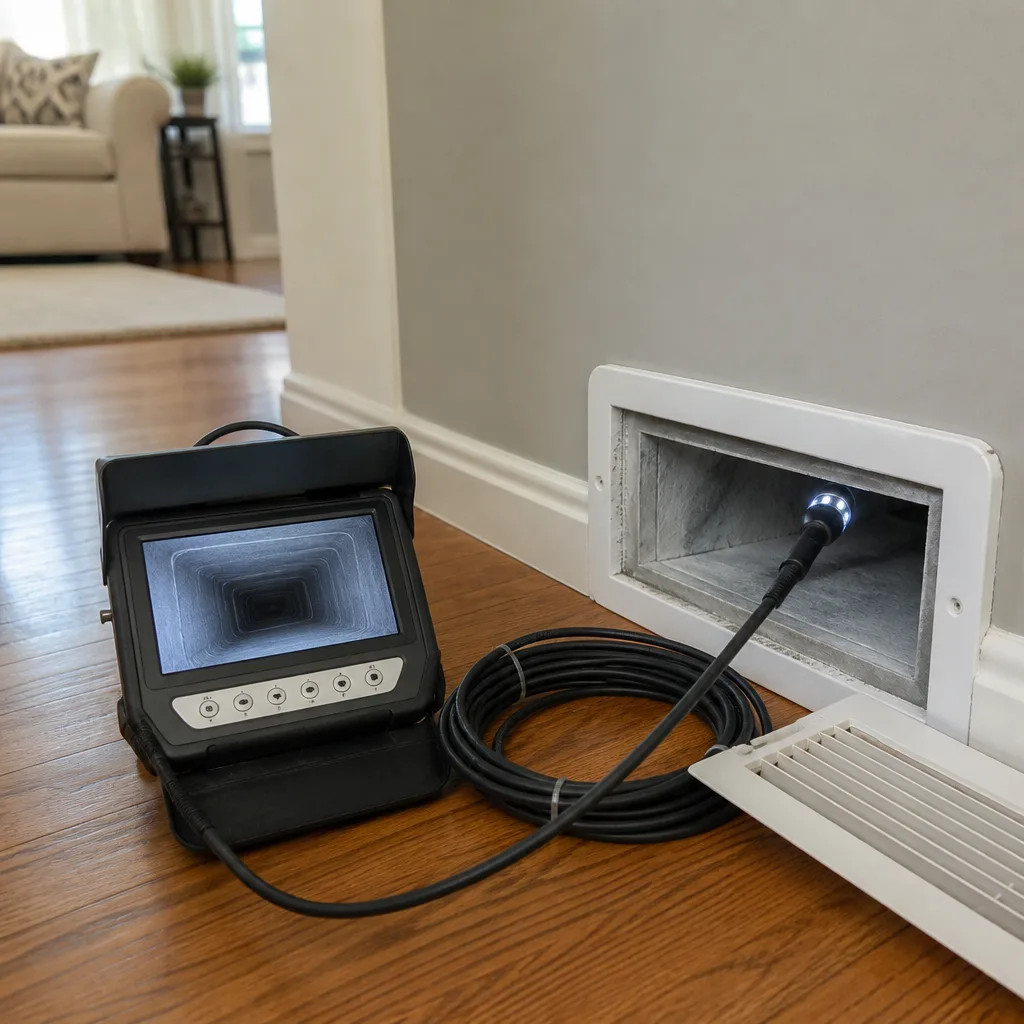
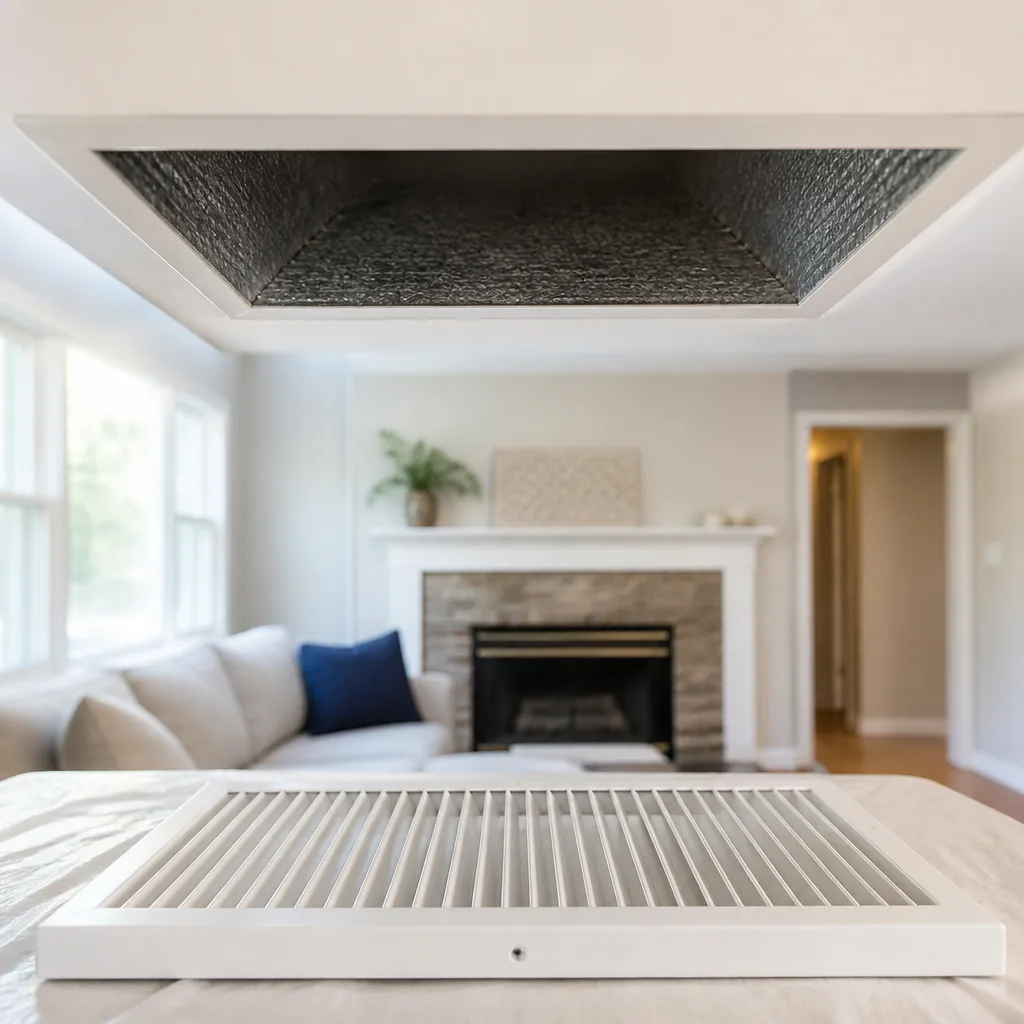
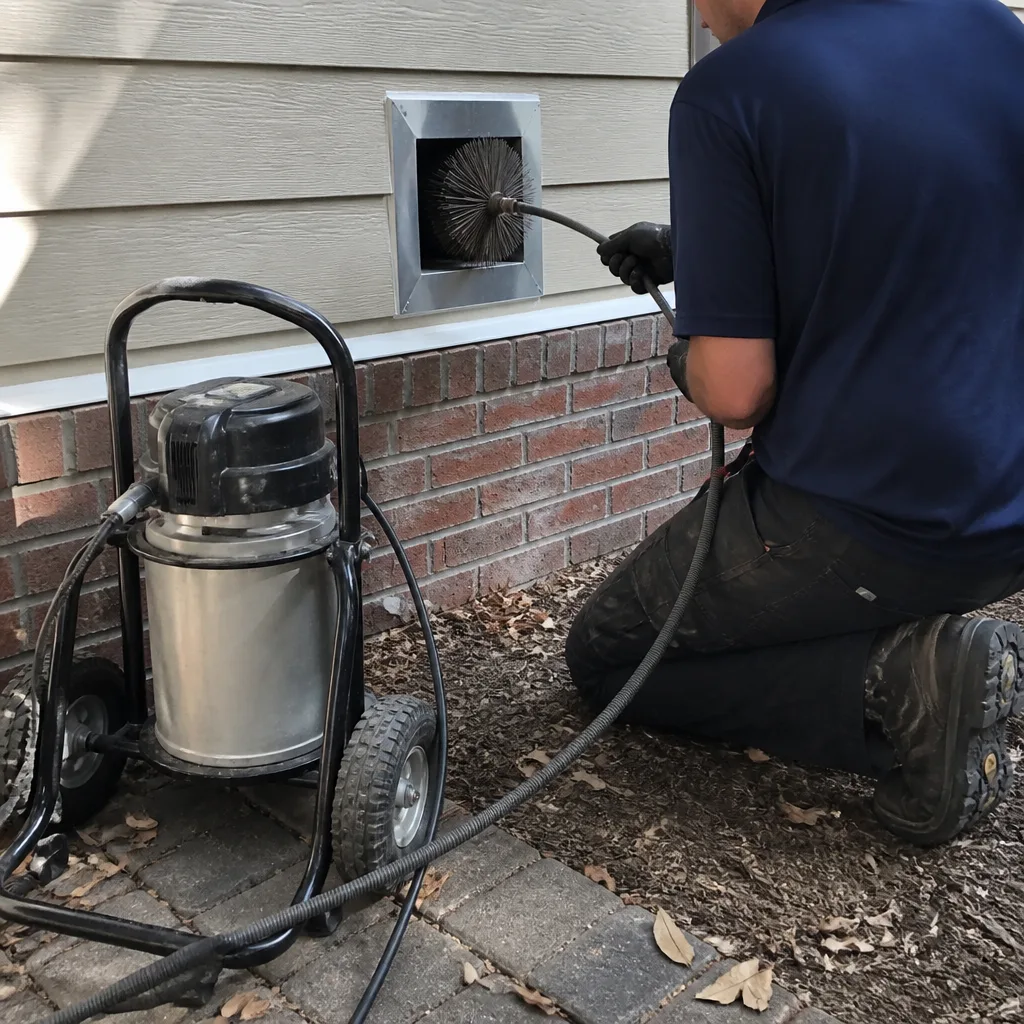
Whole-system duct and dryer vent check with before-and-after photos - you see exactly what came out of your vents
That "$99 whole-house special" is a bait ad - the real number appears once they are in your hallway, or the "clean" is a shop-vac at the register. We photograph the inside of your ducts before and after instead.
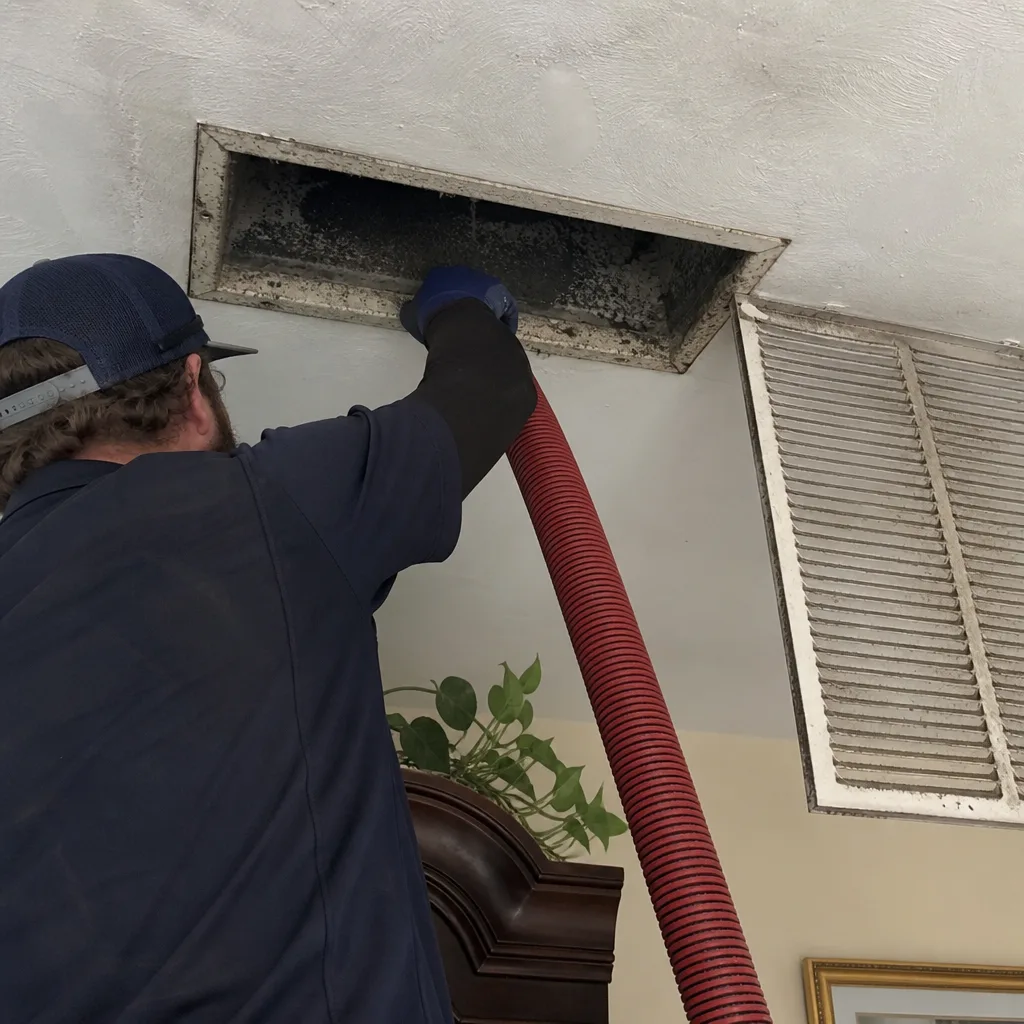 Before
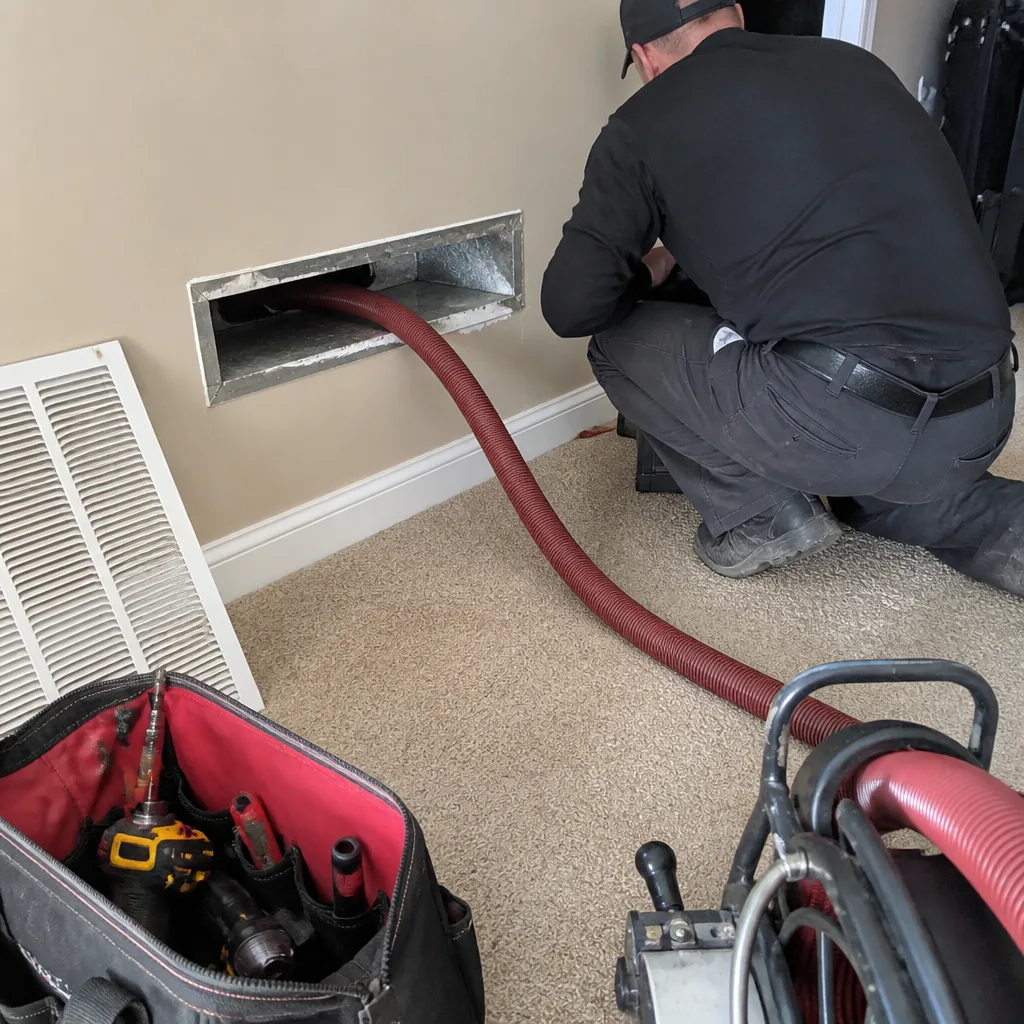 After
After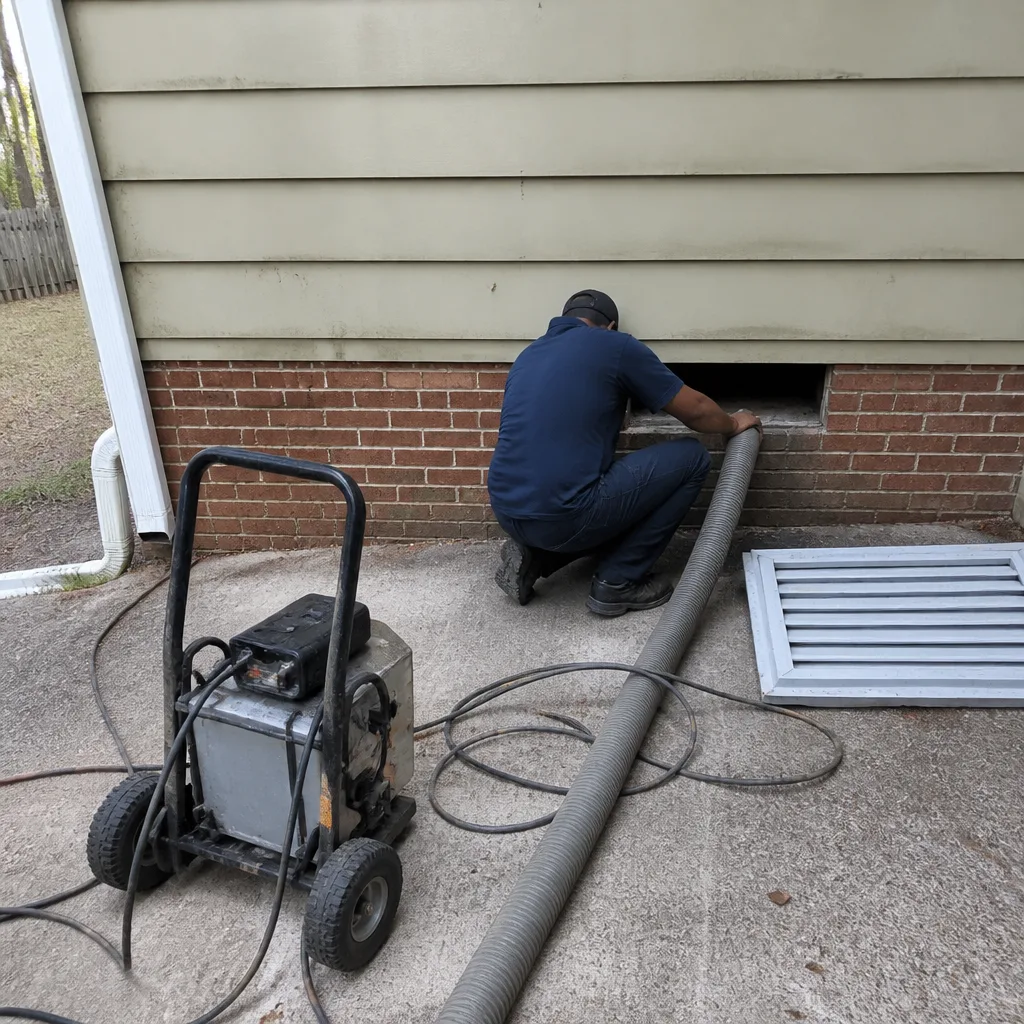 Before
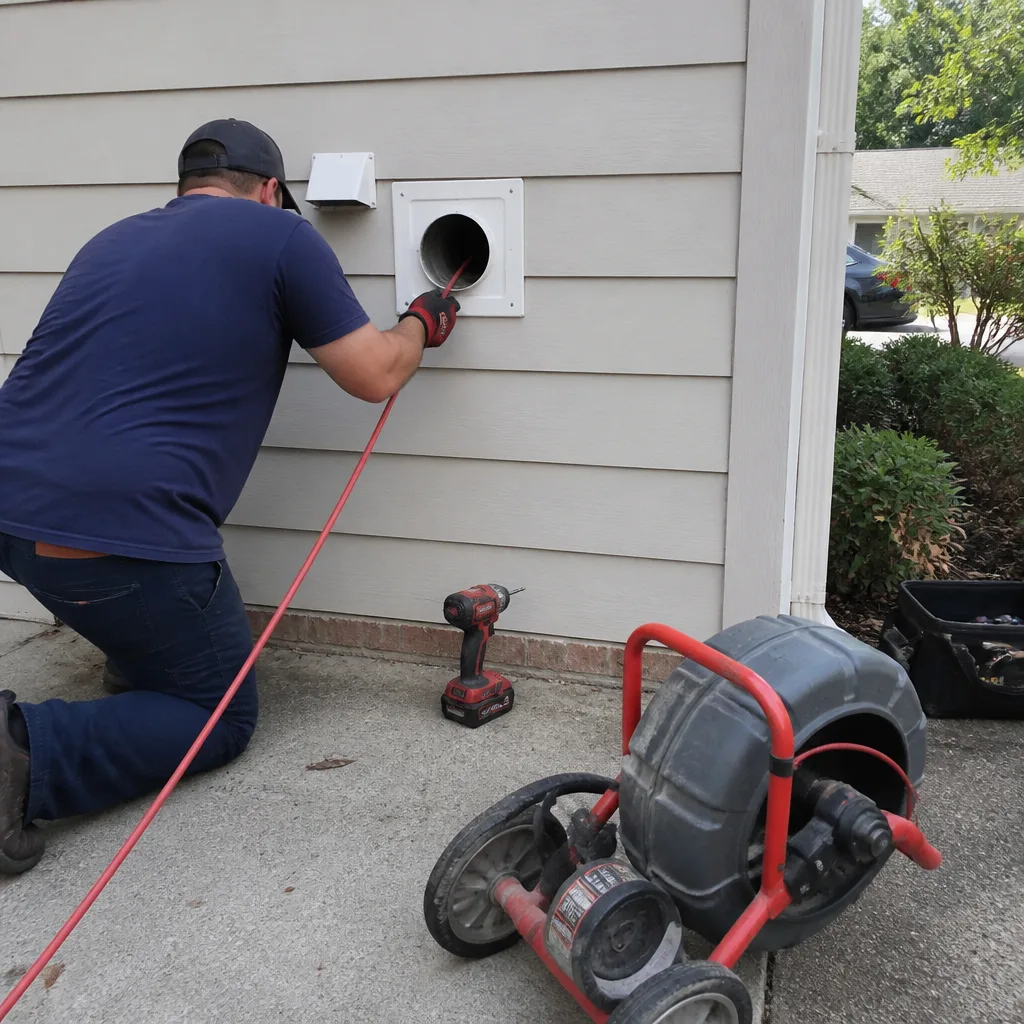 After
After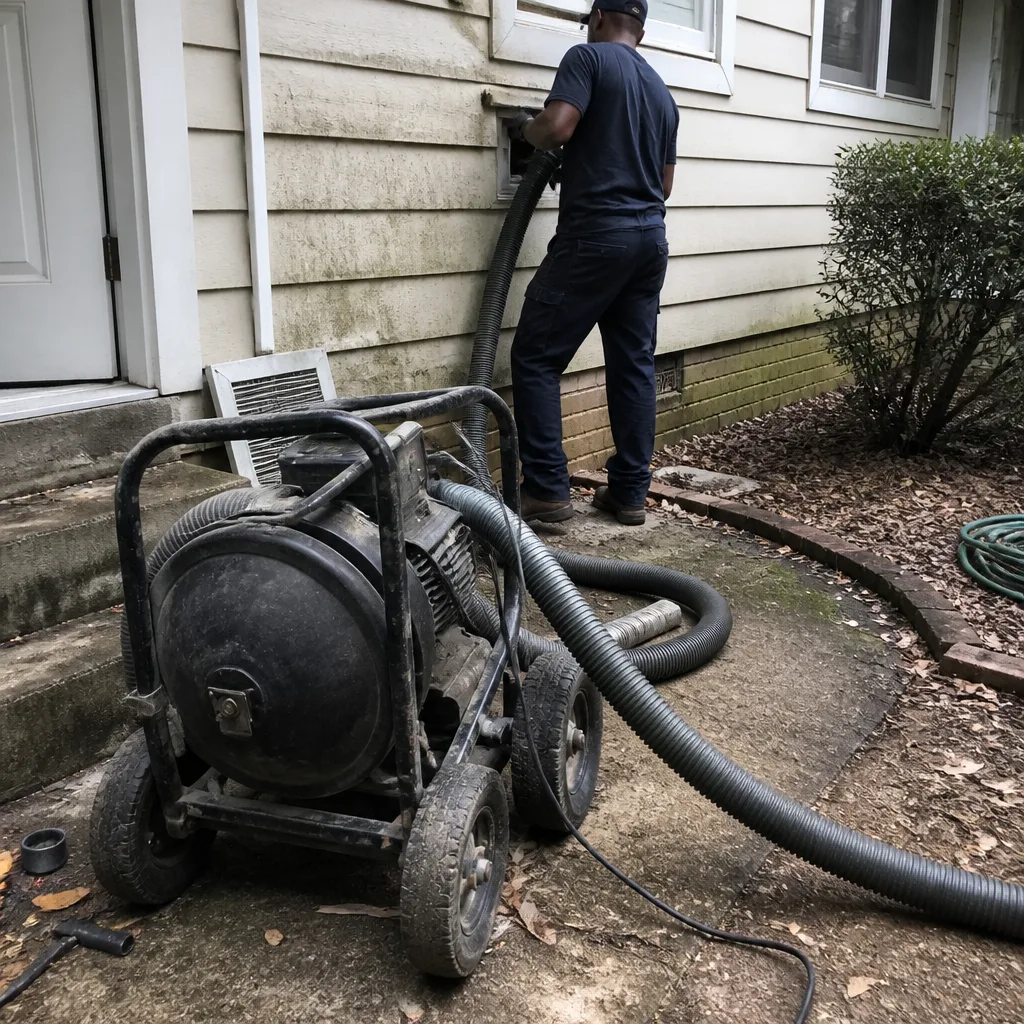 Before
 After
AfterAir Duct Cleaning Maintenance Checklist for Atlanta Homeowners
The single most skipped item on every air duct maintenance checklist, examining the return-air grille for dark “ghost staining” around its edges, is also the earliest visible indicator that a system is bypassing its filter and depositing particulate directly into duct walls. In Atlanta, where pollen counts regularly exceed 3,000 grains per cubic meter during peak season and summer humidity pushes duct systems to their condensation limits, this one observation can predict problems six months before they show up on any standard checklist. This guide gives you a month-by-month, room-by-room protocol built around what actually fails in Atlanta homes, not generic reminders to “change your filter regularly.” You’ll learn to photograph your own system for year-over-year comparison, read the warning signs in your filter’s condition at removal, and build a written maintenance log that protects your warranty and resale value.
Quick Answer
A complete air duct cleaning maintenance checklist for Atlanta homeowners includes monthly visual inspections of return and supply grilles, seasonal filter changes timed to pollen and humidity peaks, quarterly photography of grille surfaces in consistent lighting, and annual professional assessment of the full duct system including plenum, boots, and condensate drainage. Most Atlanta homes need professional Air Duct Cleaning services every 3 to 5 years, with homes near major pollen corridors like Piedmont Park or the Chattahoochee River basin trending toward the shorter end. The total cost for whole-system cleaning in Atlanta typically runs $450 to $850 for a standard single-family home, with documented before-and-after photography included as standard deliverable.
Table of Contents
- The Ghost Staining Check: Your First Line of Defense
- Atlanta Month-by-Month Maintenance Calendar
- The Homeowner Photography Protocol
- Filter MERV Ratings: What Works in Atlanta Systems
- Standing Moisture in a Boot: The Exact Response Sequence
- Building Your Written Maintenance Log
- What You Can Handle vs. What Requires a Pro
- What Professional Duct Cleaning Costs in Atlanta
BeforeAfterThe Ghost Staining Check: Your First Line of Defense
Ghost staining, the dark gray or brown discoloration that appears around the perimeter of a return-air grille where it meets the ceiling or wall, tells you that air is moving through gaps between the grille frame and the duct boot rather than through the filter media. This is unfiltered air, carrying everything your system is supposed to intercept: pollen, skin cells, construction dust from that 2019 kitchen renovation you still find traces of, and the fine particulate that Atlanta’s highway corridors push into older neighborhoods near I-85 and I-20.
We see this pattern most often in Grant Park and Inman Park homes built between 1890 and 1920, where plaster settlement has pulled grille frames away from boots over decades. But we also find it in 2017-built townhomes in West Midtown, where rushed finishing left gaps that flex with seasonal humidity swings. The stain itself is particulate deposition, the same material that will coat your duct walls if left unaddressed.
Check for ghost staining monthly. Use a flashlight held at a low angle across the grille surface; the raking light makes perimeter gaps visible even when head-on inspection shows nothing. If you find staining, the fix is not cleaning, it’s sealing. Remove the grille, clean the stained area with a damp cloth and mild detergent, then apply a bead of fire-rated caulk between the boot flange and the ceiling material before reinstalling. If the gap exceeds 1/4 inch, the boot may need repositioning, a job that requires access to the joist bay above.
Document the stain’s extent before cleaning. A photograph with the flashlight in frame establishes both the observation method and the condition baseline. This is the kind of evidence that prevents arguments with contractors about whether a problem is new or chronic.
Atlanta Month-by-Month Maintenance Calendar
Atlanta’s climate creates three distinct stress windows for duct systems: the pollen siege of March through May, the humidity peak of July through August, and the thermal switch in October through November when cooling-dominated systems suddenly face heating loads. A maintenance calendar that ignores these rhythms misses the actual failure modes.
January-February: The Heating Audit
Run your system on heat for a full cycle, then inspect every supply register while air is still moving. You’re looking for two things: uneven airflow between rooms, and any odor of dust combustion that suggests accumulated debris on heat exchanger surfaces. In Atlanta, where many homes use heat pumps with auxiliary electric strips, the first heating cycle of the season often produces a brief odor; if it persists beyond ten minutes, that’s documented evidence of contamination.
Check your thermostat’s runtime log if it has one. Heat pumps in Atlanta’s mild winters should cycle less frequently than in northern climates; excessive cycling often indicates duct leakage that’s dumping conditioned air into unconditioned spaces.
March-May: Pollen Season Protocol
This is the critical window. Atlanta’s tree pollen, primarily oak, pine, and birch, peaks in late March; grass pollen follows in April and May. Your filter is the front line, and “check monthly” is inadequate advice here.
- Install a new filter on March 1, regardless of apparent condition. The preseason load is lower than peak, and a fresh media bed has more capacity to capture the initial surge.
- Inspect the filter every two weeks through April. Look for the yellow-green film that indicates pollen loading, not just the gray of household dust. Photograph the filter in place before removal; the color pattern shows whether air is distributing evenly across the media or channeling through a clogged section.
- Replace when the pressure drop across the filter (measured by your system’s static pressure if you have a manometer, or estimated by the reduced airflow at registers) exceeds manufacturer specification. In practice, most Atlanta homes need a mid-season replacement during this window.
- After the pollen peak, vacuum the return grille and the first 12 inches of visible ductwork behind it. This is where pollen aggregates into clumps that can break free and redistribute later.
Homes near the Atlanta BeltLine corridor, with its dense tree canopy, or in the Druid Hills area with its mature oak stands, typically see 40% higher pollen loading than homes in more open developments.
June: Pre-Humidity Inspection
Before the summer load arrives, inspect your condensate drain line for algae growth, common in Atlanta’s warm, wet springs. A clogged drain backs water into the plenum, where it wets insulation and creates the conditions for microbial growth that no amount of duct cleaning will fully resolve until the moisture source is eliminated.
Check the flex duct connections at the plenum for sagging. The temperature differential between attic air and conditioned air creates condensation on the duct exterior; if the insulation vapor barrier is compromised, that moisture reaches the metal and can migrate into the system. A sagging flex duct traps water at its low point.
July-August: Humidity Peak Monitoring
Atlanta’s design humidity is 74 grains per pound; actual peaks regularly exceed this. Your duct system is now a cold surface in a warm, moist environment every time the AC runs.
Run this check weekly during this period: after the system has cycled off for at least 30 minutes, open the return-air filter slot and shine a flashlight down the duct. You’re looking for water droplets on the metal surface, or any sheen that suggests recent condensation. A few scattered droplets after a long cooling cycle are normal; persistent wetness or any standing water is not.
Also inspect ceiling registers in second-floor rooms, where attic heat drives the greatest temperature differential. Any staining of the ceiling material around the register boot indicates that cold air is leaking into the wall cavity and condensing on the warm side, a pattern we document regularly in Buckhead and Virginia-Highland homes with original 1980s ductwork.
September: The Transition Assessment
Before you switch to heating, run the cooling system for a final cycle and note any odors. Musty smells that weren’t present in June indicate microbial growth that has established during the humid months. This is the optimal time for professional cleaning, before heating loads drive spores into living spaces; check Air Duct Cleaning Permits, Codes & Inspections in GA: What You Need to Know before hiring.
October-November: The Thermal Switch
Atlanta’s fall temperature swings, 40°F mornings and 75°F afternoons, tempt homeowners to alternate heating and cooling. Each switch reverses airflow patterns and thermal stress on duct joints. Limit mode switches to no more than one per day; more frequent changes accelerate flex duct fatigue at connection points.
Inspect all visible duct joints in basement or crawl space for separation. The heating cycle’s warmer air expands metal components that have contracted through the cooling season; this is when gaps open.
December: Year-End Documentation
Compile your photographs, filter replacement dates, and any observations into your maintenance log. This is also the time to schedule professional assessment if your log shows recurring issues.
The Homeowner Photography Protocol
A photograph is evidence, not decoration. To make your images useful for year-over-year comparison and for communicating with contractors, standardize your method.
Equipment and Setup
Any smartphone camera from 2018 or later is sufficient. The critical factor is consistency, not resolution. Choose one flashlight, one camera, and one set of positions, then use them every time.
- Lighting: Use the same flashlight for every shot, held at a 15-degree angle to the surface. Raking light reveals surface texture that direct overhead lighting flattens into invisibility. We recommend a 500-lumen LED with a focused beam, not a broad flood.
- Camera settings: Disable flash. The flashlight is your only light source. Set white balance to daylight or 5500K if manual control is available; auto white balance shifts with wall color and ruins color comparison.
- Positions: Photograph each return and supply grille from two angles: straight-on at 3 feet, and raking-light close-up at 12 inches. For the close-up, place a coin or standard-size object in frame for scale.
- Reference shots: Include one photograph of the filter label in its packaging before installation, and one of the removed filter against a white background. The white background prevents color contamination from surrounding surfaces.
Storage and Naming
Name files with date, room, and condition: 2024-03-15_LivingRoom_Return_GhostStaining-Moderate.jpg. Store in a dedicated folder with subfolders by year. This naming convention lets you retrieve comparisons in seconds when a contractor asks “how long has this been happening?”
The value of this protocol became clear to us in a 2022 job in Decatur, where a homeowner’s four-year photo sequence showed progressive staining that precisely correlated with a filter change from MERV-8 to MERV-13 in an undersized return. The images made the diagnosis immediate; without them, we would have run diagnostic tests that added cost without adding information.
Filter MERV Ratings: What Works in Atlanta Systems
Minimum Efficiency Reporting Value, MERV, measures a filter’s ability to capture particles between 0.3 and 10 microns. The rating runs from 1 to 20, with residential systems typically using 8 to 13. The common advice, “buy the highest MERV your system can handle,” is incomplete and sometimes harmful.
The Pressure Drop Problem
Every filter creates resistance to airflow. Higher MERV means finer media, which means more resistance at a given face velocity. Your system’s blower is designed to operate against a specific total external static pressure, typically 0.5 inches water column for residential equipment. A filter that adds 0.3 inches of pressure drop leaves little margin for duct resistance, dirty coils, or partially closed dampers.
In Atlanta, where many homes built 2005-2015 have duct systems designed to minimum code with minimal margin, a MERV-13 filter can push the system into performance failure. We’ve measured supply airflow reductions of 25% or more after MERV-13 installation in these systems. Reduced airflow means longer runtime, higher energy cost, and, critically for duct contamination, lower face velocity at the return that allows particles to bypass the filter entirely and deposit on duct walls.
Atlanta-Specific Recommendations
| Home Characteristic | Recommended MERV | Replacement Interval | Notes |
|---|---|---|---|
| System installed 2015 or later, 3+ ton capacity, no pets | MERV-11 | 90 days | Standard for most Atlanta homes; captures pollen and typical household dust without excessive pressure drop |
| System installed 2015 or later, with pets or recent renovation | MERV-13 | 60 days | Monitor static pressure; replace more frequently to prevent loading that increases pressure drop |
| System installed 2005-2014, any capacity | MERV-8 to MERV-11 | 60 days | These systems typically have lower blower capacity; verify with static pressure measurement before upgrading |
| System installed before 2005, or unknown capacity | MERV-8 | 60 days | Older systems often have PSC blowers with fixed speed; excessive filter loading causes motor overheating |
| Home within 0.5 mile of major highway or industrial corridor | MERV-11 minimum | 45-60 days | Fine particulate from vehicle emissions requires higher capture efficiency; monitor pressure drop closely |
The critical action: if you upgrade MERV, measure. A digital manometer costs $40-$80 and measures static pressure across the filter slot. Compare your reading to the manufacturer’s maximum allowable external static pressure, found on the equipment rating plate. If you’re within 0.1 inches of maximum with a clean filter, your system cannot handle that MERV rating.
We specify Honeywell and Aprilaire filter media in our replacement recommendations because their published pressure-drop data at rated airflow allows accurate system matching. Generic filters with unverified specifications are a common source of mismatch problems.
Standing Moisture in a Boot: The Exact Response Sequence
Finding water in a duct boot triggers panic in many homeowners, and premature service calls in others. The correct response is systematic elimination of sources before deciding whether cleaning, repair, or both are needed.
Step 1: Identify the Water Source
Standing water in a boot can originate from three places: condensate overflow from the cooling coil above, duct sweating from exterior condensation, or roof/ plumbing leakage into the duct path. The distinction matters because cleaning water-contaminated ducts without fixing the source guarantees recurrence.
Check the condensate pan and drain line first. In Atlanta, algae growth in drain lines is so common that we consider annual pan treatment standard maintenance. Look for water in the pan, a full drain line (clear P-traps let you see flow), or staining on the coil cabinet that indicates past overflow.
Step 2: Inspect Insulation Integrity
If the condensate system is clear, examine the duct exterior. Flex duct insulation with a torn vapor barrier allows attic moisture to condense on the cold duct surface; water then runs to the boot, the low point. The fix is insulation repair or replacement, not duct cleaning. We see this pattern frequently in Sandy Springs and Dunwoody homes with attic ductwork installed in the 1990s, where insulation has compressed or torn at support hangers.
Step 3: Check Plenum Sealing
If both condensate and insulation are intact, inspect the plenum-to-coil seal. A gap here allows conditioned air to escape into the cabinet, where it can condense on cooler surfaces and drain into the duct system. This is a sealing job, typically with mastic or foil tape rated for the temperature range.
Step 4: Document Before Calling
Photograph the water, its location in the boot, and the results of each check above. A contractor who arrives to “clean your ducts” without asking about moisture source identification is selling a procedure, not solving a problem. At CleanRun Air Duct Cleaning Atlanta, our Haven Standard Clause 1 requires written scope definition before any work begins; moisture source identification is part of that scope for any water-related call.
If you’ve completed steps 1-3 and found no clear source, the issue may be duct sweating from inadequate insulation R-value, common in pre-2010 Atlanta homes with R-4 or R-6 flex duct in ventilated attics. Current Georgia energy code requires R-8 minimum; upgrading insulation may be the correct response rather than cleaning.
Building Your Written Maintenance Log
A maintenance log transforms vague recollection into documented evidence. It supports warranty claims, informs resale disclosures, and prevents the “when did this start?” uncertainty that complicates every service call.
Log Format
Use a simple spreadsheet or notebook with these columns:
- Date: Of observation or action, not just filter change.
- Location: Room and grille position (return, supply, ceiling, wall).
- Action: Filter change, inspection, cleaning, photography, or professional service.
- Filter details: Brand, MERV rating, dimensions, condition on removal (photograph reference number).
- Observations: Odors, visible debris, ghost staining, moisture, airflow changes, noise.
- Photograph file names: Cross-reference to your photo archive.
- Professional service details: Company, technician name, scope, written price, any documentation received.
What to Record at Each Filter Change
The filter change is your most frequent maintenance touchpoint. Don’t waste it.
- Photograph the removed filter against white background.
- Note the color and texture of loading: uniform gray, yellow-green pollen band, dark streaks (indicates bypass), or oily residue (possible blower motor issue).
- Smell the filter. A musty odor indicates moisture in the system; a chemical odor suggests VOC source in the return path; a burned odor warrants immediate blower inspection.
- Measure and record the pressure drop if you have a manometer.
- Note any change in household symptoms: increased allergy response, dry throat, dust accumulation rate. Correlating these with filter condition builds evidence for system modifications.
We provide a log template to every CleanRun customer as part of our standard job documentation. The customers who use it consistently arrive at service calls with better information, receive more accurate diagnoses, and spend less on unnecessary procedures.
What You Can Handle vs. What Requires a Pro
Homeowner maintenance has clear boundaries. Understanding them prevents both false economy and dangerous overreach; explore our more guides & resources for deeper coverage.
Appropriate Homeowner Work
- Filter inspection and replacement
- Grille and register surface cleaning
- Visual inspection of accessible ductwork in basement, crawl space, or attic
- Photography and documentation
- Condensate drain line flushing with approved algae treatment
- Caulking of minor grille-to-boot gaps
Work Requiring Professional Equipment and Training
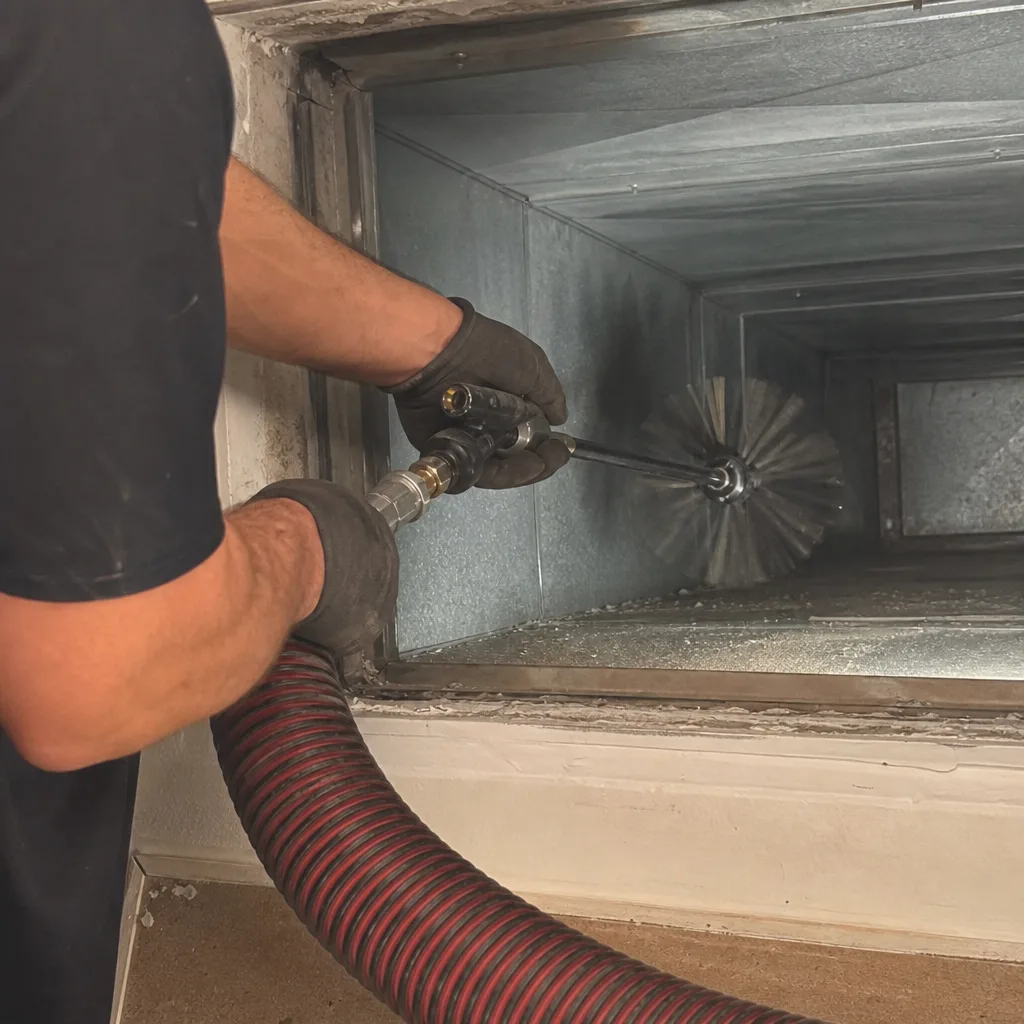
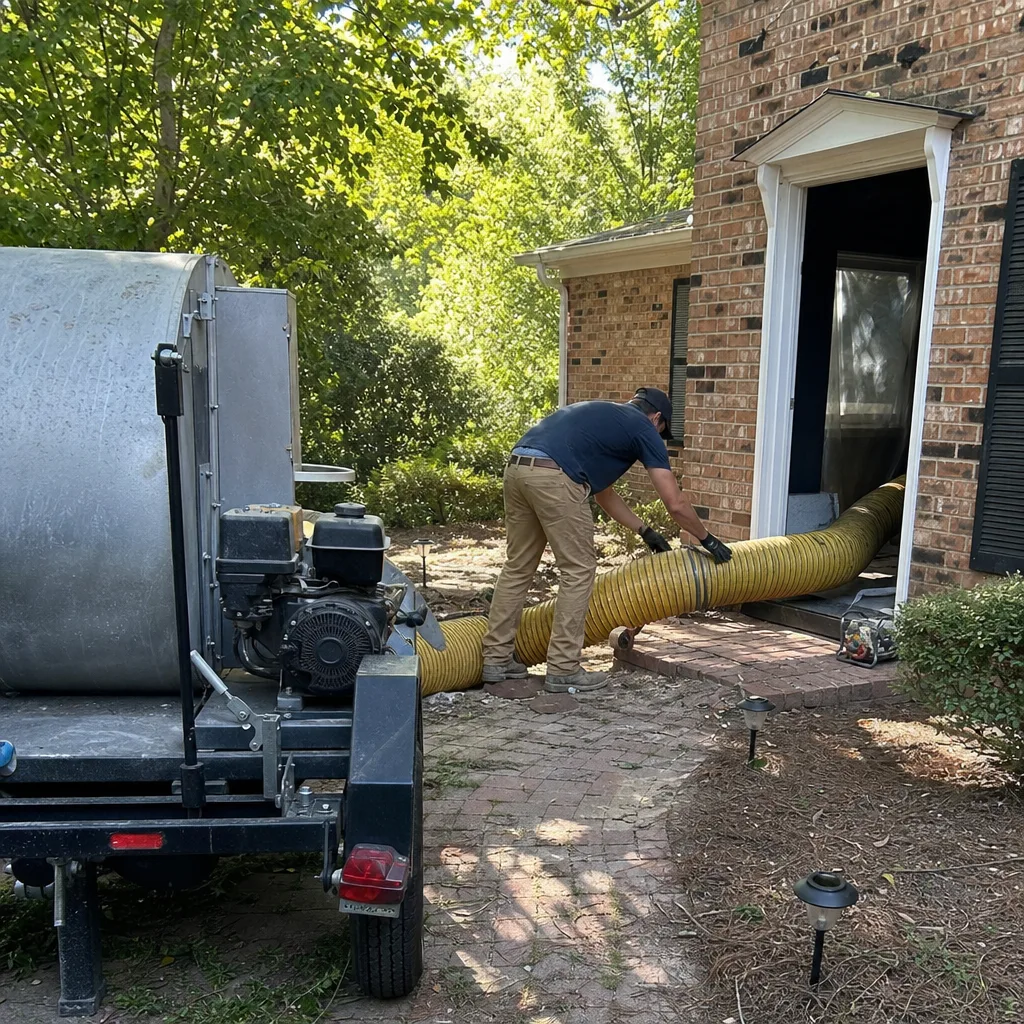
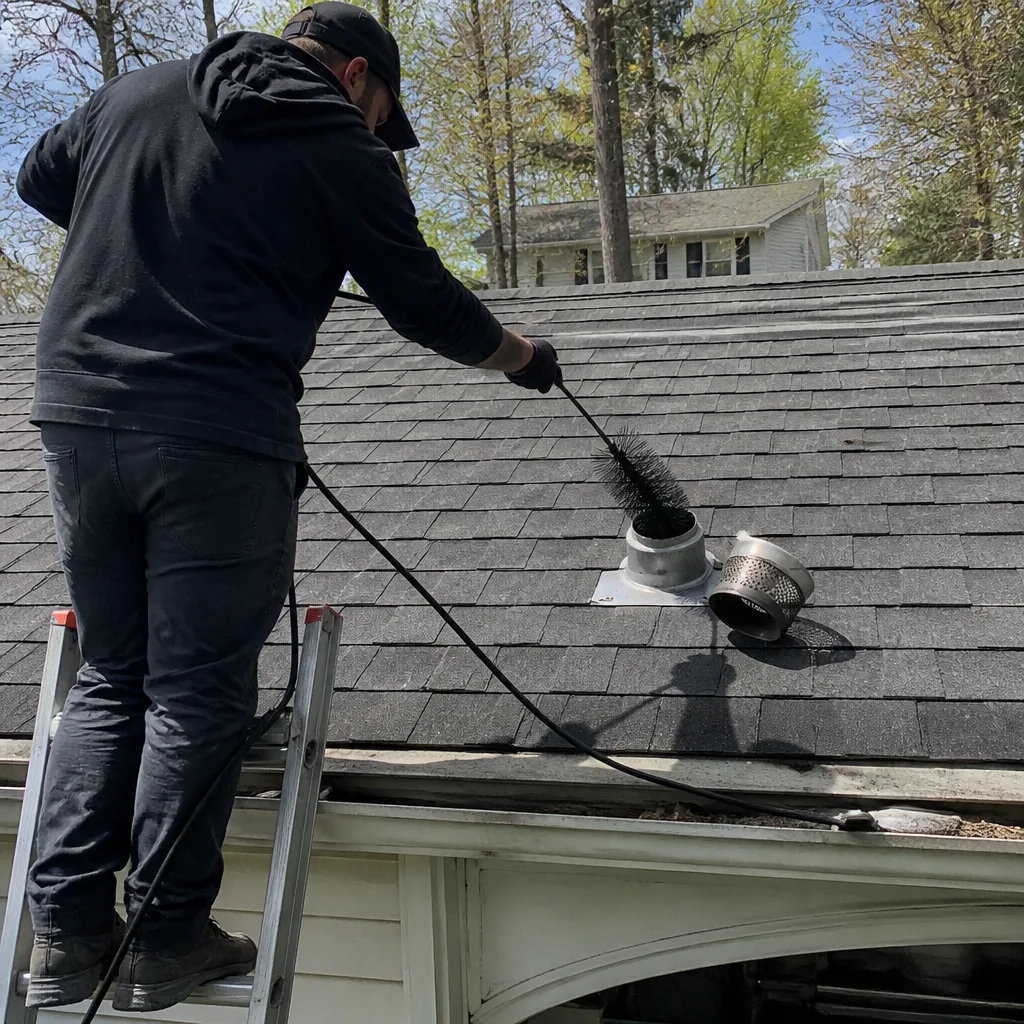
Negative-pressure extraction, the method specified by NADCA for duct cleaning, requires equipment that generates sufficient airflow to dislodge debris and transport it to collection without releasing it into occupied space. A shop vacuum, even with a long hose, does not create the pressure differential or the controlled containment. The $79 coupon services that use this method are performing surface cleaning at register openings, not duct cleaning.
Duct repair and sealing in plenum or main trunk locations often requires working in confined, hot spaces with electrical and gas line hazards. Georgia code requires licensed HVAC contractors for modifications to duct systems connected to fuel-burning appliances.
Air quality testing for microbial contamination requires interpretation by qualified assessors; DIY mold test kits have high false-positive rates from normal airborne spore loads and can drive unnecessary remediation.
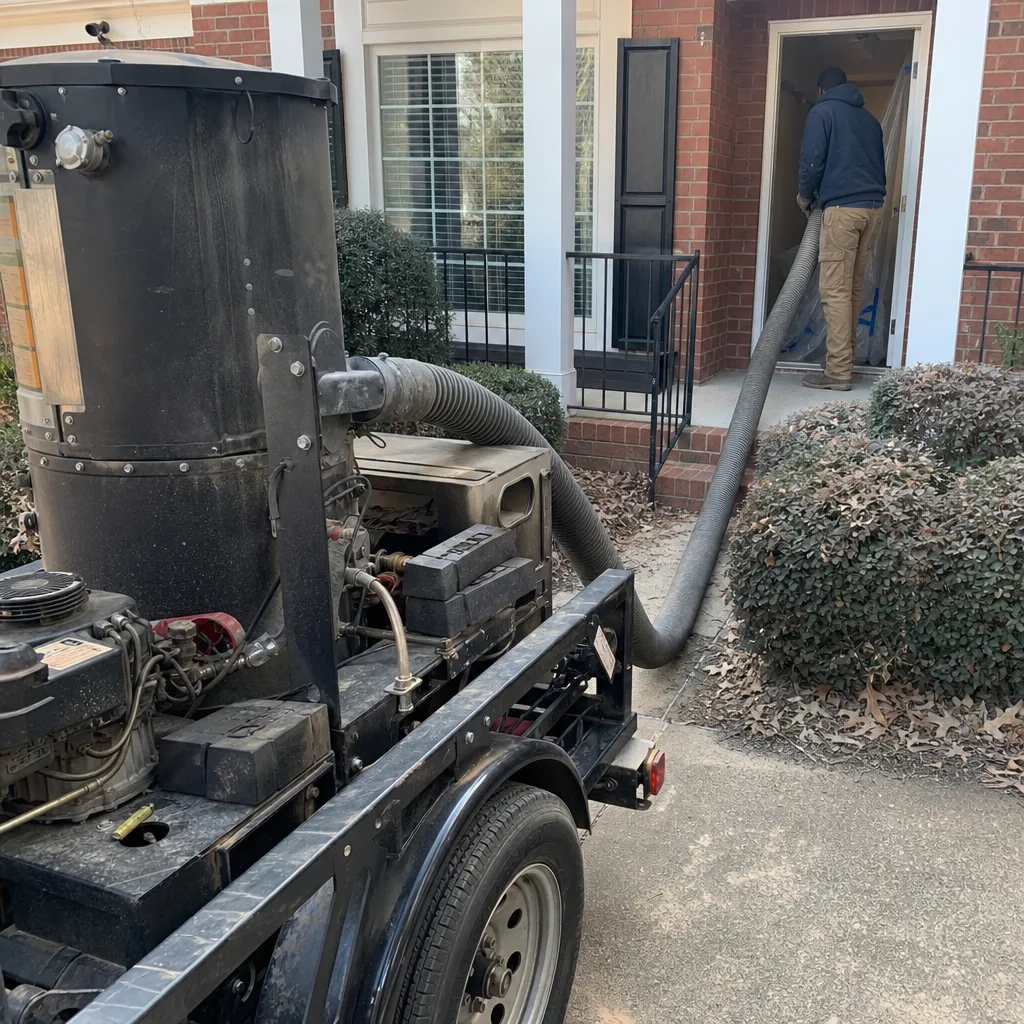
At Air Duct Cleaning in Atlanta, we use Rotobrush and Nikro negative-pressure systems, with Abatement Technologies HEPA filtration, to achieve the extraction and containment that homeowner equipment cannot. Our technicians operate under Haven Standard Clause 3: Verified Crews, with background checks and uniformed identification before arrival.
What Professional Duct Cleaning Costs in Atlanta
Price transparency is a core brand commitment. The table below shows actual whole-system pricing ranges for Atlanta-area homes, based on system size and accessibility. These are flat prices per system, agreed in writing before work begins, with no per-vent add-ons or post-arrival upsells.
| Home Type / System Size | Typical Range | What’s Included |
|---|---|---|
| Condo or townhome, 1-2 ton system | $350-$500 | Full supply and return ductwork, registers, grilles, plenum; before-and-after photo record of every run |
| Single-family home, 2-3 ton system | $450-$650 | Full system as above; includes one main trunk and up to 12 duct runs |
| Single-family home, 4-5 ton system | $600-$850 | Full system; includes two main trunks or extended ductwork in conditioned basement |
| Large home or multi-zone system, 5+ tons | $800-$1,200 | Custom scope based on duct layout; includes all zones and return pathways |
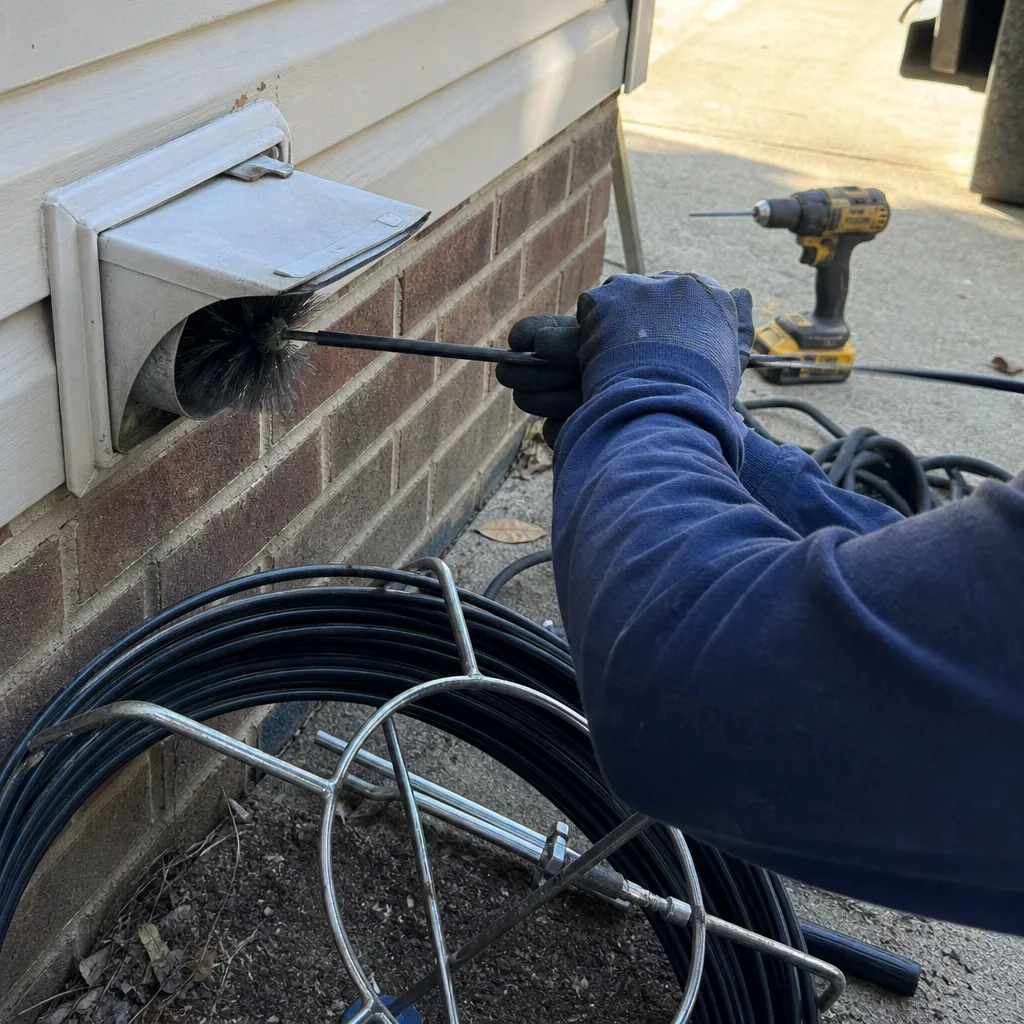
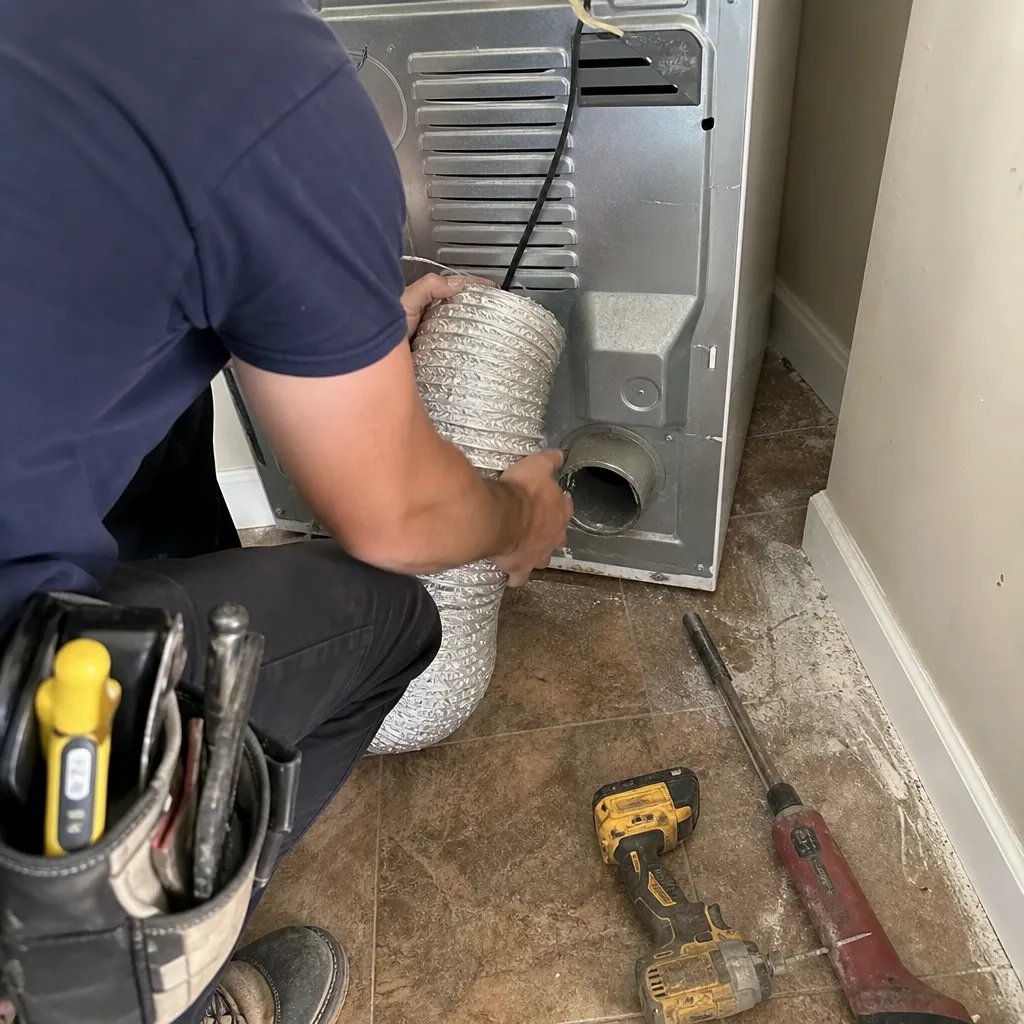
| Dryer vent cleaning (add-on or standalone) | $150-$250 | Full vent run from appliance to exterior termination; airflow verification |
These ranges reflect Atlanta market conditions in 2024-2025, including labor rates, fuel costs, and equipment pricing. The lower end assumes straightforward access, standard flex duct or metal duct construction, and no pre-existing damage requiring repair. The upper end accounts for complex attic routing, crawl space access, or systems with significant contamination requiring extended cleaning time.
What drives cost above these ranges: duct repair or sealing needed to make cleaning effective, microbial treatment with EPA-registered products (required when visible growth is present), or HVAC Cleaning in Atlanta that includes coil and blower cabinet service beyond ductwork alone.
We do not offer coupons, teaser rates, or per-vent pricing. Every CleanRun job begins with a written price under Haven Standard Clause 1, and every price includes the documented photo record that lets you verify what was done. Our Dryer Vent Cleaning in Atlanta follows the same protocol.
Common Mistakes to Avoid
- Changing filters on a fixed calendar instead of condition. A filter in a lightly occupied Buckhead condo with no pets may last 90 days; the same filter in a Kirkwood bungalow with three dogs and a dirt driveway may need replacement in 30. Set a maximum interval, but inspect and replace based on loading.
- Installing MERV-13 in systems without verifying static pressure capacity. We’ve documented blower motor failures in Atlanta homes where restricted airflow caused overheating. The filter is not “better” if it breaks the system.
- Ignoring the return side. Supply registers get attention because they’re visible; return grilles get ignored because they’re often in hallways or utility spaces. The return path carries unfiltered air from the entire house, and contamination there affects every supply.
- Cleaning without source identification. A homeowner in East Atlanta spent $600 on duct cleaning for persistent mustiness, then discovered a disconnected bathroom exhaust dumping moisture into a return chase. The cleaning was wasted; the fix was a $20 duct connection.
- Using “duct cleaning” as a response to every air quality complaint. Volatile organic compounds from new flooring, elevated CO2 from inadequate fresh air, and particulate from nearby construction all present as “bad air” but require different responses. A maintenance log with symptom timing helps distinguish these.
- Failing to photograph before professional service. Without your own documentation, you’re dependent on the contractor’s word about pre-existing conditions. The photo record protects both parties.
- Accepting verbal estimates. Georgia does not regulate duct cleaning pricing, and the industry has more than its share of bait-and-switch operators. A written price, with scope, is minimum due diligence.
When to Call a Professional
Call for professional assessment when your maintenance log shows a pattern you cannot explain: recurring moisture, progressive staining despite filter changes, or symptoms that correlate with system runtime. Call immediately for any odor of combustion, electrical burning, or gas, any visible microbial growth on duct surfaces, or any water that reappears within 48 hours of your own remediation attempt.
CleanRun Air Duct Cleaning Atlanta offers free estimates in Atlanta. We’ll review your maintenance log and photographs, measure your system’s static pressure, and provide a written scope and price before any work begins. Our 365-Day Done Right Promise means the work is accountable long after the truck leaves, and our documented photo record gives you evidence of what was found and what was changed. Call (470) 495-9370 to schedule.
Frequently Asked Questions
Whole-system air duct cleaning in Atlanta typically costs $450 to $850 for a standard single-family home with a 2-4 ton system, with condos and townhomes starting around $350 and large multi-zone homes ranging up to $1,200. The final price depends on system size, duct accessibility, and whether repairs or microbial treatment are needed. CleanRun provides a written flat price before any work begins, with no per-vent add-ons. Call (470) 495-9370 for an exact quote on your system, estimates are free.
The $79 to $199 quotes you see advertised typically cover only register vacuuming with a portable machine, not full-system negative-pressure extraction. The low price gets a technician in your door; the upsell for “additional vents,” “sanitizing,” or “deep cleaning” follows. A legitimate whole-system cleaning requires truck-mounted or portable HEPA-filtered negative-pressure equipment, access to every duct run, and time, none of which is profitable at coupon prices. Ask for the specific scope in writing before comparing prices.
Demand a documented photo record of every duct run, before and after, as a standard deliverable, not an extra. At CleanRun, this has been included on every job since 2013. The images should show the interior duct surface, not just the register opening, with identifying features that confirm location. If a contractor cannot or will not provide this, you’re paying for a procedure you cannot verify.
Most Atlanta homes benefit from professional cleaning every 3 to 5 years. Homes with pets, recent renovation, or location near major pollen sources may need service every 2 to 3 years. The correct interval for your home emerges from your maintenance log: if filter loading is accelerating, if ghost staining progresses despite sealing, or if odors return within months of cleaning, the system needs attention sooner. There is no universal calendar that fits all homes.
You can clean accessible surfaces, registers, and the first few inches of visible ductwork. You cannot achieve negative-pressure extraction of the full duct system with consumer equipment, and you should not attempt to access plenum, main trunk, or sealed duct sections without training and protective equipment. The risk is not just ineffectiveness, it’s releasing accumulated contamination into your home without containment.
Humidity itself doesn’t require more frequent cleaning, but it creates conditions that do. Condensation in ducts, whether from poor insulation or drainage issues, supports microbial growth that cleaning addresses. If your maintenance log shows moisture events, prioritize fixing the source, then assess whether contamination has occurred. Humidity also increases filter loading by causing particles to adhere more tenaciously, so inspect filters more frequently during peak summer months.
The Bottom Line
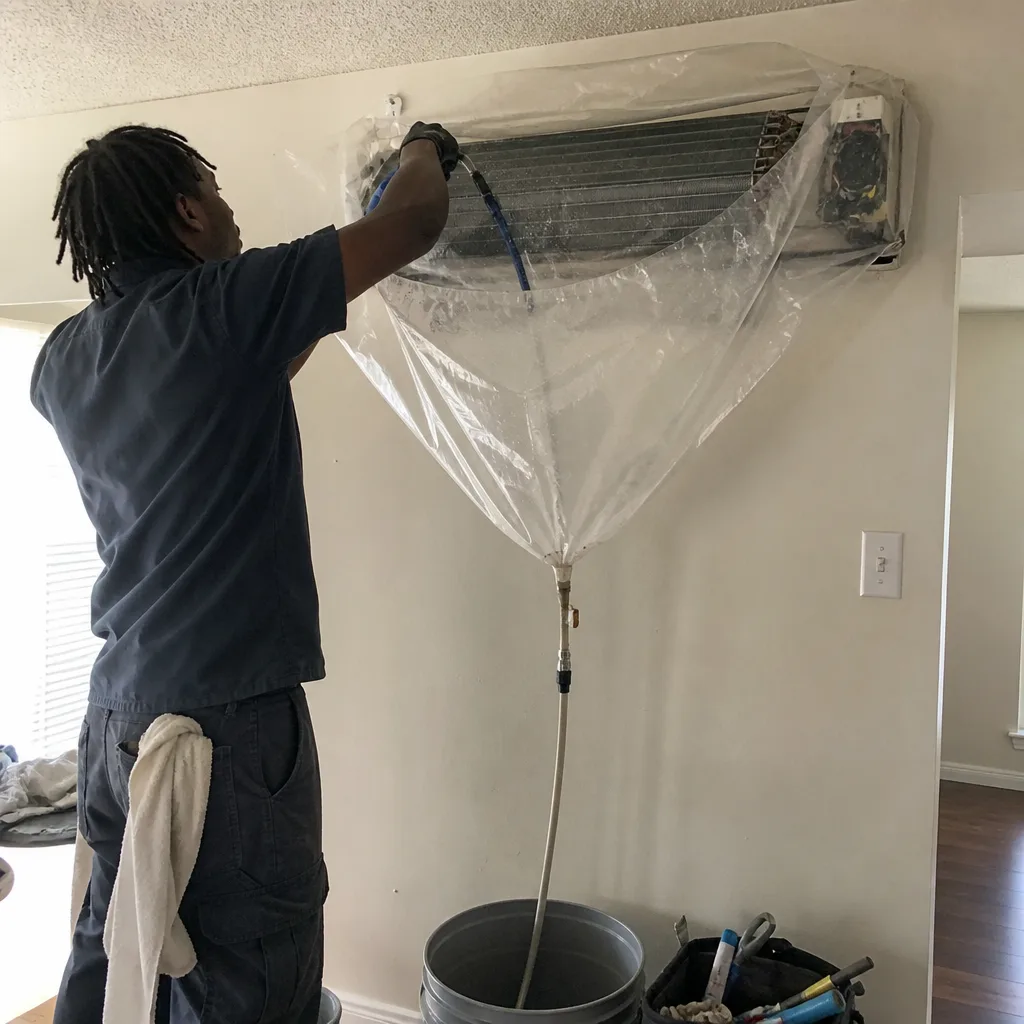
Effective air duct maintenance in Atlanta is not a list of generic reminders. It’s a disciplined observation practice, timed to the city’s actual seasonal stress points, that produces documented evidence of system condition. The ghost staining check, the photography protocol, the MERV-matched filter selection, and the written log together create a maintenance record that protects your investment and prevents unnecessary service. When professional cleaning is needed, arrive at that call with evidence, not anxiety. The homeowners who spend least on duct maintenance over time are those who observe most carefully.
Written by Tomas Reyes, Owner at CleanRun Air Duct Cleaning Atlanta, serving Atlanta since 2013.