
Last updated September 23, 2026
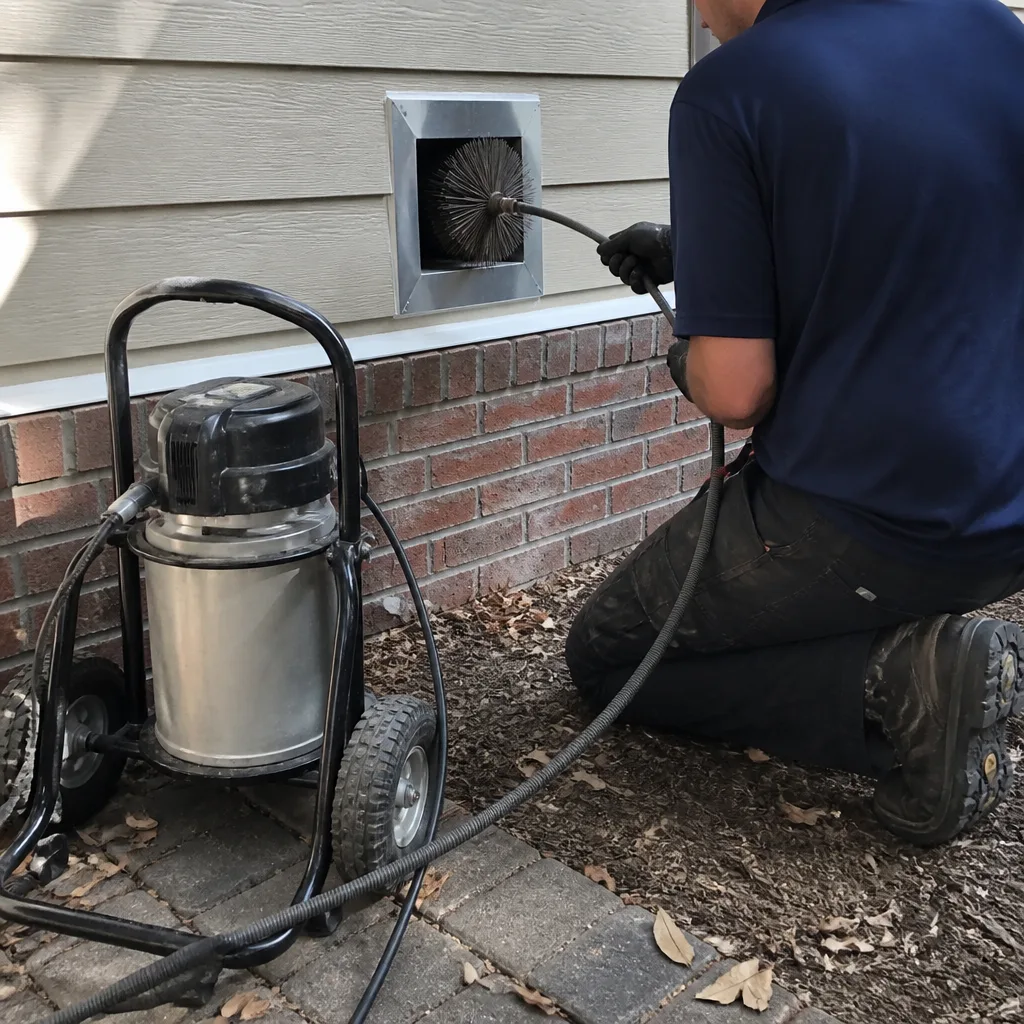
Whole-system duct and dryer vent check with before-and-after photos - you see exactly what came out of your vents
That "$99 whole-house special" is a bait ad - the real number appears once they are in your hallway, or the "clean" is a shop-vac at the register. We photograph the inside of your ducts before and after instead.
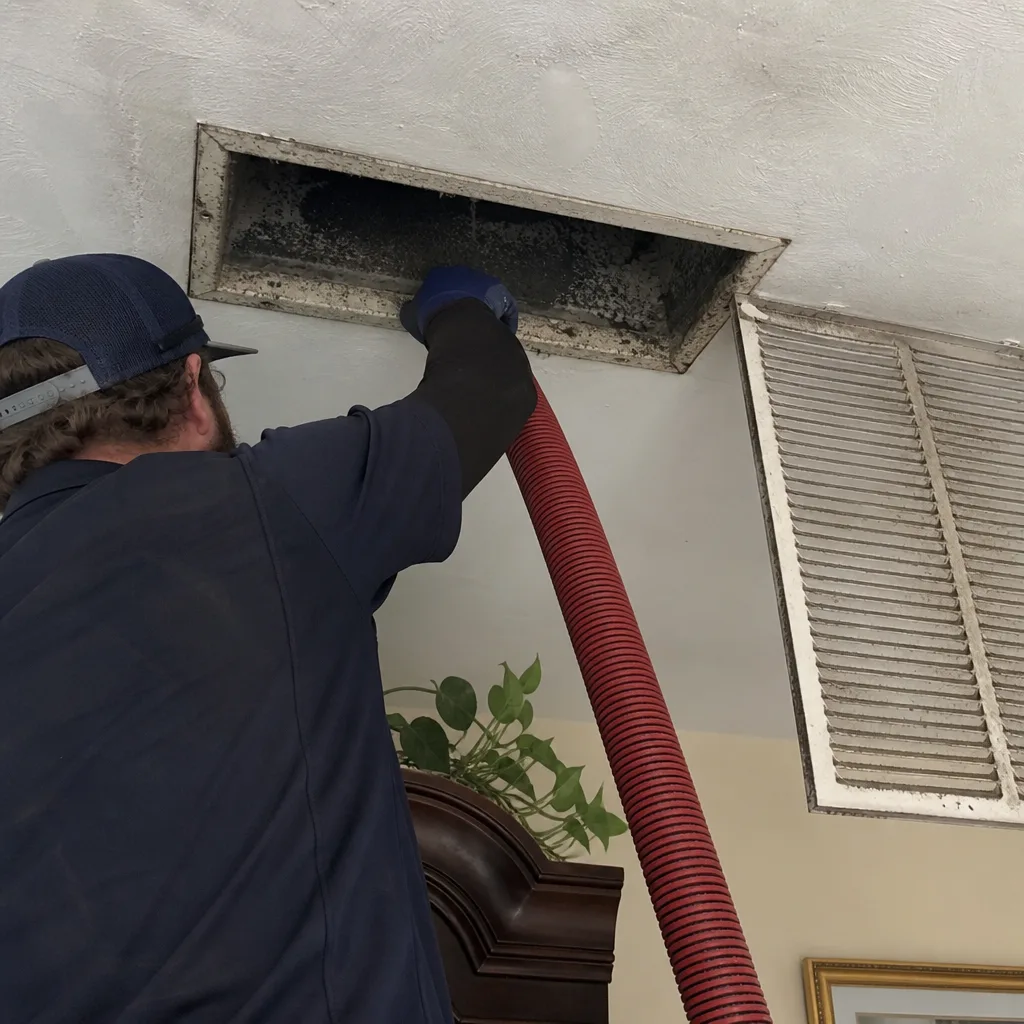 Before
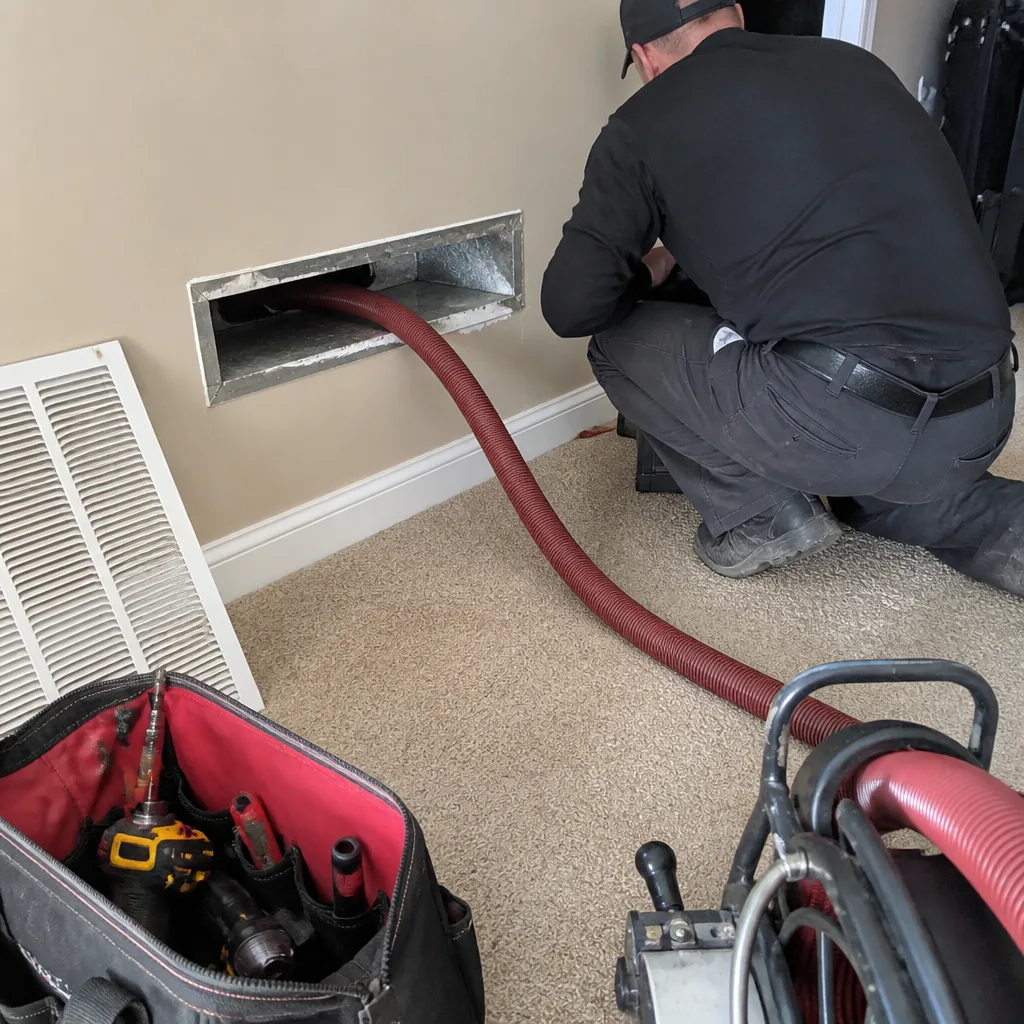 After
After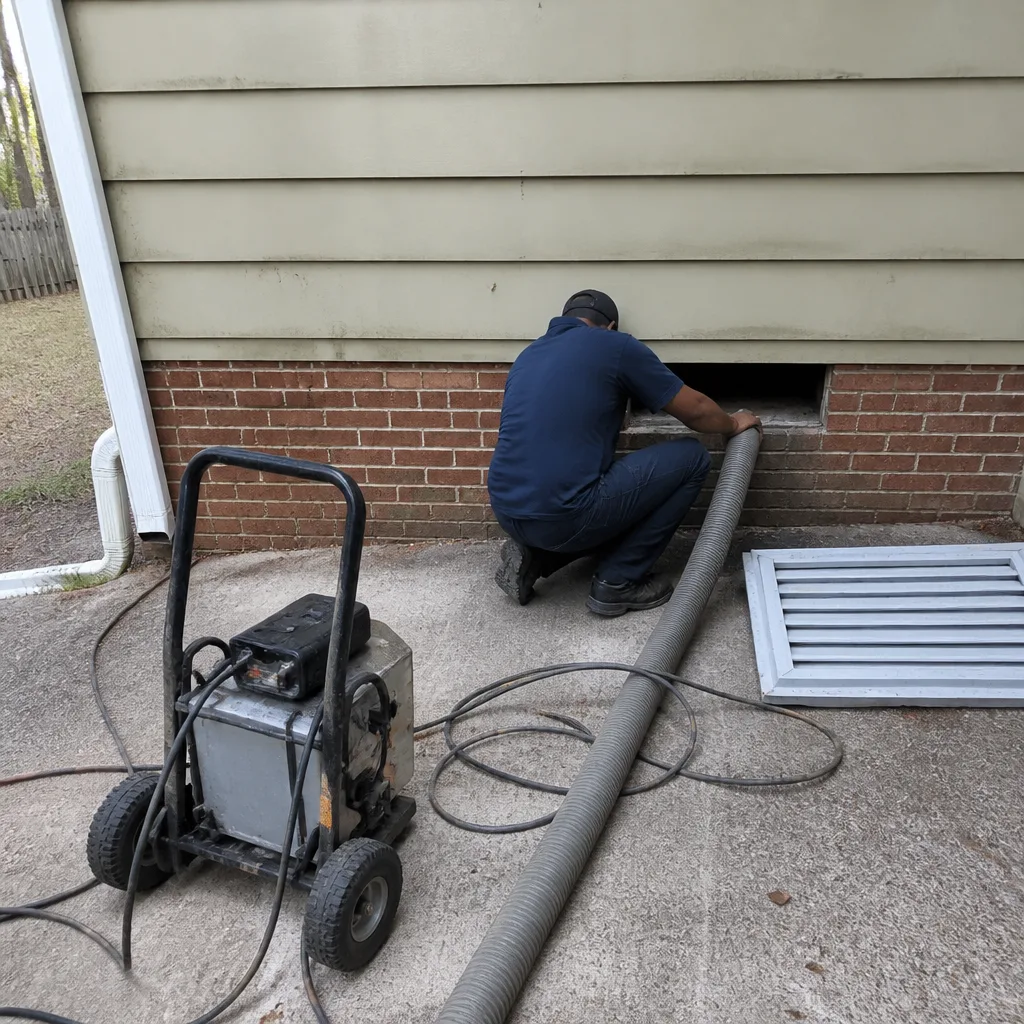 Before
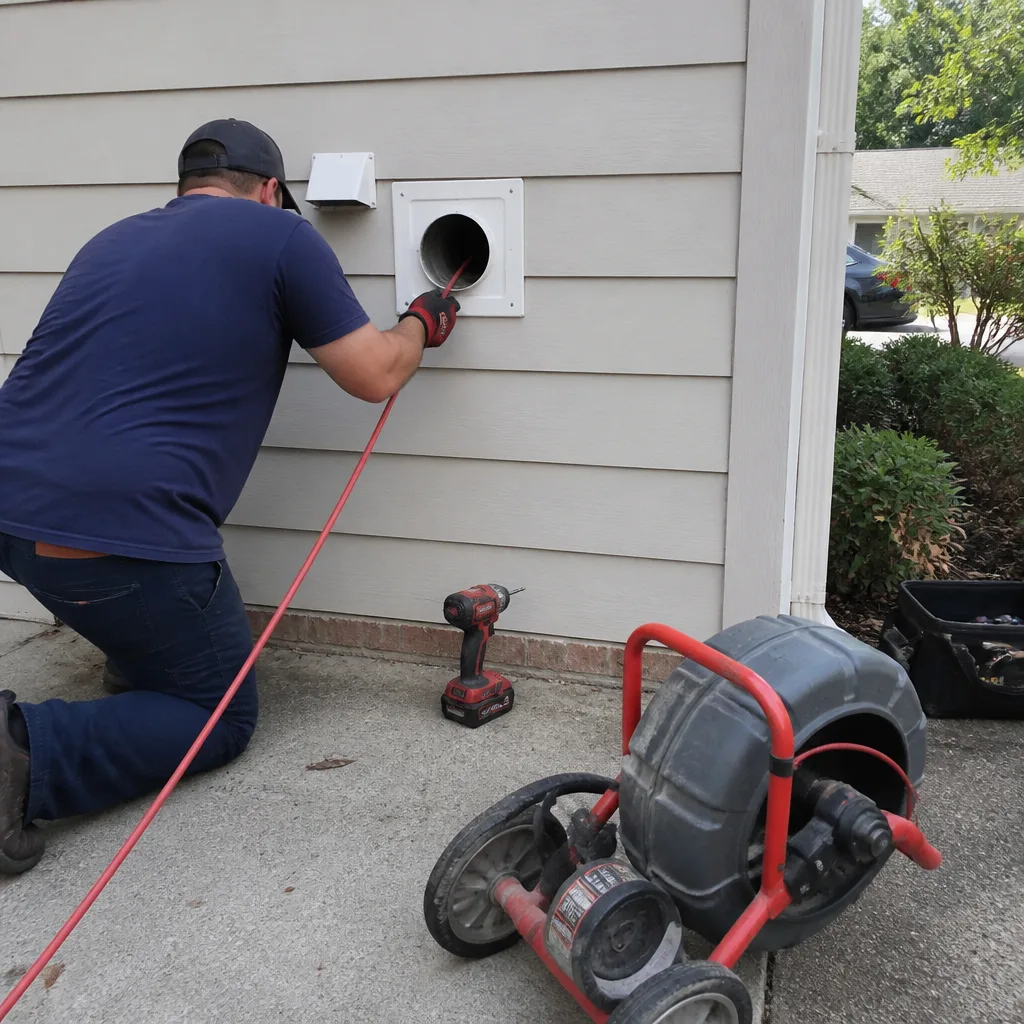 After
After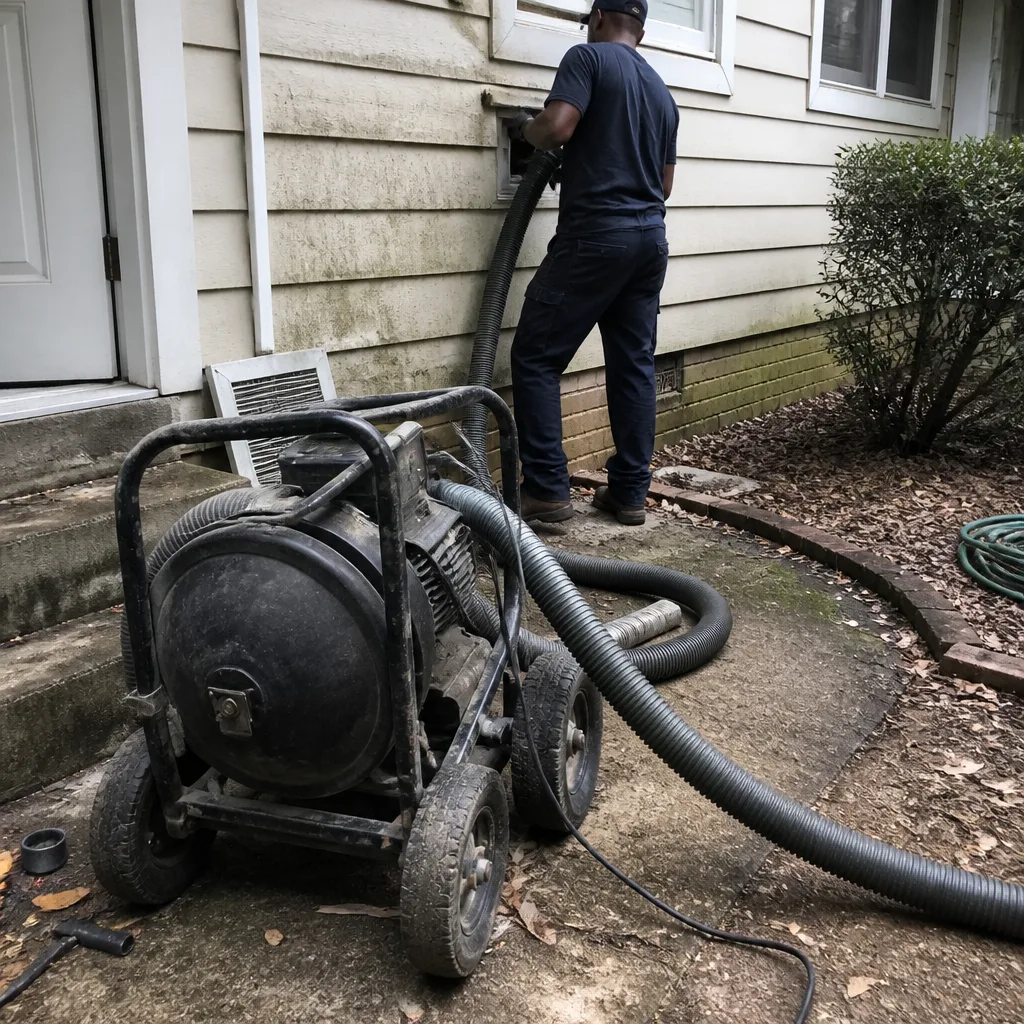 Before
 After
AfterSeasonal Air Duct Cleaning Care for Atlanta: Year-Round Homeowner’s Guide
Atlanta’s outdoor mold spore counts peak twice - once in spring (April) and again in late summer (September) - and both peaks coincide with HVAC transitions when systems are moving air through ducts that have sat dormant for weeks. This is exactly when indoor air quality problems from duct contamination are most acute. Most year-round guides divide care by calendar quarter, but Atlanta’s climate doesn’t cooperate with that neat framework. The metro area experiences three distinct duct-stress periods, each producing different contamination types and requiring different homeowner actions. This guide maps the actual stress cycle Atlanta systems experience, drawn from 52,000+ documented inspections since 2013, and gives you a seasonal log template to build your own evidence record.
Quick Answer
Atlanta homeowners should structure duct care around three HVAC stress periods: the pollen-load cooling ramp (March-May), the sustained high-humidity cooling season (June-September), and the heating-season startup (October-November). During each period, inspect specific indicators - pollen infiltration at flex duct boots, moisture accumulation in duct liner, and odor signatures at first heat - and schedule our Air Duct Cleaning services when documented debris exceeds visual thresholds or odors persist beyond 48 hours.
Table of Contents
- Atlanta’s Three HVAC Stress Periods (Not Four Seasons)
- The Spring Transition: Highest Indoor Air Quality Risk of the Year
- Summer Humidity and the Short-Cycle Problem
- The Fall Heating Startup: What to Smell For
- Winter Dormancy: Low Stress, High Observation Value
- Your Atlanta Seasonal Duct Log Template
- What Professional Equipment Actually Does (And Doesn’t Do)
- Common Mistakes to Avoid
- When to Call a Professional
- Frequently Asked Questions
- The Bottom Line
BeforeAfterAtlanta’s Three HVAC Stress Periods (Not Four Seasons)
Calendar-quarter guides fail in Atlanta because the metro area’s HVAC reality is shaped by humidity and pollen, not temperature alone. We’ve documented this across inspections in Buckhead, Decatur, Sandy Springs, and the northern exurbs. The pattern is consistent.
Period One: The Pollen-Load Cooling Ramp (March-May)
Atlanta’s tree pollen season typically begins mid-February and peaks late March to early April. Grass pollen follows through May. During this window, homeowners switch from heating to cooling - often during the peak pollen window itself. The system, dormant for weeks, suddenly moves high volumes of outdoor air through ductwork that has accumulated winter debris. In our inspections, we regularly find that flex duct runs in attics (the ribbed, flexible tubing common in Atlanta homes built 1985-2010) have developed micro-gaps at boot connections during winter thermal cycling. These gaps pull unfiltered attic air - and pollen - directly into the supply stream.
The critical action: inspect visible duct boots (the metal collar where duct meets ceiling register) for separation or tape failure before first AC use. The pollen infiltration we photograph most often in April starts here.
Period Two: Sustained High-Humidity Cooling (June-September)
Atlanta averages 50+ days above 90°F, but the more significant figure is nighttime dew points remaining above 65°F for weeks at a stretch. This creates chronic moisture stress inside duct systems, particularly in homes with oversized AC units - a common condition in Atlanta’s 2015-2025 construction where builders spec equipment for rapid cooldown rather than sustained dehumidification.
Period Three: Heating-Season Startup (October-November)
The brief Atlanta heating season creates its own contamination signature. Dust and debris settle in ducts during summer dormancy. When heat strips or gas furnaces first fire, this material burns off or gets disturbed. The odors produced are diagnostic - we’ll detail these in the fall startup section below.
Winter itself (December-February) is largely a dormant period for duct stress, which makes it valuable for documentation and baseline-setting rather than reactive maintenance.
The Spring Transition: Highest Indoor Air Quality Risk of the Year
The first week of AC use in April is, in our documented experience, the highest indoor air quality risk period for Atlanta homeowners. Three conditions converge:
- Dormant system activation: The blower motor and ductwork have been still for weeks. Any settled debris - dust, skin cells, insect fragments, previous season’s pollen - gets mobilized immediately.
- Peak outdoor pollen: Atlanta’s oak, pine, and birch pollen counts frequently exceed 2,000 grains per cubic meter in late March and early April. The metro area consistently ranks among the nation’s worst for spring pollen.
- Moisture condensation in flex duct: During winter, poorly insulated flex duct runs in ventilated attics experience temperature differentials that create condensation on the duct exterior. This moisture wicks into the duct liner (the fiberglass insulation inside flex duct) through micro-perforations. When AC first activates, cold air hits this damp liner. The result: musty odor, potential mold spore release, and accelerated liner degradation.
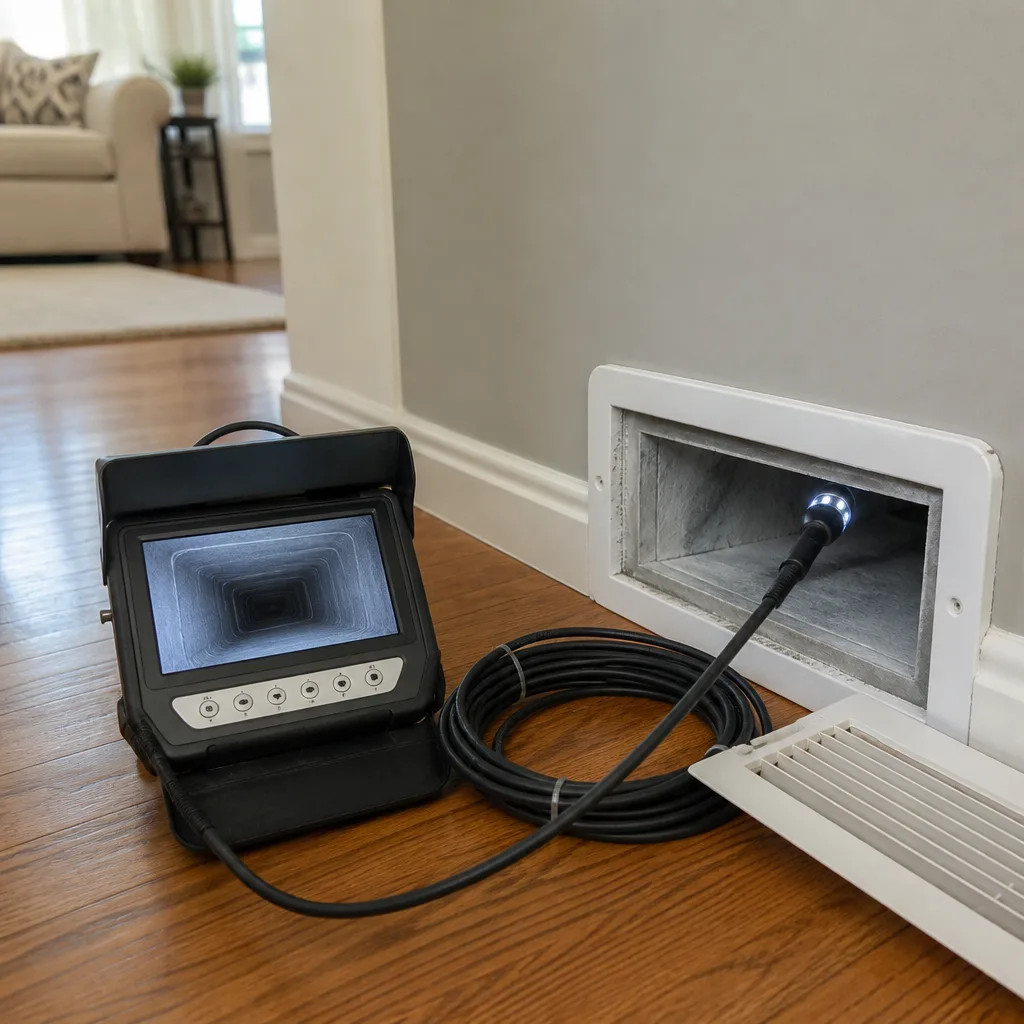
We’ve photographed this sequence repeatedly. In a 2019 inspection in Virginia-Highland, the camera showed a 3-inch debris build-up at the first elbow of a master bedroom supply run, with visible moisture staining on the flex duct exterior where attic insulation had been displaced. The homeowner had activated AC for the first time three days prior and reported “a wet basement smell” that morning. The debris was primarily pollen and attic insulation fragments, pulled through a separated boot connection.
What to check before first AC use:
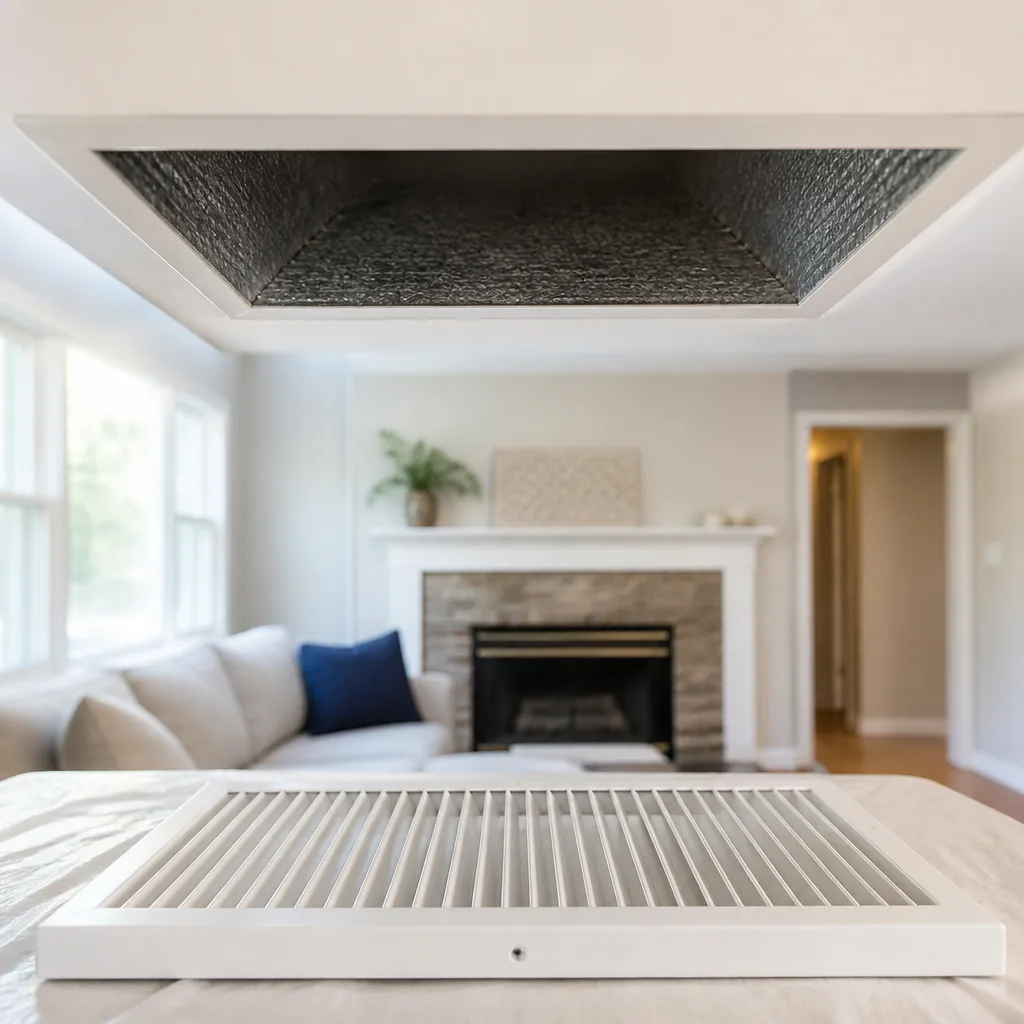
- Remove two ceiling registers and photograph the duct boot with your phone. Look for gaps between boot and drywall, or tape that has peeled or darkened.
- Run the system fan only (no cooling) for 30 minutes and note any odor at registers. A brief dust smell is normal; musty or chemical odors are not.
- Check your filter. Atlanta’s spring pollen load means a filter that was “fine” in February is likely saturated by April.
If you find separated boots or persistent musty odor, the duct run needs inspection before cooling season intensifies. This is not a DIY repair - flex duct replacement requires proper sizing, sealing, and insulation to prevent recurrence. Air Duct Cleaning in Atlanta from CleanRun includes boot inspection and photo documentation of every run condition.
Summer Humidity and the Short-Cycle Problem
Atlanta’s summer duct stress is less about temperature than about moisture management failure. Here’s the mechanism we’ve documented in hundreds of inspections.
How oversized AC creates duct moisture:
Many Atlanta homes, particularly those built 2015-2025 in neighborhoods like West Midtown, Reynoldstown, and Brookhaven, have AC systems sized to cool rapidly. The unit reaches thermostat setpoint quickly and shuts off. This short-cycling prevents the evaporator coil from running long enough to drain condensation effectively. Humidity remains in the air, and critically, the ductwork doesn’t reach steady-state temperature. Warm, humid attic air contacts cooler duct surfaces, creating condensation on the duct exterior and, in cases of liner compromise, moisture migration inward.
What this looks like inside a duct camera inspection: darkened or matted fiberglass liner, particularly at low points in the duct run where condensation pools. In metal duct systems (more common in pre-1990 Atlanta homes), we find rust at seams and standing water in horizontal runs.
The documentation that matters:
We deliver a photo record from every inspection showing liner condition at three points per duct run: the boot connection, the mid-run straight section, and any elbow or transition. Atlanta homeowners with summer moisture issues typically see progressive darkening in year-over-year photos - evidence that justifies cleaning or liner replacement before structural damage occurs.
Action thresholds for summer:
- Relative humidity above 60% indoors for more than 48 hours: check duct boots for condensation.
- Musty odor when AC cycles on (not continuous): likely liner moisture, not just filter saturation.
- Visible mold on ceiling around registers: this indicates duct moisture migration, not just surface humidity.
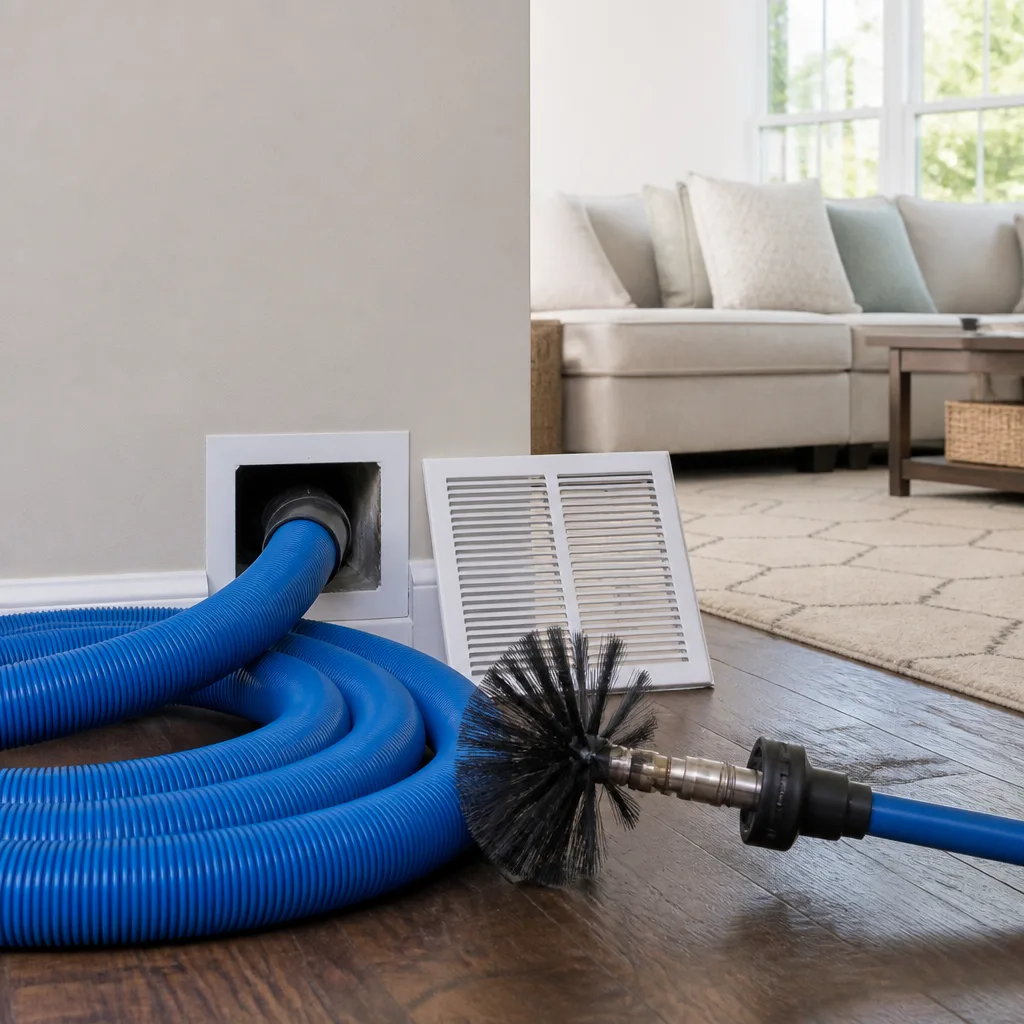
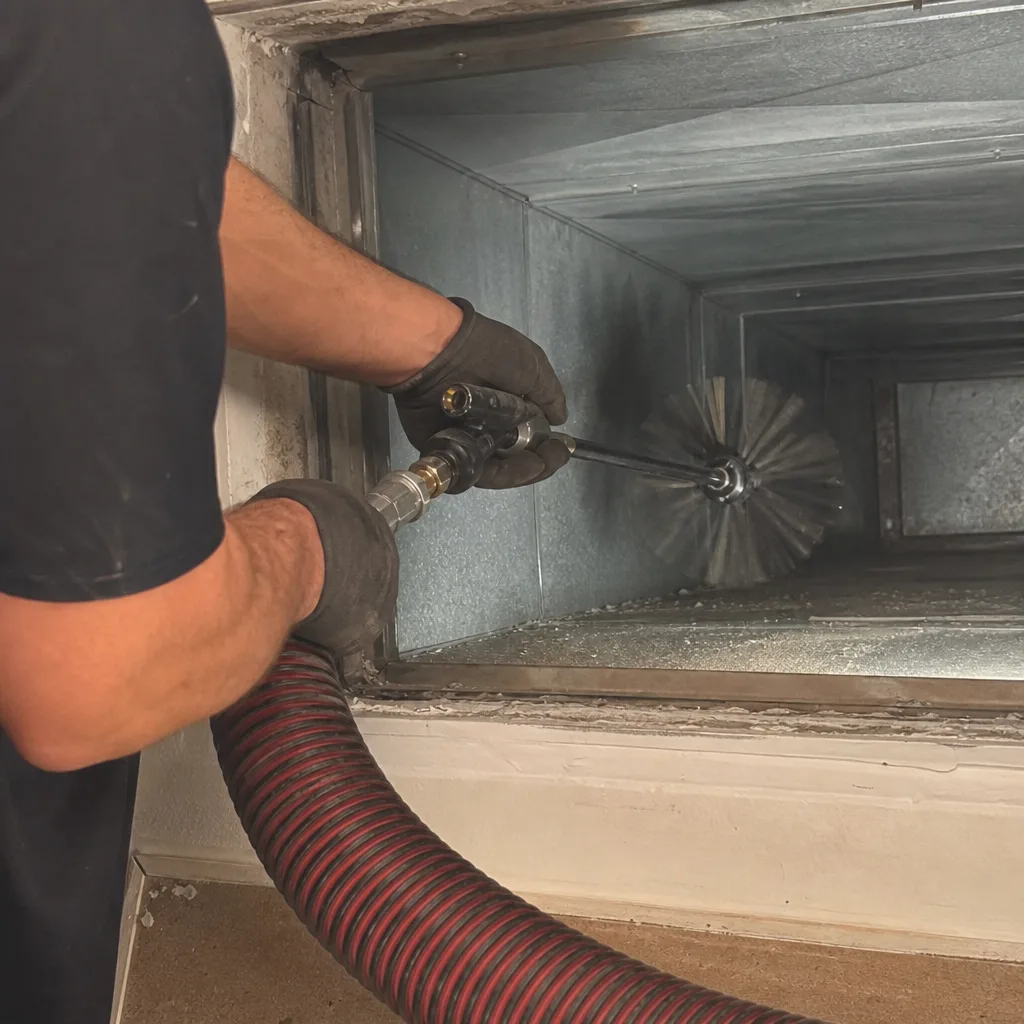
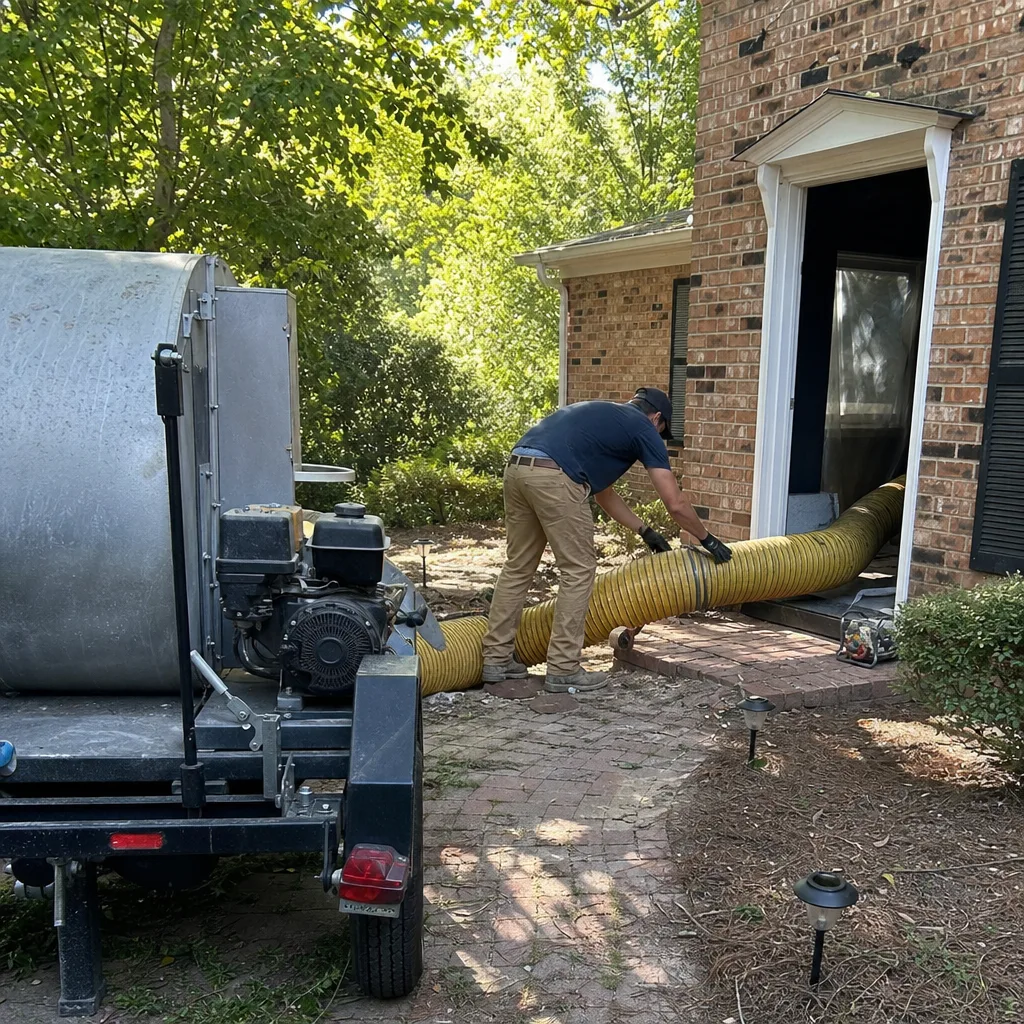
Professional-grade equipment addresses this through negative-pressure extraction (a vacuum system that pulls debris from the duct while maintaining containment) combined with mechanical agitation. CleanRun uses Rotobrush and Nikro systems for this purpose - tools customers can verify independently. The key is that extraction must be thorough enough to remove moisture-loaded debris without damaging saturated liner. In cases of advanced liner degradation, we document this and recommend replacement rather than cleaning that would dislodge fiberglass into the airstream.
The Fall Heating Startup: What to Smell For
Atlanta’s heating season is brief but diagnostically valuable. The first furnace or heat strip activation in October or November produces odors that reveal duct condition accumulated over the cooling season.
Three odor signatures and what they mean:
- Burning dust (brief, 10-30 minutes): Normal. Dust settles on heat exchangers and strip elements during summer dormancy. Initial burn-off produces a dry, slightly sharp odor that dissipates quickly. No action needed.
- Musty or earthy odor (persistent, returns with each cycle): Indicates moisture accumulation in ductwork during summer, likely with biological growth. This requires inspection and likely cleaning. The odor source is typically in the return plenum (the large duct section connecting to the air handler) or in low points of the supply system where condensation collected.
- Chemical or plastic odor (sharp, acrid, persistent): Potentially serious. This can indicate overheating electrical components, failing heat strips, or - in gas furnaces - combustion byproduct leakage. Shut the system off and call an HVAC technician before considering duct cleaning. This is a safety issue outside the scope of duct maintenance.
The musty odor is the one that drives most fall duct cleaning calls in Atlanta. In our experience, homeowners who delayed spring inspection often compound the problem: summer moisture loads the duct liner, fall heating dries and mobilizes the biological material, and the odor becomes the forcing function for action.
What to document at fall startup:
Note the date of first heat use, the odor type from the list above, how long it persisted, and which registers produced the strongest smell. This becomes evidence for your seasonal log and helps technicians isolate problem runs. In a 2022 inspection in East Atlanta, the homeowner’s log showed musty odor concentrated at two registers in a single bedroom - information that directed our camera inspection to a disconnected return duct in the crawl space, pulling damp crawl air directly into that room’s circulation.
HVAC Cleaning in Atlanta addresses the full system including coils and blower, which is often necessary when musty odor persists after duct cleaning alone. The coil and plenum are the moisture collection points; cleaning ducts without addressing these is incomplete.
Winter Dormancy: Low Stress, High Observation Value
December through February is Atlanta’s lowest-stress period for duct systems. Heating demand is intermittent, humidity is lower, and pollen is minimal. This is when systematic observation produces the most valuable baseline documentation.
Winter tasks:
- Complete your seasonal log entry for the calendar year (template below).
- Photograph accessible duct boots and registers for year-over-year comparison.
- Schedule non-urgent maintenance - duct sealing, insulation assessment, or planned cleaning - when contractor availability is better and you’re not reacting to an active problem.
- Verify your filter change schedule. The 90-day filter change recommended for Atlanta’s climate often slips during low-stress periods.
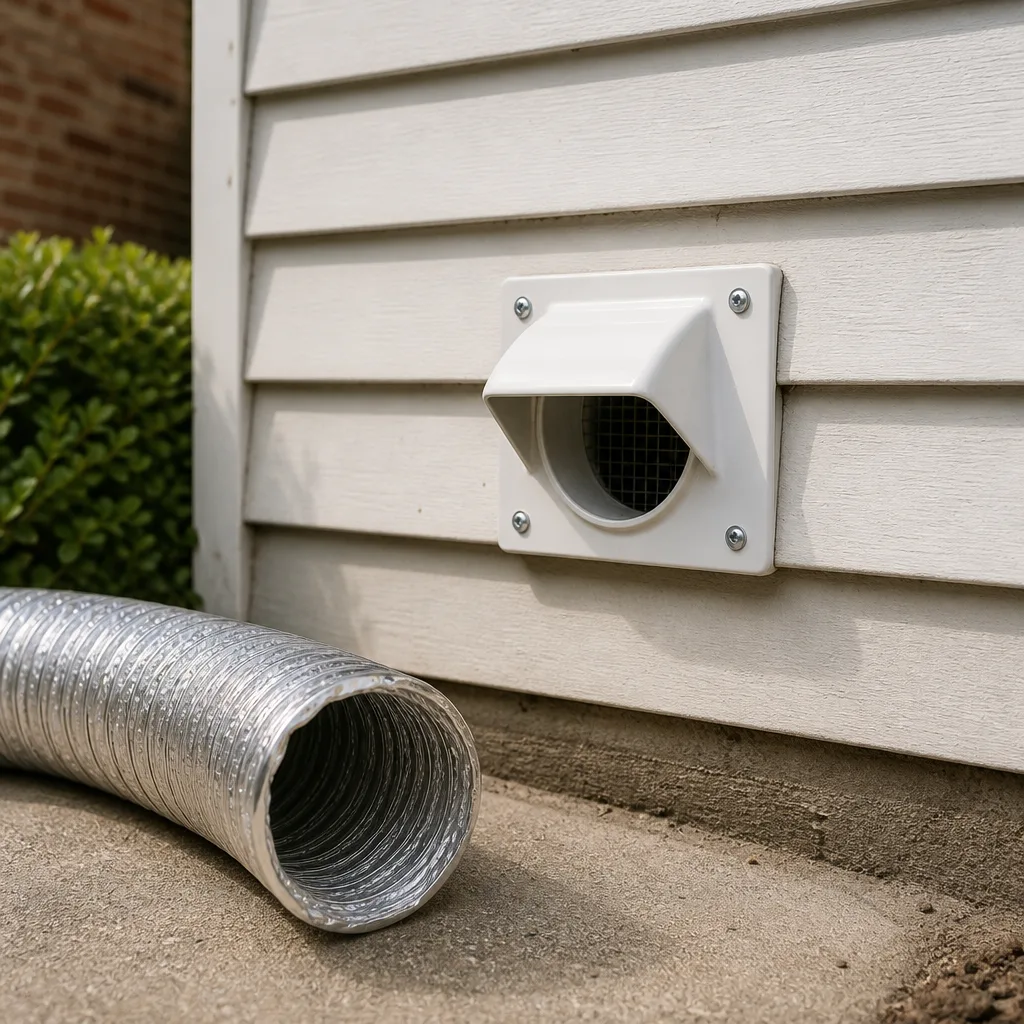
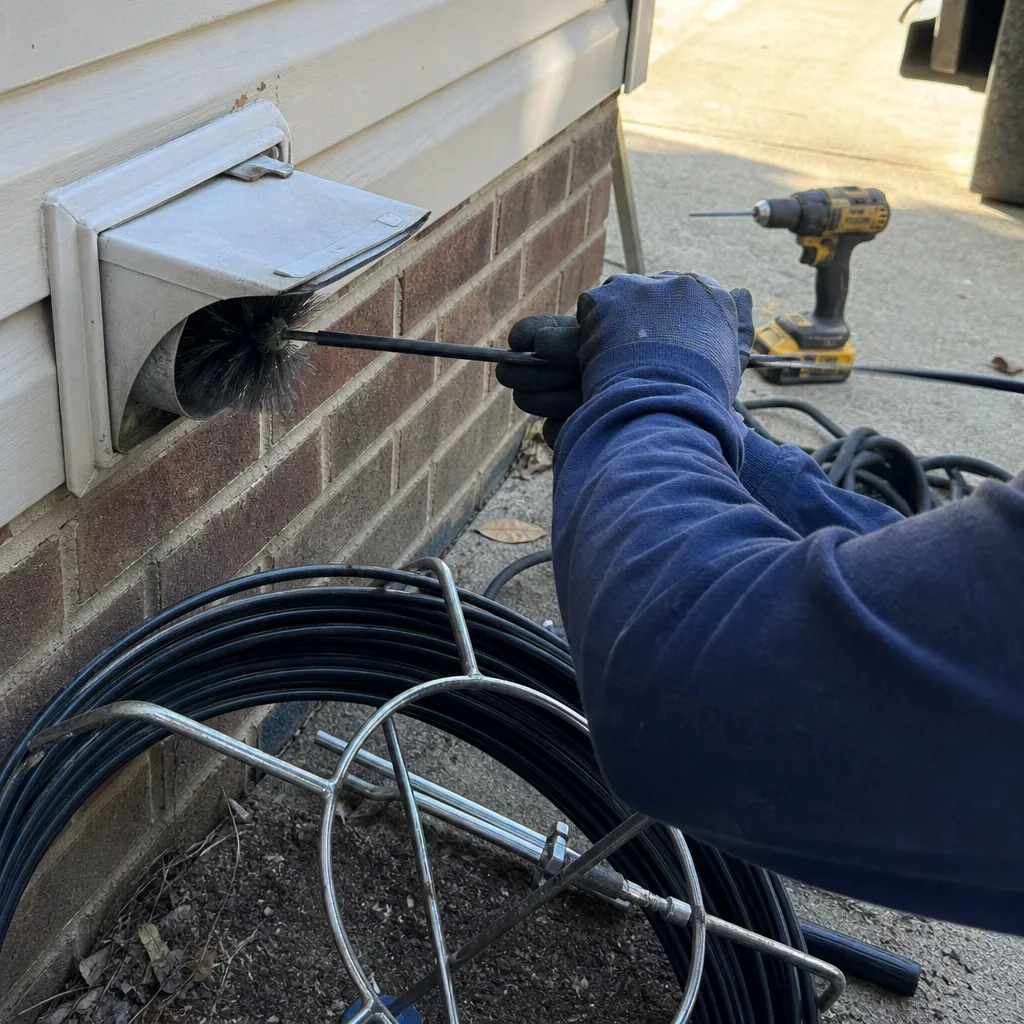
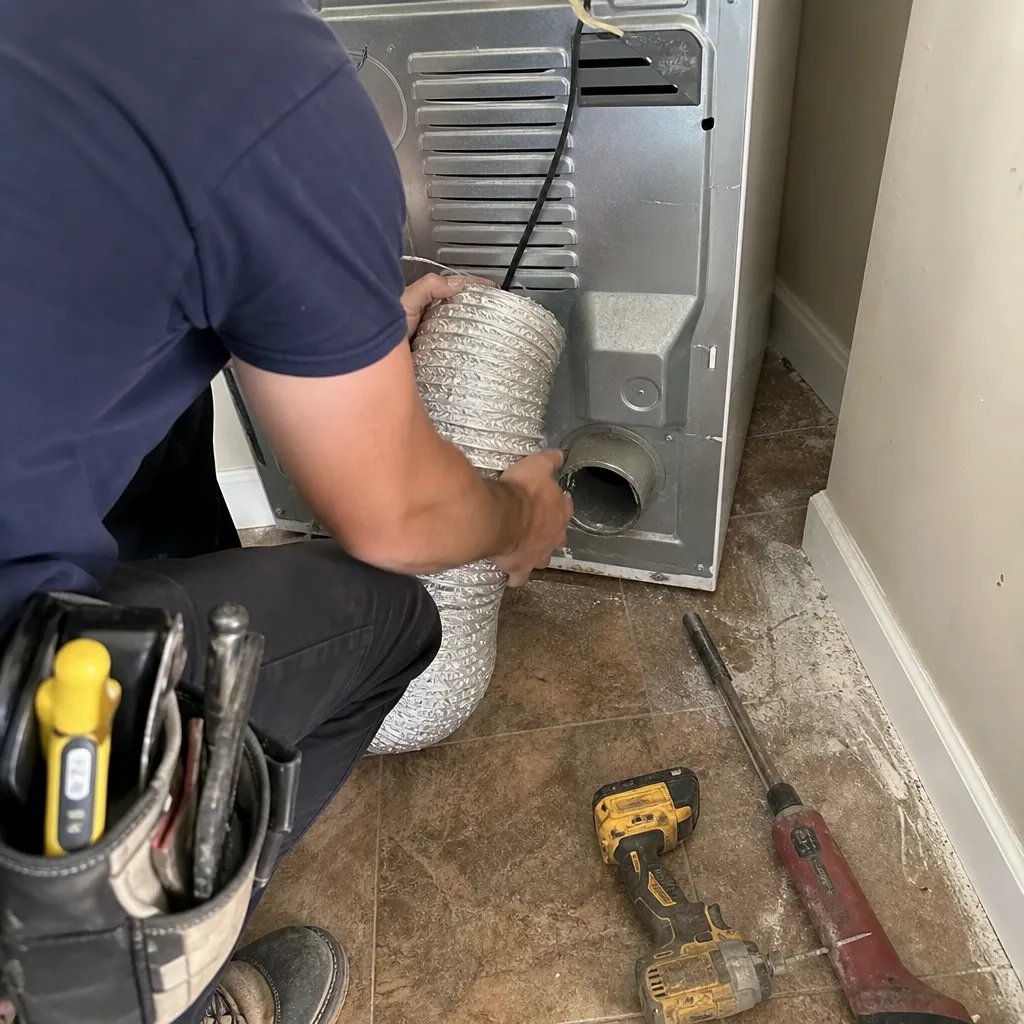
Winter is also when we recommend the Dryer Vent Cleaning in Atlanta as a companion service. Dryer vent lint accumulation is independent of HVAC cycles but creates similar fire and efficiency risks. The same documentation standard applies: before and after photos of the full vent run.
One Atlanta-specific winter consideration: ice dam events, though rare, can force attic moisture into ductwork through compromised insulation. After any significant ice accumulation, inspect attic flex duct for exterior wetness or sagging, which indicates water weight loading.
Your Atlanta Seasonal Duct Log Template
Memory fails when contractors ask “when was your last cleaning?” A written log transforms your observations into evidence. Here’s the template we provide CleanRun customers, formatted for a simple notebook or digital note - or see our Air Duct Cleaning Maintenance Checklist for Atlanta Homeowners for expanded guidance.
Annual Duct Log - [Address] - Year: ______
| Date | Event | Odor (type / duration) | Visual Findings | Filter Change | Action Taken |
|---|---|---|---|---|---|
| ___/___ | First AC use | ||||
| ___/___ | Mid-summer check | ||||
| ___/___ | First heat use | ||||
| ___/___ | Winter baseline |
Atlanta-specific dates to anchor your log:
- Target first AC check: March 15-April 1 (before pollen peak)
- Target mid-summer check: July 15-August 1 (after sustained humidity stress)
- Target first heat check: October 15-November 1 (before consistent heating)
- Target winter baseline: January 15-February 1 (lowest stress, best documentation conditions)
Action thresholds to write in your log’s cover:
- Odor persisting beyond 48 hours after system change = schedule inspection
- Visible debris at register or boot = photograph and date
- Indoor humidity above 60% for 48+ hours = check duct exterior for condensation
- Filter visibly darkened before 60 days = upgrade filter or inspect for duct leakage pulling unfiltered air
- Any ceiling discoloration near register = immediate inspection (moisture migration indicator)
Bring this log to any estimate. A competitor’s verbal assessment becomes testable against your documented history. CleanRun’s Free Second Opinion on any written estimate includes reviewing your log against our inspection findings - Haven Standard Clause 2: Transparent Comparison.
What Professional Equipment Actually Does (And Doesn’t Do)
Understanding equipment helps you evaluate quotes. The duct cleaning industry in Atlanta includes operators using equipment that ranges from professional-grade to modified shop vacuums. Here’s what the named equipment does, without performance claims beyond manufacturer specifications.
Negative-pressure extraction systems (Nikro, Abatement Technologies):
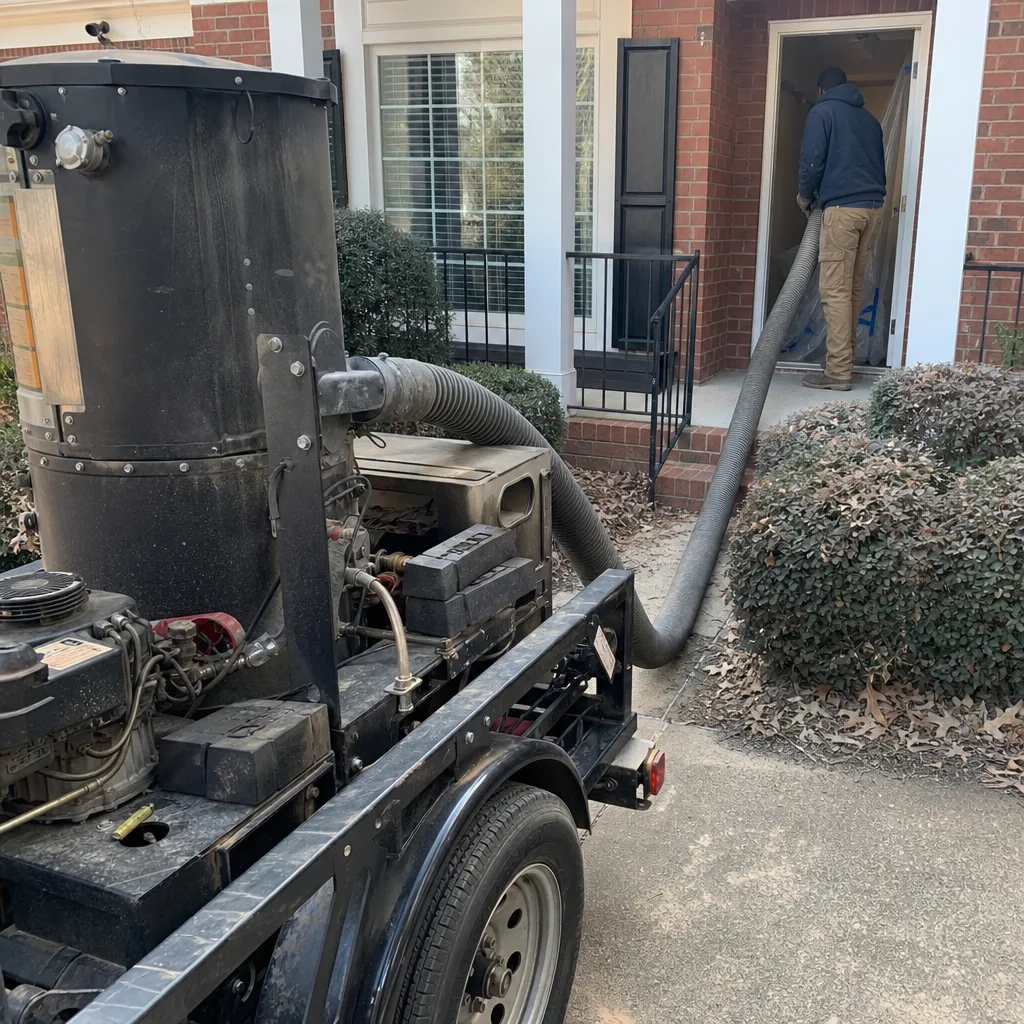
These create vacuum containment at the duct system level, typically through a large hose connected to the air handler or a sealed access point. The principle: debris is loosened by mechanical agitation and immediately captured by airflow, rather than being pushed through the duct into the home. This is the standard for containment-sensitive environments and for systems with significant debris loads.
Rotary brush systems (Rotobrush):
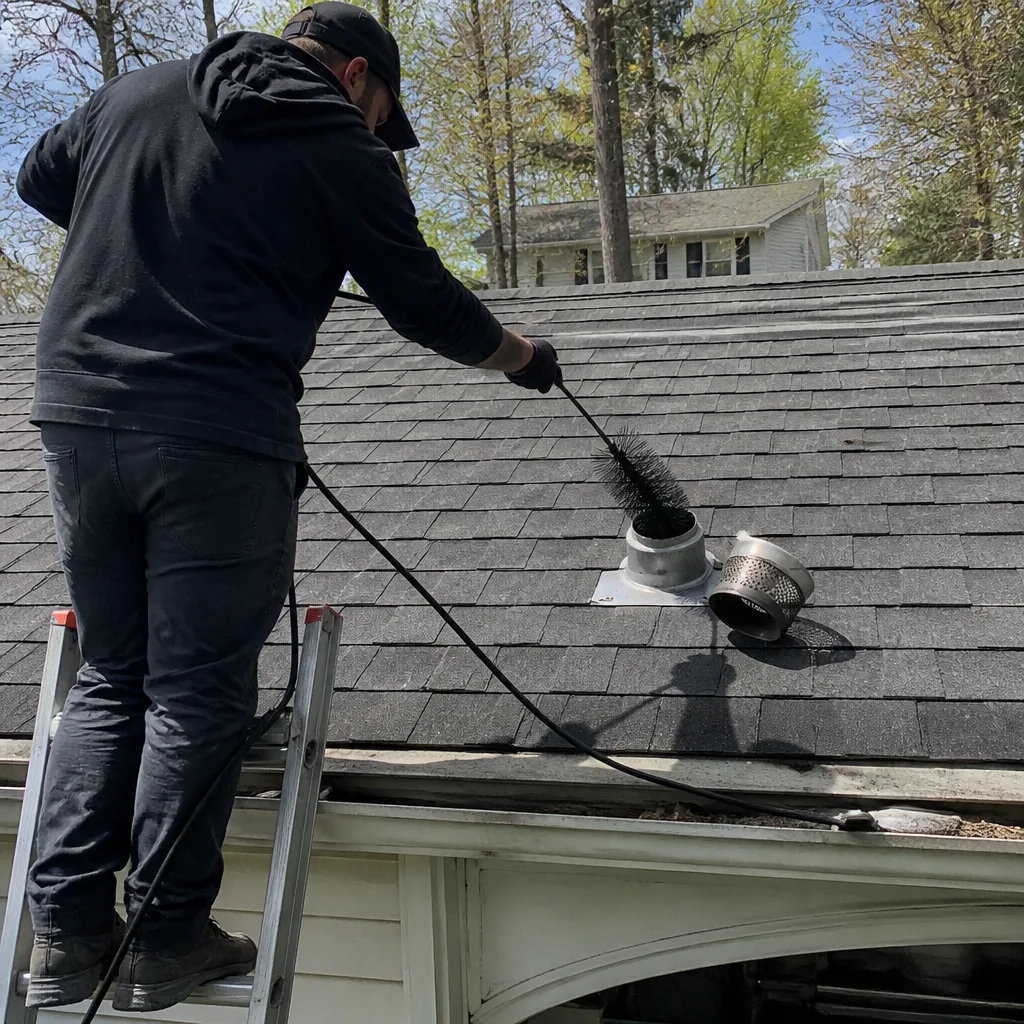
A spinning brush on a flexible cable navigates duct runs, contacting interior surfaces directly. Effective for adhered debris that vacuum airflow alone won’t dislodge. The brush diameter must match duct size - oversized brushes damage flex duct liner; undersized brushes miss contact. We document brush size in our written scope for each job.
What equipment doesn’t do:
No portable equipment fully cleans a duct system without proper access point creation. Every sealed duct system requires strategic access cuts (later sealed) to reach all runs. Any quote that doesn’t specify access point locations is incomplete. No equipment sanitizes ductwork in a way that persists - “sanitizing” treatments require EPA-registered products applied to clean surfaces, and the effect is immediate reduction, not ongoing protection. We use Guardsman-applied treatments where appropriate, with the application documented in the photo record.
Equipment naming matters because verifiable claims outperform vague assurances. When a technician names Rotobrush, Nikro, or Abatement Technologies, you can research the manufacturer’s specifications and hold the operator to them. This is why CleanRun publishes its equipment roster - Haven Standard Clause 4: Accountable Tools.
Air quality monitoring equipment (Honeywell, Aprilaire) provides post-cleaning verification where requested. These are measurement tools, not cleaning tools, and we specify what metrics they capture (particle count, VOC levels) and their limitations.
Common Mistakes to Avoid
- Waiting for visible dust at registers. By the time debris reaches visible registers, the duct system has been circulating it for weeks. Atlanta’s high airflow volumes during cooling season accelerate this. Check boots and plenum access points instead - contamination starts upstream.
- Accepting per-vent pricing. This structure incentivizes minimal time per run and creates invoice inflation. CleanRun quotes one flat price per system, agreed in writing before work starts - Haven Standard Clause 1. The number of vents in your Atlanta home doesn’t change the scope of proper work.
- Ignoring flex duct in attics. Atlanta’s post-1985 housing stock relies heavily on flex duct, which degrades faster than metal. Thermal cycling in ventilated attacks separates connections and compresses insulation. Annual boot inspection catches this before it becomes an air quality problem.
- Cleaning without photo documentation. Without before and after images, you have no evidence the work occurred. Every CleanRun job includes a Documented Photo Record of every duct run - standard, not optional. Demand this from any provider.
- Treating all odors as “normal system behavior.” Burning dust for 20 minutes at first heat: normal. Musty odor persisting for days: not normal. Chemical odor: potentially dangerous. The distinction matters for both health and system longevity.
- Scheduling cleaning reactively only. The homeowners with cleanest long-term outcomes schedule winter baseline inspections and address findings before stress periods. Reactive cleaning costs more and addresses damage already done.
- Using the cheapest filter that fits. Atlanta’s pollen and particulate load justifies MERV 11-13 filtration in most systems (verify your blower capacity - higher MERV restricts airflow in underpowered units). Cheap fiberglass filters protect equipment minimally and allow fine particulate into ductwork.
When to Call a Professional
Call for inspection when: musty odor persists beyond 48 hours after system change; visible mold appears on ceiling near registers; you find separated duct boots or disconnected flex duct; your seasonal log shows progressive debris accumulation year-over-year; or you’re purchasing a home and the seller cannot produce duct maintenance records. In Atlanta’s competitive resale market, 2015-2025 homes often have no duct maintenance history - a documented inspection protects your purchase.
CleanRun Air Duct Cleaning Atlanta offers free estimates in Atlanta - call (470) 495-9370. Every estimate includes a written price before any work starts, with no obligation. Bring a competitor’s written quote; we’ll provide a Free Second Opinion with our number next to theirs.
Frequently Asked Questions
Whole-system duct cleaning for a typical Atlanta home (2,000-3,500 square feet) generally ranges from $450 to $850, depending on system accessibility, contamination level, and whether duct repair or sealing is needed. See our Air Duct Cleaning Cost Breakdown: The Atlanta Homeowner’s Reference for 2026 for detailed pricing factors. Per-vent pricing structures often produce final invoices well above this range through add-ons. CleanRun provides one flat price per system, agreed in writing before work starts - no per-vent calculations, no post-arrival surprises. Call (470) 495-9370 for an exact quote; estimates are free.
Low quotes typically reflect minimal scope: a vacuum hose inserted at one point, brief run time, no access point creation, and no documentation. The $79-$149 coupon model common in Atlanta relies on upselling once the technician is in your home - mold “treatments,” extra vents, “deep cleaning” upgrades. We’ve inspected systems after these services and found significant debris remaining. A legitimate whole-system cleaning requires time, multiple access points, mechanical agitation, and photo verification. The written price before work starts protects you from this model.
Demand a documented photo record of every duct run, before and after. This is standard on every CleanRun job - not a premium add-on. The photo record shows the interior condition at multiple points per run, with timestamps. Without this, you’re trusting a verbal report. With it, you have evidence comparable to a home inspection report. Ask any provider: will you photograph the inside of every run, and will I receive these images as part of the standard deliverable?
Most Atlanta homes benefit from inspection every 2-3 years and cleaning every 3-5 years, with variation based on pollen exposure, humidity management, and system age. Homes with flex duct in ventilated attics, chronic moisture issues, or high pollen sensitivity may need more frequent service. Your seasonal log provides the evidence to adjust this interval - progressive debris accumulation in year-over-year photos indicates shorter intervals; stable, clean conditions suggest longer. There’s no universal schedule; there’s your documented history.
Humidity increases cleaning frequency need when it produces moisture accumulation in duct liner or biological growth. Not all humid climates create this condition - it depends on AC sizing, duct insulation quality, and system runtime. Atlanta’s combination of high humidity and common short-cycling from oversized equipment does produce more moisture-stressed ductwork than drier climates. The indicator to watch is your seasonal log: musty odor at startup, visible liner darkening in photos, or indoor humidity consistently above 60% all suggest more frequent service.
Duct cleaning addresses the distribution system - supply and return ducts, boots, and registers. HVAC cleaning includes the air handler components: evaporator coil, blower assembly, and plenum. In Atlanta, musty odor often originates in the coil and plenum, not the ducts alone. Cleaning ducts without addressing these upstream components can leave the odor source intact. CleanRun offers both services and specifies in the written scope which components are included. CleanRun Air Duct Cleaning Atlanta home service pages detail the full scope options.
The Bottom Line
Atlanta’s duct care calendar has three stress periods, not four seasons. The spring cooling ramp brings pollen infiltration and moisture risk from dormant systems. Summer humidity, compounded by short-cycling equipment, loads duct liner with moisture. Fall heating startup reveals accumulated problems through odor signatures. Winter dormancy is for documentation and baseline-setting. Structure your care around these actual conditions, keep a written seasonal log with Atlanta-specific dates and action thresholds, and demand photo documentation from any service provider. For more guides & resources on protecting your home’s air quality, explore our blog. The homeowners with the cleanest systems and fewest surprises are those who accumulate evidence year over year rather than relying on memory or reacting to emergencies.
Written by Tomas Reyes, Owner at CleanRun Air Duct Cleaning Atlanta, serving Atlanta since 2013.