
Last updated September 23, 2026
Whole-system duct and dryer vent check with before-and-after photos - you see exactly what came out of your vents
That "$99 whole-house special" is a bait ad - the real number appears once they are in your hallway, or the "clean" is a shop-vac at the register. We photograph the inside of your ducts before and after instead.
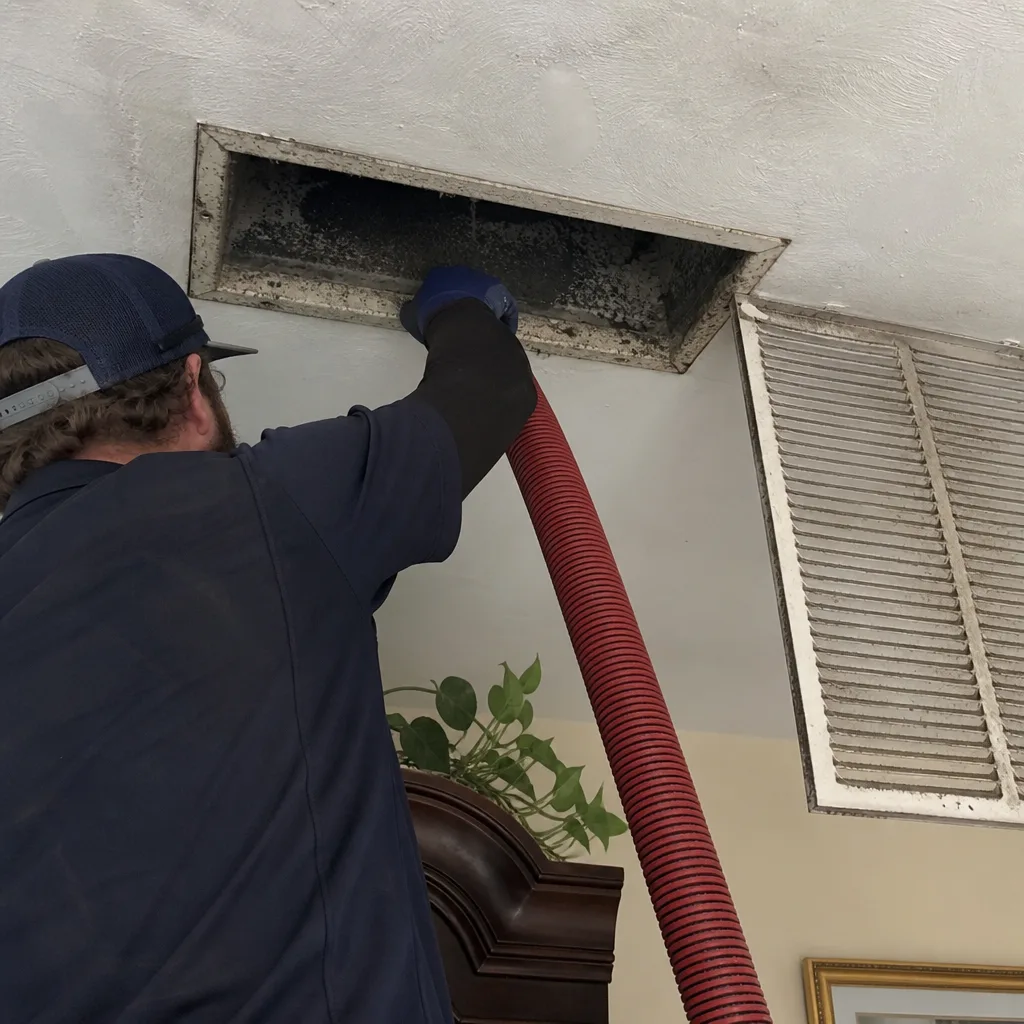 Before
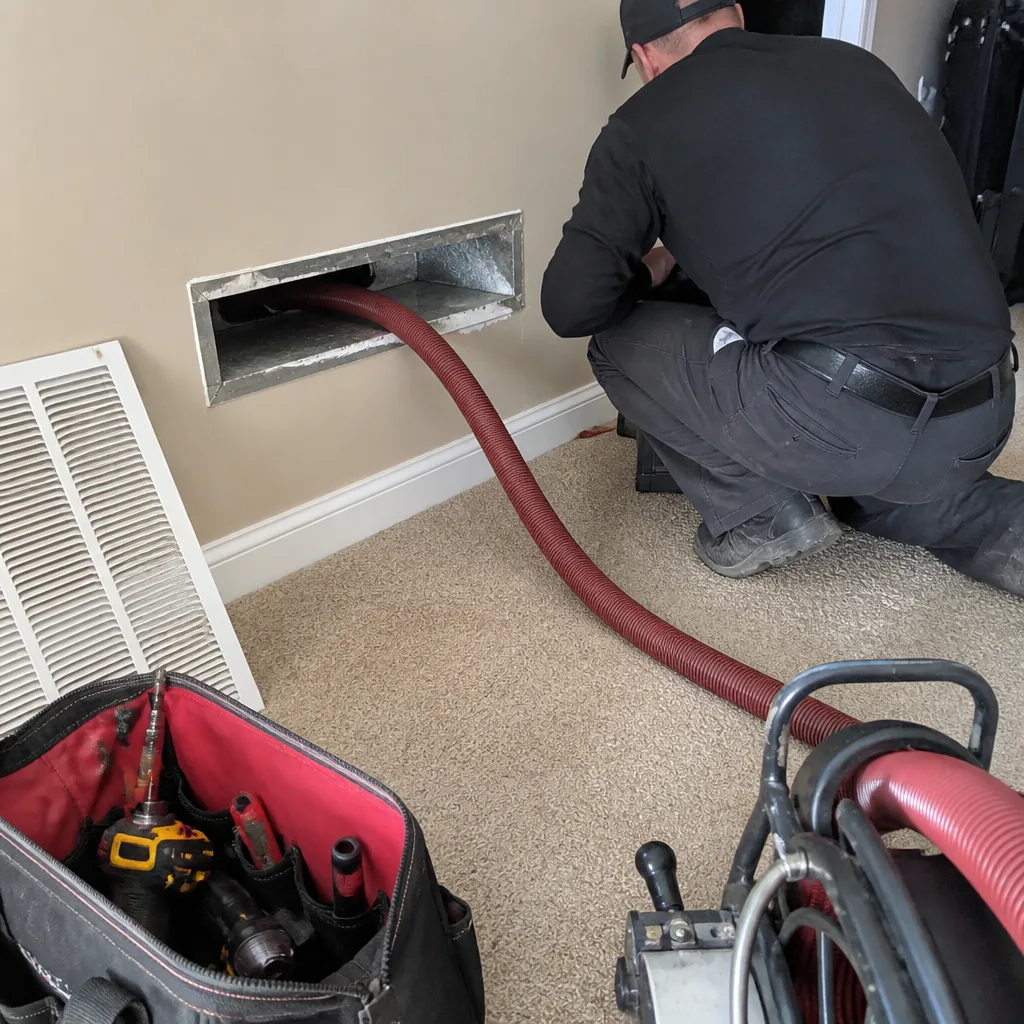 After
After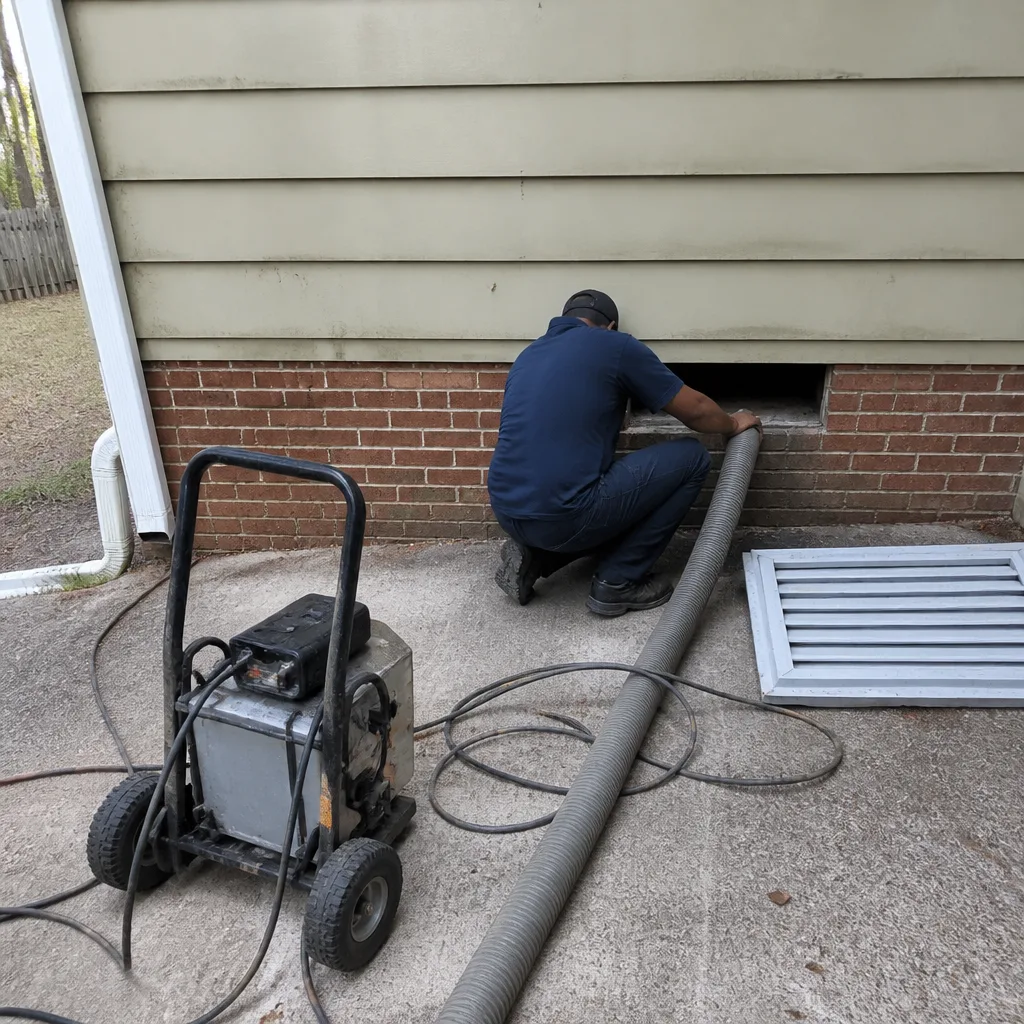 Before
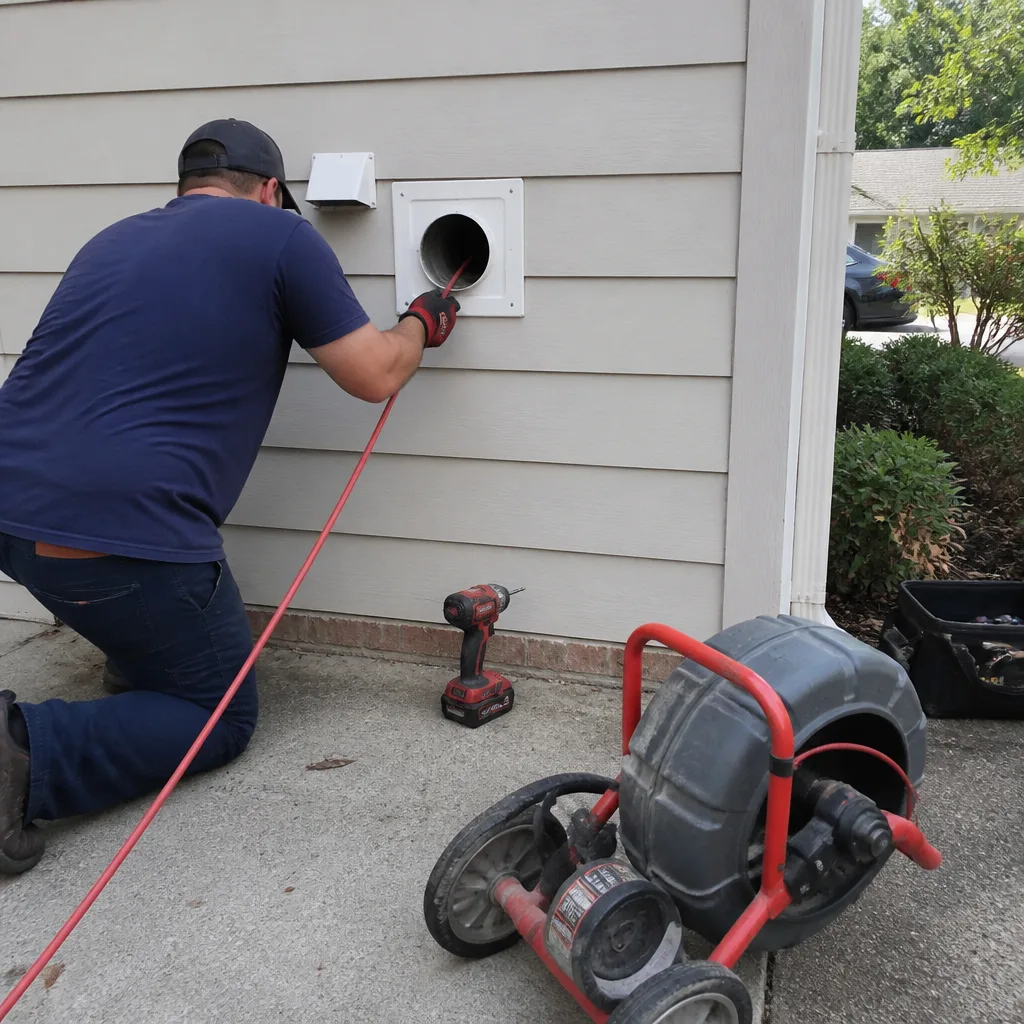 After
After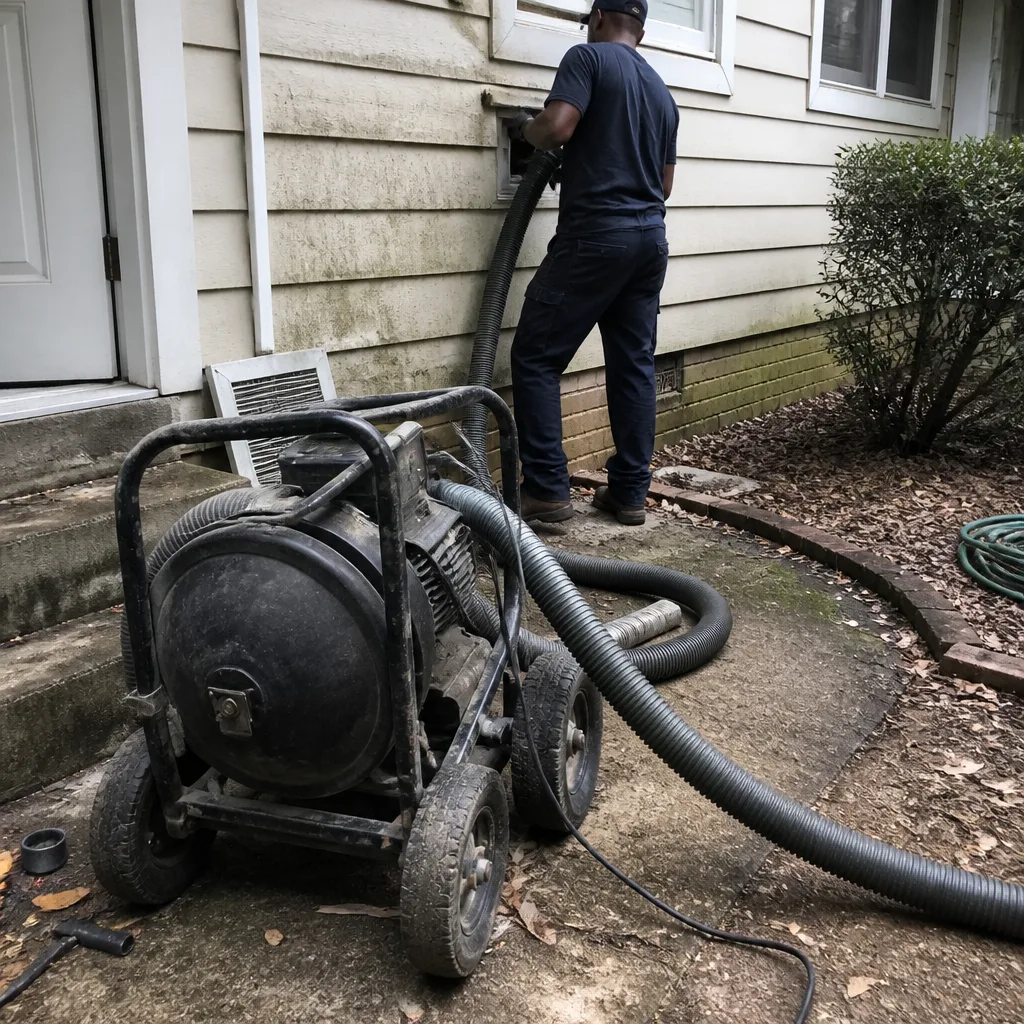 Before
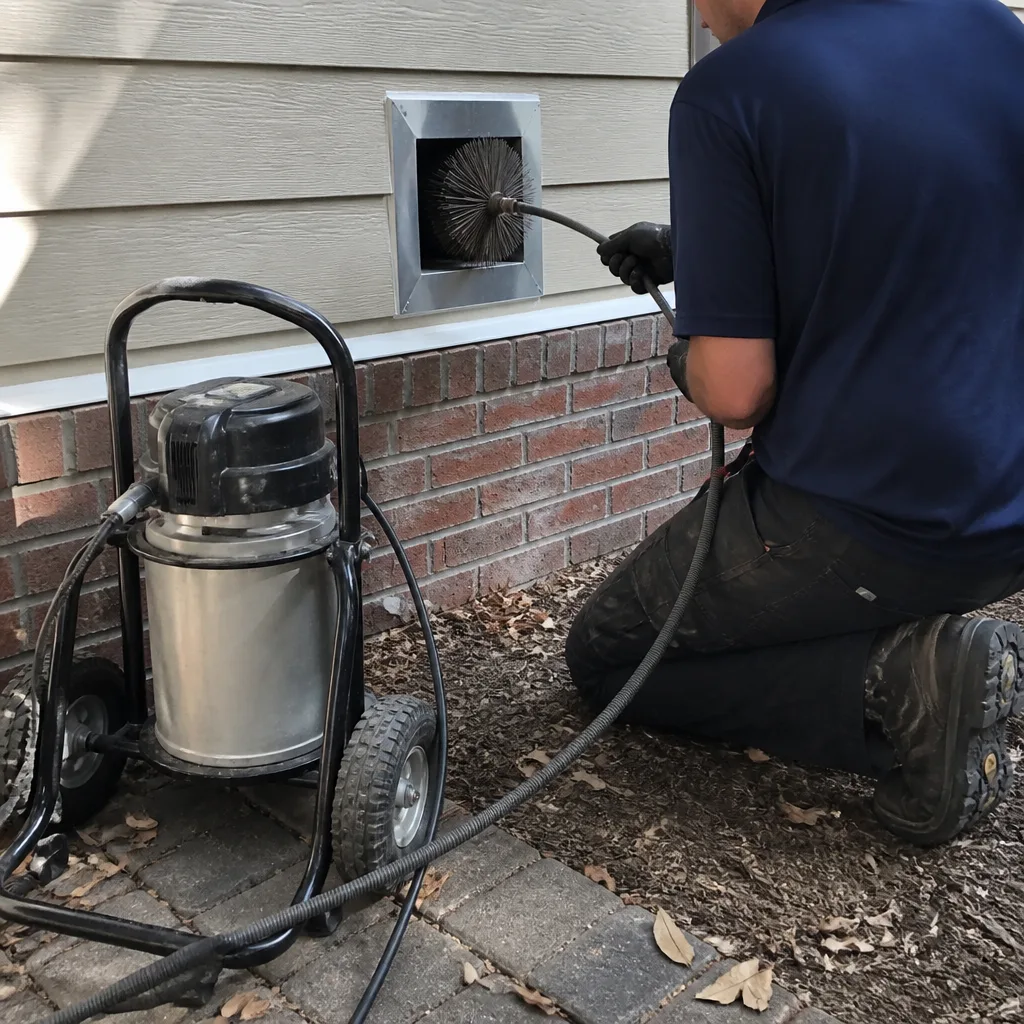 After
AfterDIY vs Professional Air Duct Cleaning: The Atlanta Homeowner’s Decision Guide
A homeowner in Buckhead with a $400 shop vac, a dryer vent brush kit, and three free hours can scrub every supply and return grille in their Atlanta home spotless - and still accomplish almost nothing inside the actual duct runs. The reason is physical, not motivational. Most Atlanta homes built after 1985 use corrugated flex duct that collapses around brush heads, and the suction pressure of a consumer vacuum runs 6-10 times lower than the threshold required to move dislodged debris toward any collection point. In this guide, we’ll map what DIY tools can genuinely reach against what Atlanta’s typical residential duct systems actually contain, so your decision to choose our Air Duct Cleaning services or go it alone is based on geometry and pressure differentials, not coupon prices.
Quick Answer
DIY air duct cleaning in Atlanta is genuinely effective for grilles, registers, and straight dryer vent runs under 15 feet, but cannot clean past the first 3 feet of flex duct, which comprises 70-80% of most metro Atlanta residential systems. Professional cleaning uses truck-mounted negative-pressure extraction at 5,000-7,000 CFM and 10-15 inches of water column suction, physically capable of dislodging debris that has compacted against flex-duct liner over years of Georgia pollen seasons.
Table of Contents
- What DIY Air Duct Cleaning Can Actually Accomplish
- Atlanta’s Three Common Duct Types: A Capability Map
- Three DIY Tasks That Are Genuinely Effective
- What Professional Equipment Does Differently
- The Atlanta-Specific Risk of DIY Duct Disturbance
- The Hybrid Approach: What to Do Between Professional Cleanings
- Cost Comparison: Real Numbers for the Atlanta Market
- Common Mistakes to Avoid
- When to Call a Professional
- Frequently Asked Questions
BeforeAfterWhat DIY Air Duct Cleaning Can Actually Accomplish
Let’s start with what consumer tools can do, because overstating DIY limitations is as misleading as overstating DIY capabilities. A homeowner with patience and the right attachments can achieve measurable improvements in three specific zones of their Atlanta home’s air distribution system.
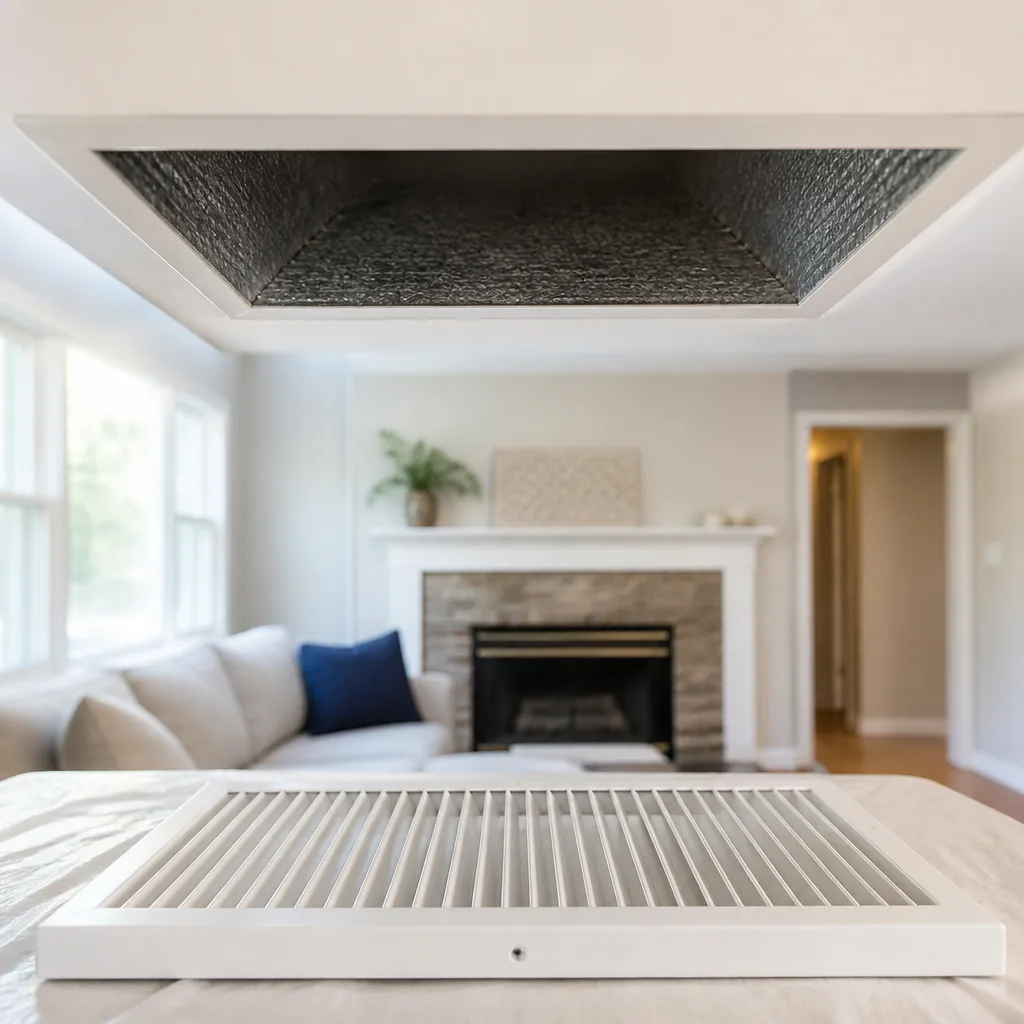
The first zone is the visible grille and register assembly. These are the metal or plastic covers at wall and floor openings, and the short boot - the transitional fitting between grille and duct - immediately behind them. Consumer vacuums with brush attachments can remove accumulated dust, pet hair, and the fine particulate that settles in these areas. In Atlanta’s pollen-heavy spring seasons, this alone can reduce the visible debris entering occupied rooms.
The second zone is the return air pathway at the filter rack. Most Atlanta homes have a centralized return, often in a hallway or stairwell, where the filter slides into a metal frame. A homeowner can vacuum the filter slot, wipe the surrounding frame, and ensure the filter is properly seated - a task that matters because gaps around the filter allow unfiltered air to bypass the media entirely.
The third zone is the exterior of the air handler cabinet in basement or attic installations. Wiping down the cabinet, ensuring the access panel is sealed, and clearing debris from the condensate drain pan (the collection reservoir for condensation from the cooling coil) are all within consumer capability and worth doing annually.
What DIY cannot do, in virtually every Atlanta home we’ve inspected since 2013, is clean past the first elbow or bend in the duct run. The physics are straightforward. Consumer vacuums generate approximately 50-100 inches of water column at the hose opening under ideal conditions, but this drops precipitously as hose length increases and as the hose encounters the corrugated interior of flex duct. Professional negative-pressure systems maintain 10-15 inches of water column at the duct opening through 8-inch diameter hoses running 25-50 feet from the truck, with airflow volumes of 5,000-7,000 CFM - roughly 10 times the volume of the most powerful consumer shop vac.
The consequence: DIY cleaning of duct interiors moves surface debris at best, and often simply redistributes it. We’ve photographed runs in Decatur and Sandy Springs where homeowners had clearly attempted brush cleaning - the flex-duct corrugations showed fresh abrasion marks, but debris remained packed in the valleys between ridges, now more deeply embedded from the brush pressure.
Atlanta’s Three Common Duct Types: A Capability Map
Atlanta’s housing stock determines what duct cleaning can achieve, and the metro area presents a distinct mix of system types that reward careful identification before any work begins.
Rigid Sheet-Metal Trunk Lines
Found primarily in homes built before 1985 and in high-end custom construction, these are the rectangular or round galvanized steel ducts that serve as main distribution pathways from the air handler. Their smooth interior surfaces are the most accessible to any cleaning method, DIY or professional. A homeowner with a long-handled brush and a vacuum with adequate hose length can genuinely clean accessible sections of trunk line, particularly in unfinished basements where the ductwork is exposed.
The limitation is access. In Atlanta’s older intown neighborhoods - Virginia-Highland, Inman Park, Grant Park - these trunk lines are often enclosed in soffits or chases with limited or no access panels. Without an opening every 10-12 feet, brush-based cleaning cannot reach the full length. Professional systems address this through sealed access ports cut by technicians and resealed after cleaning, a modification that requires sheet-metal work and proper sealing to prevent leakage.
Corrugated Flex Duct
The dominant duct type in Atlanta suburbs built from 1985-2015 - Alpharetta, Johns Creek, Cumming, McDonough, and similar - flex duct consists of a plastic inner liner wrapped around a wire coil, with fiberglass insulation and a vapor barrier outer jacket. The corrugated interior that makes the duct flexible also creates hundreds of small valleys where debris accumulates and where brush bristles cannot effectively reach.
More critically for DIY attempts, flex duct has a rated positive pressure of only 4-6 inches of water column before structural deformation occurs. Consumer brush systems, particularly rotary brushes driven by cordless drills, apply radial pressure that can collapse the duct interior against the wire coil. Once compressed, the liner often does not fully rebound, permanently reducing airflow capacity. We’ve replaced runs in Marietta and Roswell where aggressive DIY brush cleaning had compressed 8-inch flex to effective 5-inch diameter, with measurable airflow reduction at the register.
Fiberboard Duct
Less common but present in some 1970s-1980s Atlanta construction, particularly in townhome and condominium developments, fiberboard duct is essentially compressed fiberglass board formed into rectangular channels with a foil facing. The interior surface is porous and rough - excellent for acoustic dampening, catastrophic for debris release once contamination occurs.
DIY cleaning of fiberboard is inadvisable under any circumstance. The porous surface cannot be effectively cleaned without damaging the facing, and any moisture from improper technique can degrade the board structure. Professional cleaning of fiberboard requires specialized contact-vacuum methods at reduced pressure, with careful monitoring of board condition. In our experience, fiberboard duct past 30 years of age in Atlanta’s humidity often warrants replacement rather than cleaning, as the facing has degraded from thermal cycling.
Three DIY Tasks That Are Genuinely Effective
Based on the capability map above, here are three maintenance tasks where homeowner effort produces genuine, measurable benefit without system risk.
1. Grille and Register Deep Cleaning
Time required: 2-3 hours for a 2,500 square foot home
Tools: Vacuum with brush attachment, microfiber cloths, mild detergent, screwdriver for removal
- Remove each grille or register from the wall or floor. Most are held by 2-4 screws; some snap in with friction clips.
- Vacuum the back surface of the grille, paying attention to the angled louvers where dust accumulates in layers.
- Wipe with damp microfiber cloth; dry thoroughly before reinstallation.
- Vacuum the boot interior to arm’s length - typically 6-12 inches of accessible sheet metal before the first flex connection.
- Photograph the boot interior with your phone, date-stamped, for comparison at next professional service.
- Reinstall grilles with original fasteners; do not overtighten plastic components.
This task is particularly valuable in Atlanta’s spring pollen season, when outdoor particulate loads peak and interior dust accumulation accelerates. We’ve found that homes where owners perform quarterly grille cleaning show 15-20% less visible debris at professional service intervals. Check our more guides & resources for additional maintenance tips.
2. Straight Dryer Vent Runs Under 15 Feet
Time required: 45-90 minutes
Tools: Dryer vent brush kit ($15-$30), cordless drill, vacuum with crevice tool, foil tape (not duct tape)
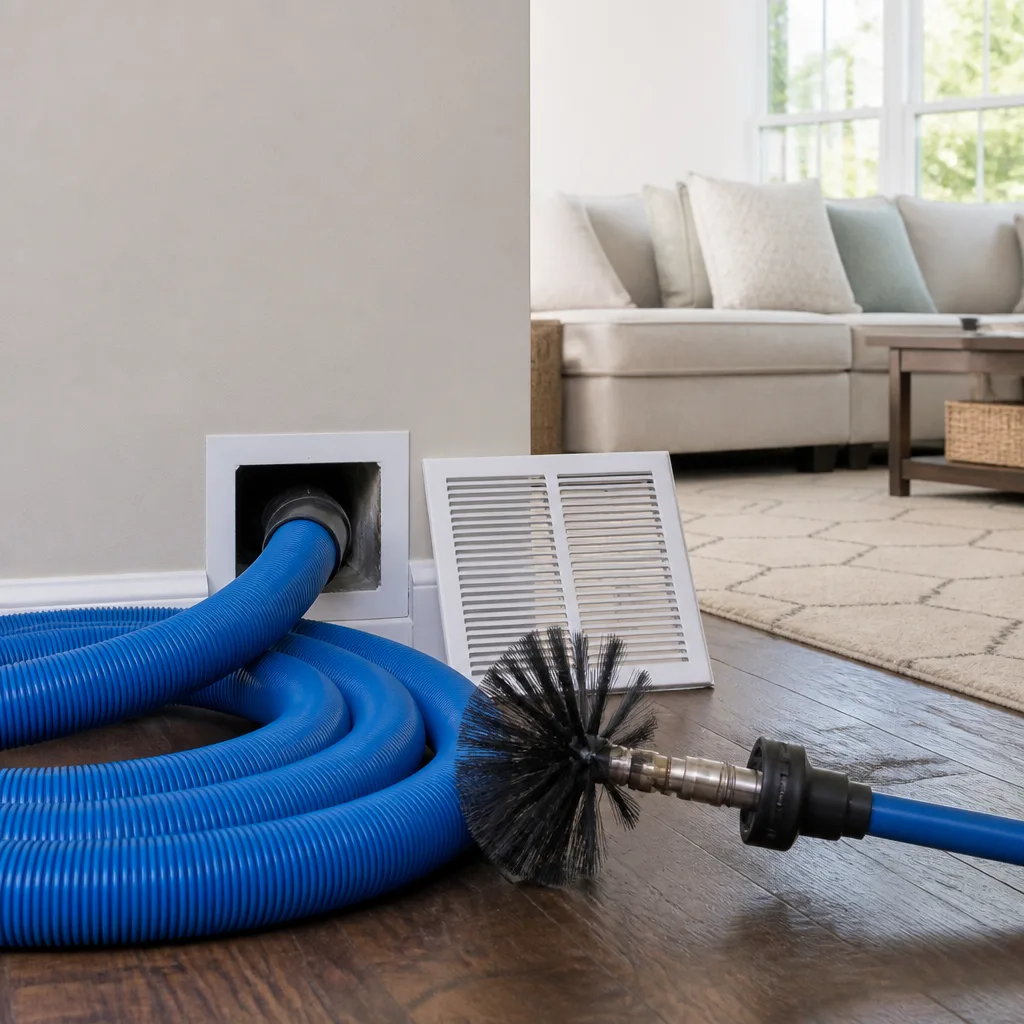
Dryer vent cleaning is a distinct specialty from HVAC duct cleaning, and it’s where DIY is most often appropriate. The key constraints are length and geometry. A straight or single-90-degree run under 15 feet, with exterior termination accessible for brush retrieval, can be effectively cleaned by a homeowner.
- Disconnect the dryer from the wall duct; move the unit carefully without stressing the gas line if applicable.
- Insert the brush from the interior end and advance to the exterior termination, rotating with drill attachment.
- Vacuum dislodged debris at both ends.
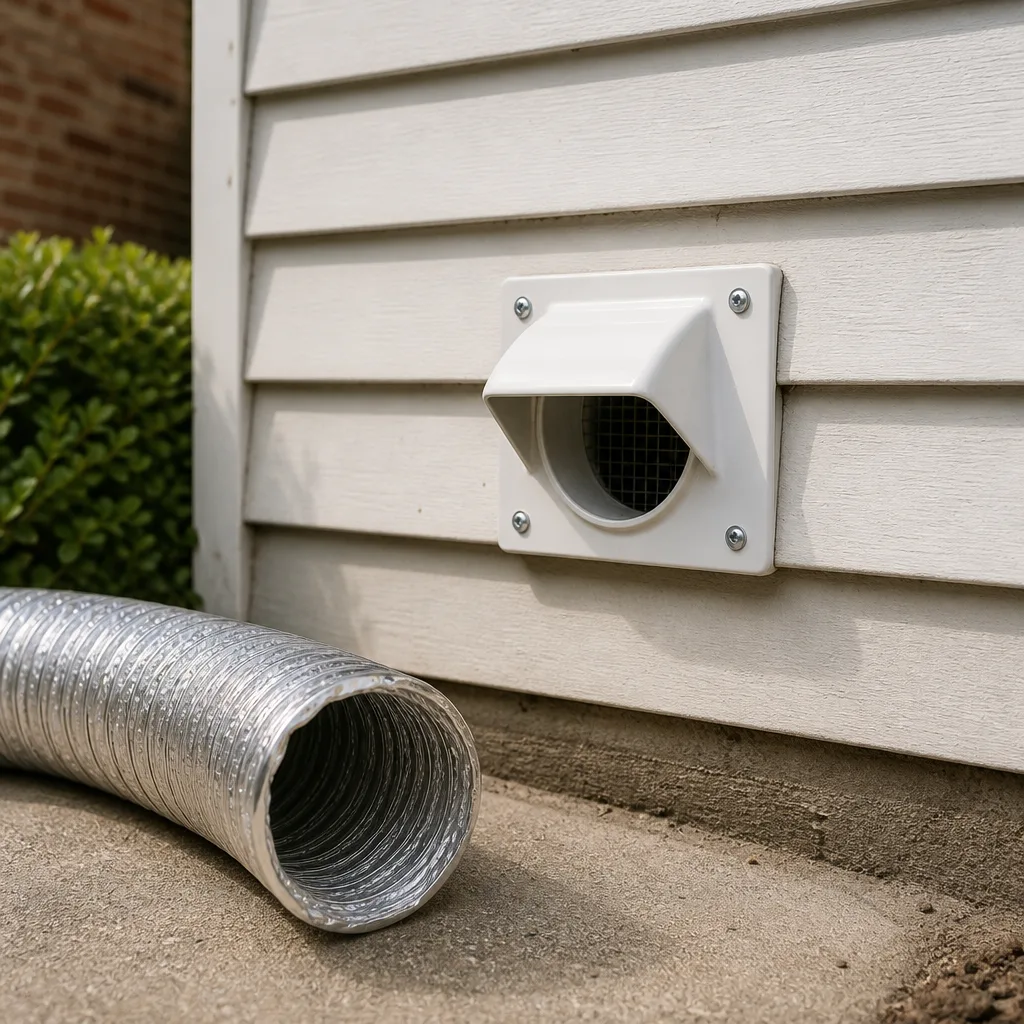
- Inspect the exterior termination for proper damper operation - the flapper should move freely and seal when closed.
- Reconnect with foil tape; do not use screws that protrude into the duct and catch lint.
The 15-foot limit matters because longer runs, or runs with multiple bends common in Atlanta’s larger homes, require camera inspection to verify complete cleaning. We’ve documented partial DIY cleanings in East Cobb where the brush reached a mid-run obstruction - often a sagging section where lint had compacted - and the homeowner assumed the job was complete. The lint remained, creating a fire hazard that professional dryer vent cleaning in Atlanta would have identified with borescope inspection.
3. Accessible Boot Insulation Replacement
Time required: 30-60 minutes per boot
Tools: Foil-faced duct insulation (R-6 minimum), foil tape, utility knife, gloves
The boot is the sheet-metal transition between grille and duct run, and in Atlanta’s unconditioned attics, the exterior insulation degrades over time from heat and moisture. A homeowner can replace degraded insulation on accessible boots, improving thermal efficiency and reducing condensation risk.
Do not attempt this on boots connected to flex duct without first photographing the connection. The flex-to-boot joint is secured with a draw band or clamp, and disturbing this connection without proper resealing technique can create a disconnected run. If the boot connection is not immediately visible and accessible, defer to professional service.
What Professional Equipment Does Differently
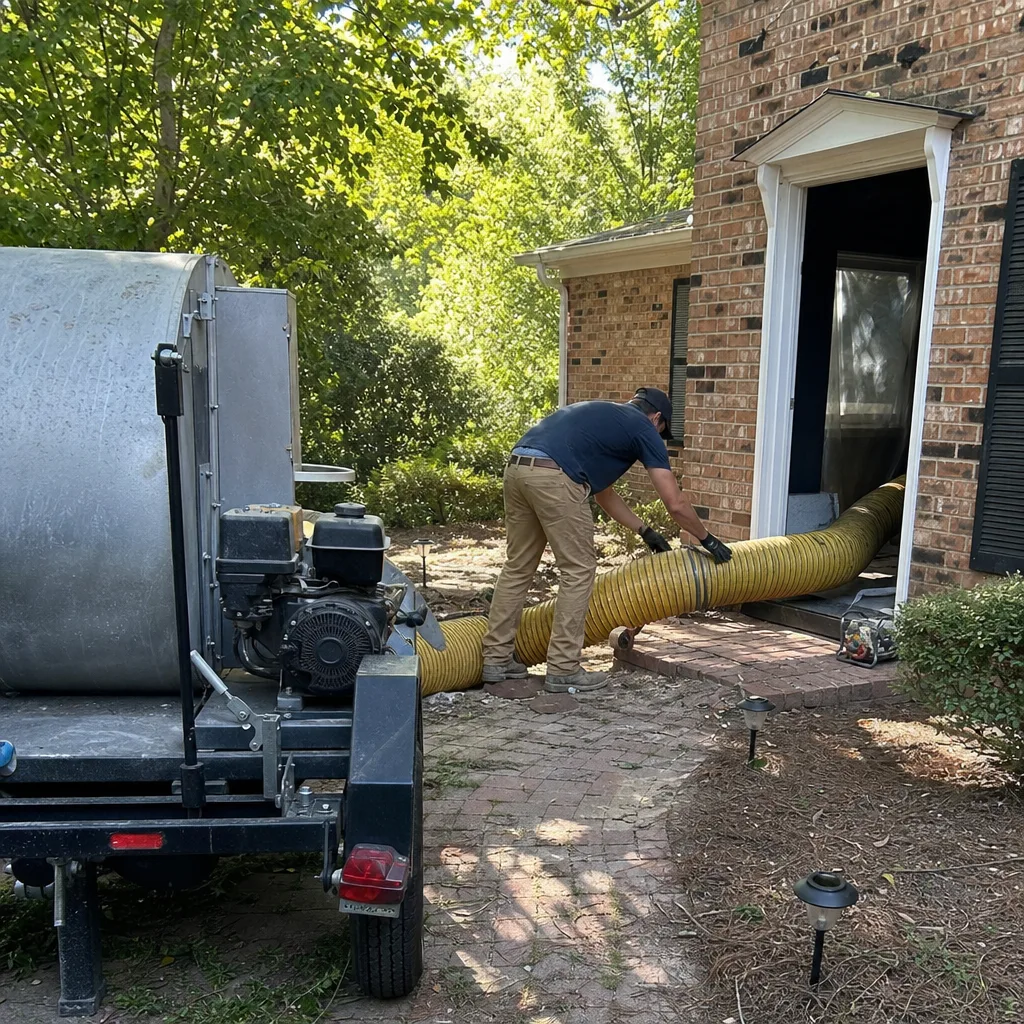
The distinction between DIY and professional duct cleaning is not merely scale - it’s a different physical process entirely. Understanding the measurable differences helps explain why certain outcomes are simply unavailable to consumer tools.
Negative-Pressure Extraction
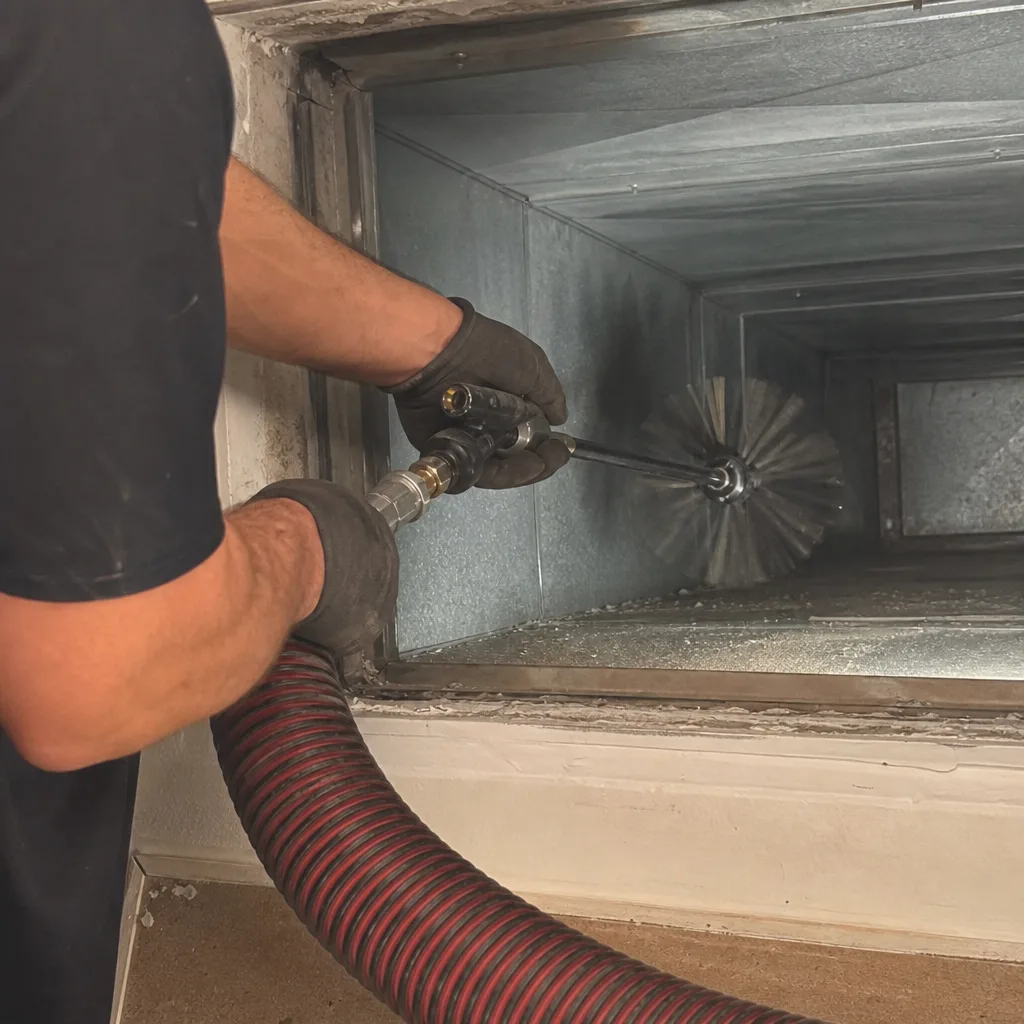
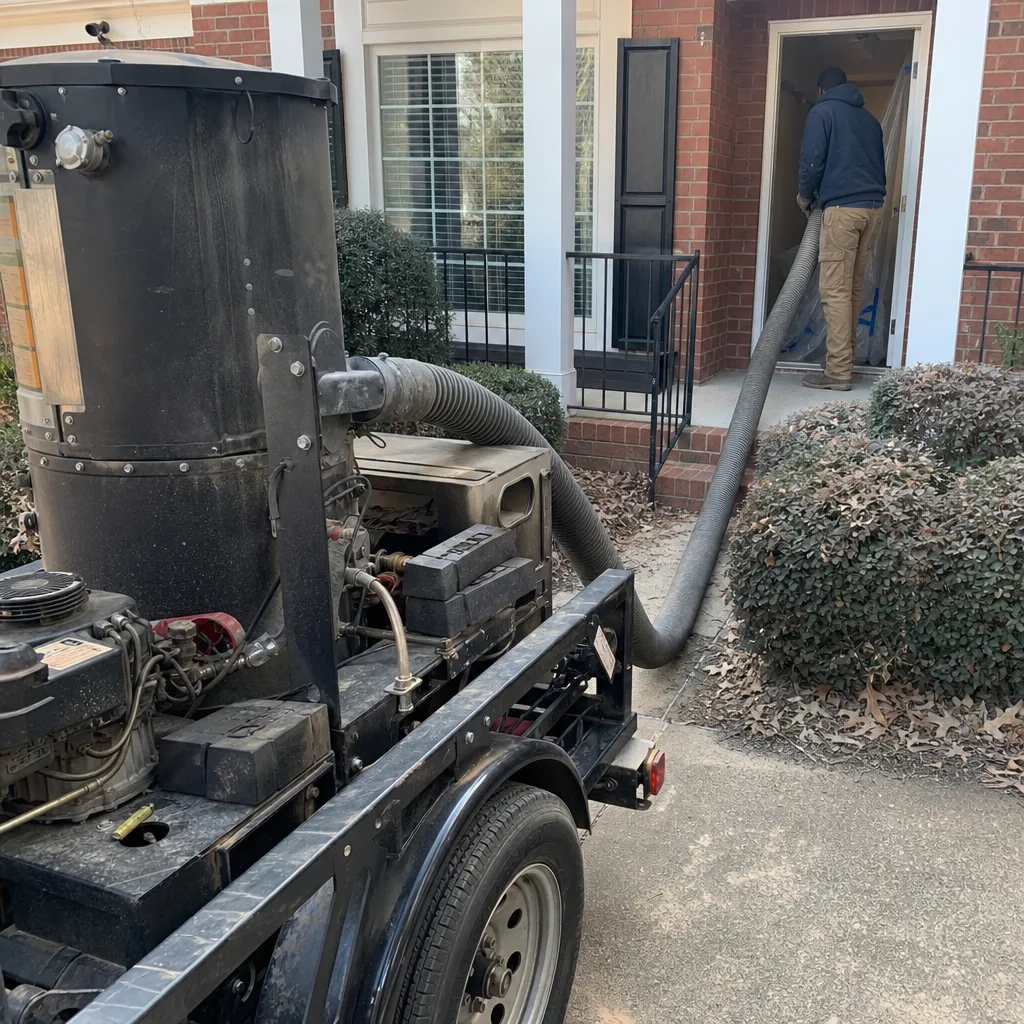
Professional truck-mounted systems, including the Rotobrush and Nikro units CleanRun deploys, create a controlled vacuum environment throughout the duct system. The process works as follows:
- System isolation: The duct network is sealed at all supply and return registers except one, creating a single extraction point.
- Agitation: A mechanical brush or air whip dislodges debris from duct interior surfaces. In flex duct, this requires brushes sized to the corrugation pattern - too large and the duct collapses; too small and the valleys are missed.
- Concurrent extraction: Dislodged debris is immediately drawn toward the collection point by sustained negative pressure, preventing redistribution.
- Filtration: Collected debris passes through HEPA filtration before exhaust, typically at 99.97% efficiency at 0.3 microns.
The critical numbers: professional systems maintain 5,000-7,000 CFM (cubic feet per minute) of airflow at the collection hose, with sustained negative pressure of 10-15 inches of water column throughout the cleaning cycle. Consumer vacuums peak at 100-200 CFM with no sustained negative-pressure capability across a sealed system.
Why CFM and Water Column Matter for Atlanta Homes
Atlanta’s climate produces specific debris profiles that reward high-extraction cleaning. The combination of long cooling seasons, high outdoor humidity, and dense spring pollen creates a sticky, layered accumulation in duct interiors. Surface dust becomes bound with condensate residue and biological growth in the flex-duct valleys. Dislodging this material requires mechanical agitation plus immediate extraction - the debris is too heavy for airflow alone, and too adhesive for brushing without concurrent vacuum.
We’ve photographed runs in Dunwoody and Peachtree Corners where the debris layer measured 3-8 millimeters at the flex-duct elbows, with a tar-like consistency from years of humidity cycling. No consumer tool generates the sustained airflow to transport this material once dislodged. The result of DIY attempt is typically surface disturbance without material removal - the worst outcome, as disturbed debris often becomes airborne in the home when the system restarts.
Documentation Equipment
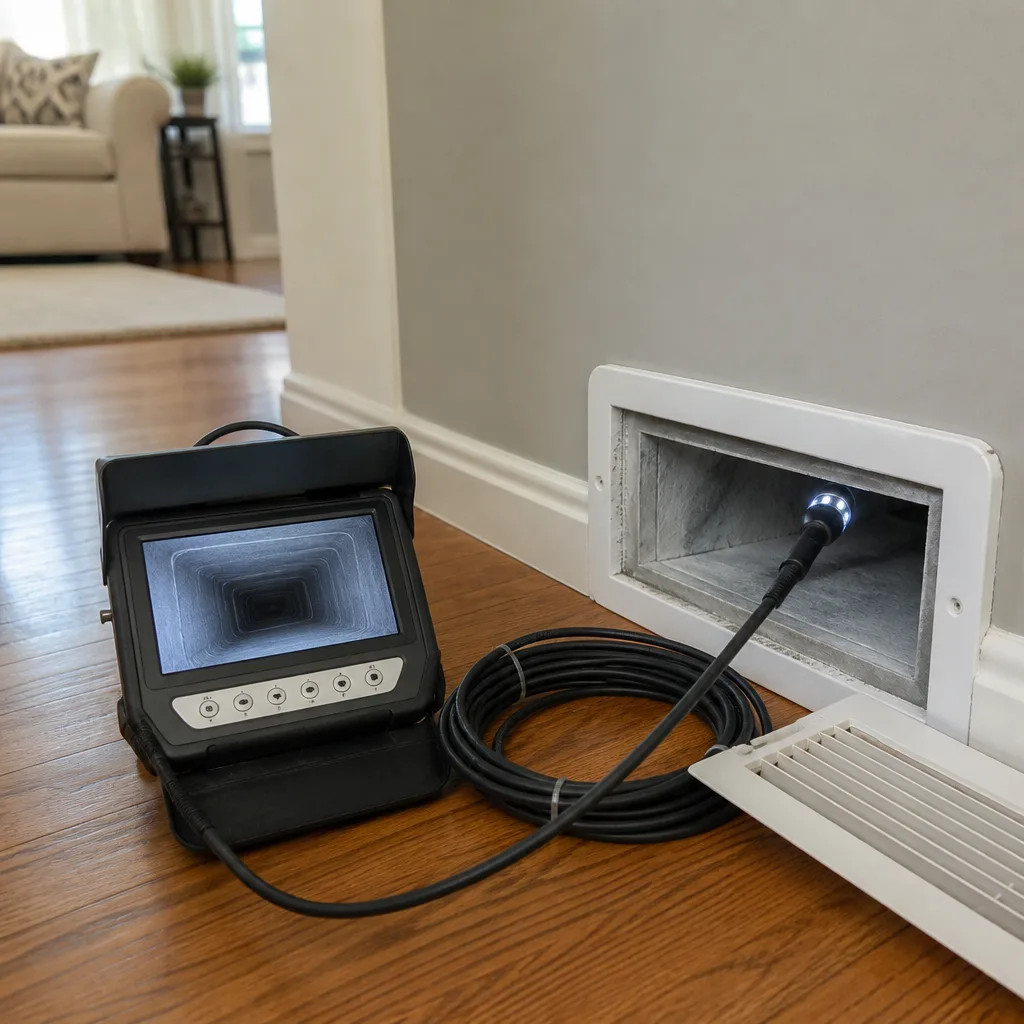
Professional service includes borescope inspection before and after cleaning - a camera on a flexible probe that documents the interior condition of every duct run. At CleanRun, this documentation is standard on every job, delivered to the customer as part of the photo record. A homeowner cannot verify DIY effectiveness without similar inspection equipment, which rents for $200-$400 daily - exceeding the cost of professional service for most homes. For help selecting qualified help, read our How to Hire a Air Duct Cleaning Contractor in Atlanta: A Step-by-Step Guide.
The Atlanta-Specific Risk of DIY Duct Disturbance
Atlanta’s construction practices and climate create specific hazards for DIY duct cleaning that are less prevalent in other markets. Understanding these risks helps homeowners evaluate whether attempted savings are worth potential remediation costs.
Flex-Duct Connection Failures
The dominant risk is dislodging flex-duct connections at boots and plenums (the central distribution box connected to the air handler). In Atlanta’s production housing - the subdivisions built rapidly from 1995-2010 in Gwinnett, Forsyth, and Henry counties - flex-duct connections were often secured with minimal draw-band tension and no mastic sealant. These connections meet code minimum but lack the mechanical robustness to withstand brush pressure or vacuum hose insertion.
We’ve documented this failure mode repeatedly. A homeowner in Lawrenceville inserted a brush into a second-floor return, encountered resistance at the first elbow, and applied additional pressure. The flex duct separated from the boot in the attic, creating a 12-inch gap that pulled conditioned air directly from the attic space - 140°F in summer, 30°F in winter. The homeowner’s next cooling bill increased 40% before the disconnection was discovered. The repair required attic access, boot replacement, and proper mastic sealing - a $400-$600 remediation that exceeded professional cleaning cost.
The specific vulnerability: flex-duct connections in Atlanta’s slab-on-grade homes with attic air handlers are under tension from the weight of the insulated duct hanging in the truss space. Any additional axial or radial pressure can overcome the draw-band clamp force.
Condensate Line Disruption
Atlanta’s cooling-dominant climate means most attic air handlers produce substantial condensate, collected in a primary drain pan and routed to exterior via PVC line. DIY work in the air handler cabinet or nearby ductwork risks dislodging this line, particularly in older installations where the PVC has become brittle. A disconnected condensate line in an Atlanta August can produce hundreds of dollars in ceiling damage before the first drip is visible below.
Mold Disturbance Without Containment
Atlanta’s humidity supports mold growth in duct systems with chronic moisture issues, typically at cooling-coil leaks or poorly insulated boots in unconditioned spaces. DIY disturbance of mold-contaminated ductwork without proper containment and negative-pressure isolation can release spores throughout the home. Professional mold remediation in ducts requires containment barriers, negative-air machines, and post-remediation verification - not equipment found in consumer garages.
The Hybrid Approach: What to Do Between Professional Cleanings
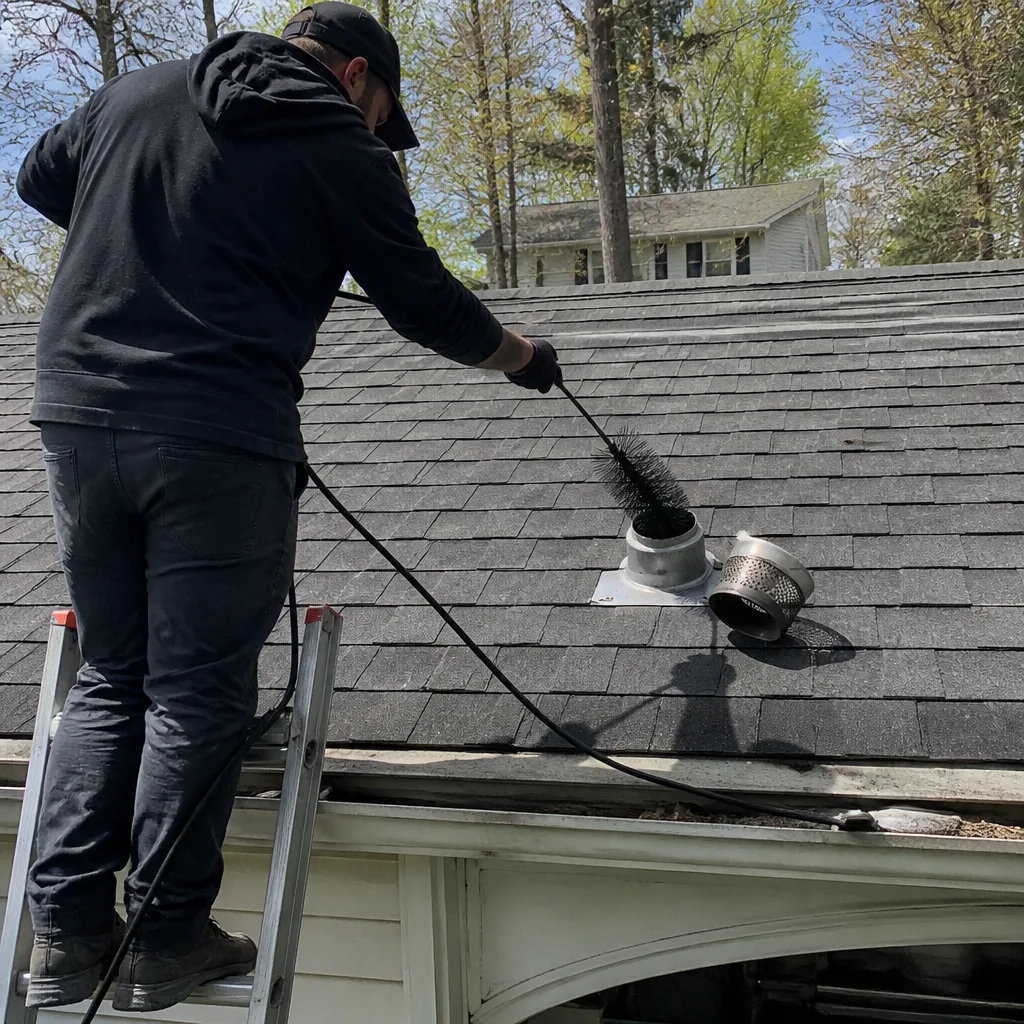
The most cost-effective maintenance strategy for most Atlanta homeowners combines professional deep cleaning at appropriate intervals with homeowner maintenance that extends cleanliness. For Seasonal Air Duct Cleaning Care for Atlanta: Year-Round Homeowner’s Guide, see our dedicated resource. Here’s a specific six-month task schedule based on what we’ve observed across 52,000+ Atlanta-area homes.
Months 1-2: Post-Professional Baseline
After professional service, photograph every register and boot interior with date stamps. Store these in a dedicated folder. These images become your comparison baseline.
Replace the HVAC filter with the highest MERV rating your system specification allows - typically MERV 8-11 for residential systems in Atlanta, where pollen filtration is relevant. Higher MERV without verifying fan capacity can reduce airflow and stress the blower motor.
Months 3-4: Grille and Register Maintenance
Perform the grille cleaning procedure described above. Compare boot interior photos to your baseline. If visible debris has accumulated beyond 2-3 millimeters at the boot entrance, this indicates either filter bypass or duct leakage - both warrant professional inspection.
Inspect the exterior dryer vent termination for lint accumulation and proper damper function. Clean if accessible.
Months 5-6: Pre-Professional Inspection
Photograph all boot interiors again. Note any registers with disproportionate debris - this pattern often indicates a disconnected or leaking duct run upstream. Note any musty odors when the system first cycles, which can indicate condensate drainage issues or biological growth.
Schedule professional service if: debris accumulation exceeds 5 millimeters at any boot; odors persist beyond the first 30 seconds of system operation; any register shows markedly reduced airflow compared to others; or it’s been 3-5 years since last professional cleaning.
This documented approach - photographing, comparing, scheduling based on evidence rather than calendar - aligns with how CleanRun’s CleanRun Air Duct Cleaning Atlanta home service operates. The photo record from your maintenance efforts, combined with our professional documentation, creates a complete system history that informs better maintenance decisions over time.
Cost Comparison: Real Numbers for the Atlanta Market
Honest pricing is central to the Haven Standard, so we publish what professional service costs rather than obscuring it behind “call for quote” language. Here’s what Atlanta homeowners actually spend, based on our service records and market observation.
DIY Cost Range
| Item | Cost |
|---|---|
| Shop vacuum with HEPA filter (adequate for grilles, not ducts) | $150-$400 |
| Dryer vent brush kit | $15-$35 |
| Register/grille cleaning supplies | $20-$40 |
| Borescope rental (for verification - one day) | $200-$400 |
| Total DIY investment (first year, with verification) | $385-$875 |
| Annual maintenance supplies (subsequent years) | $35-$75 |
Professional Air Duct Cleaning Cost in Atlanta
| Home Size / System Type | Typical Range |
|---|---|
| Condo or townhome (1-2 systems, limited duct runs) | $300-$450 |
| Single-family home, 1,500-2,500 sq ft, single system | $400-$600 |
| Single-family home, 2,500-4,000 sq ft, dual system | $550-$850 |
| Large home or complex layout, 4,000+ sq ft, multiple zones | $800-$1,200 |
These ranges reflect whole-system cleaning with documented photo record, not per-vent pricing. CleanRun’s Haven Standard Clause 1 requires written price before work starts - the quote you receive is the price you pay, with no per-vent add-ons or “surprise” contamination charges.
The critical comparison: DIY with verification (borescope rental) costs nearly as much as professional service for smaller homes, while achieving substantially less inside the duct runs. For larger homes with complex duct geometry, professional service is often less expensive than the equipment rental required for equivalent verification.
Common Mistakes to Avoid
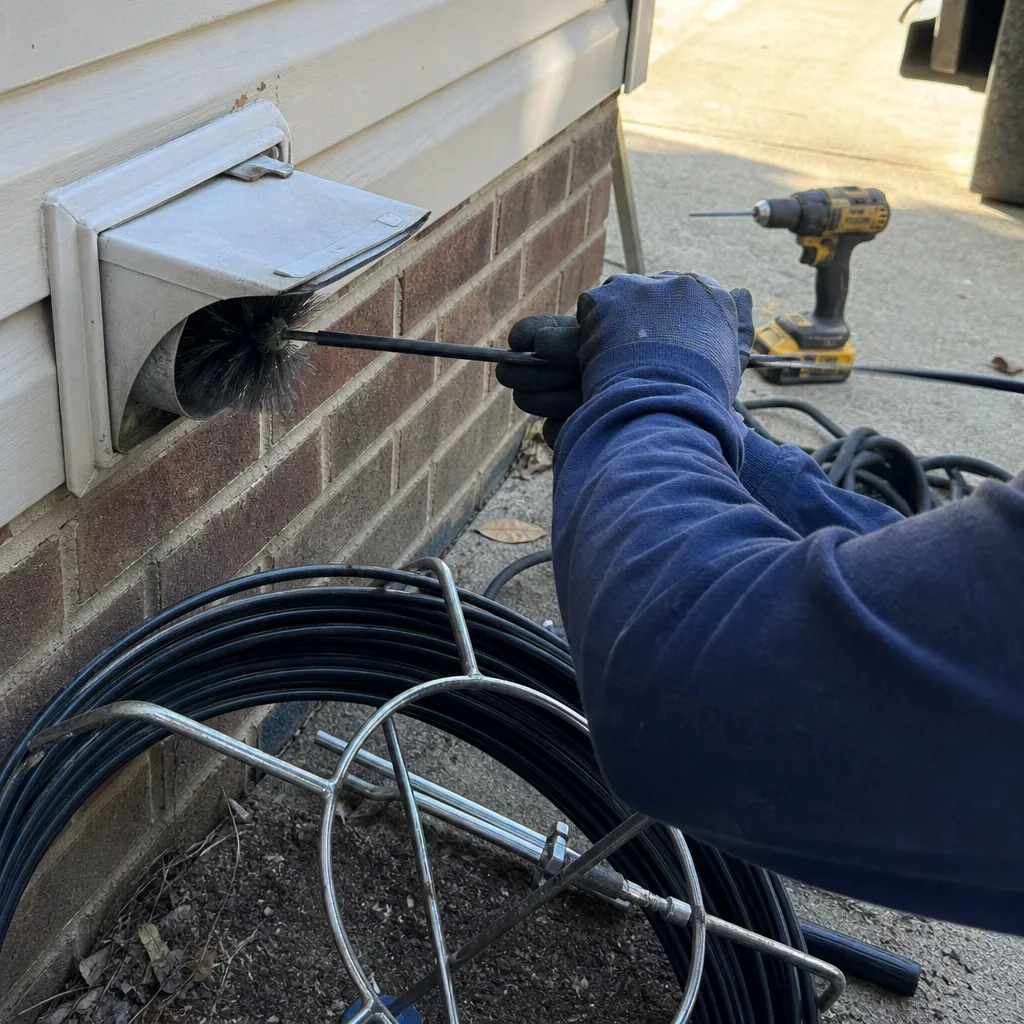
- Using a standard vacuum brush in flex duct. The radial pressure collapses the corrugated liner against the wire coil, permanently reducing airflow capacity. We’ve replaced runs in Smyrna and Tucker where this damage required full duct replacement.
- Applying water or cleaning solutions to duct interiors. Atlanta’s humidity means any moisture introduced into the duct system dries slowly, creating mold growth conditions. Professional sanitizing, when appropriate, uses controlled-application products with specific dwell times and ventilation requirements.
- Cleaning without verifying filter fit. A filter that gaps at the frame edges allows unfiltered air to bypass - rendering grille cleaning pointless within days. The filter should require gentle pressure to insert and should not rattle when the system cycles.
- Ignoring the return air pathway. Homeowners often clean supply registers (where conditioned air exits) while neglecting returns (where air is drawn back to the air handler). Returns typically accumulate more debris because they lack the velocity of supply air to keep particles suspended.
- Attempting duct cleaning during peak cooling season. In Atlanta’s July-August heat, attic work is hazardous and system downtime creates immediate discomfort. Schedule professional service in spring or fall; perform homeowner maintenance in mild weather.
- Trusting “clean” appearance at the register. The first 6-12 inches of boot behind a grille often appears clean because supply air velocity prevents deposition. Debris accumulates at elbows and in horizontal runs where velocity drops - areas invisible without borescope inspection.
- Using duct tape for any duct connection. The adhesive fails rapidly in Atlanta’s temperature and humidity cycling. Foil tape or mastic are the only appropriate sealing materials; duct tape is a temporary label, not a duct sealant.
When to Call a Professional
Call for professional service when: any duct run is flex duct and past its first 3 feet; you cannot verify cleaning effectiveness with borescope inspection; the system shows musty odors, visible mold, or disproportionate airflow at registers; it’s been 3-5 years since last professional service; or you’re preparing a home for sale and want documented system condition.
CleanRun Air Duct Cleaning Atlanta offers free estimates throughout the metro area - call (470) 495-9370 to schedule. Every estimate includes written price before work starts, per Haven Standard Clause 1, and every completed job includes the Documented Photo Record of every duct run. We also provide a Free Second Opinion on any competitor’s written estimate, placing our number beside theirs so you can compare scope, equipment, and documentation directly.
Frequently Asked Questions
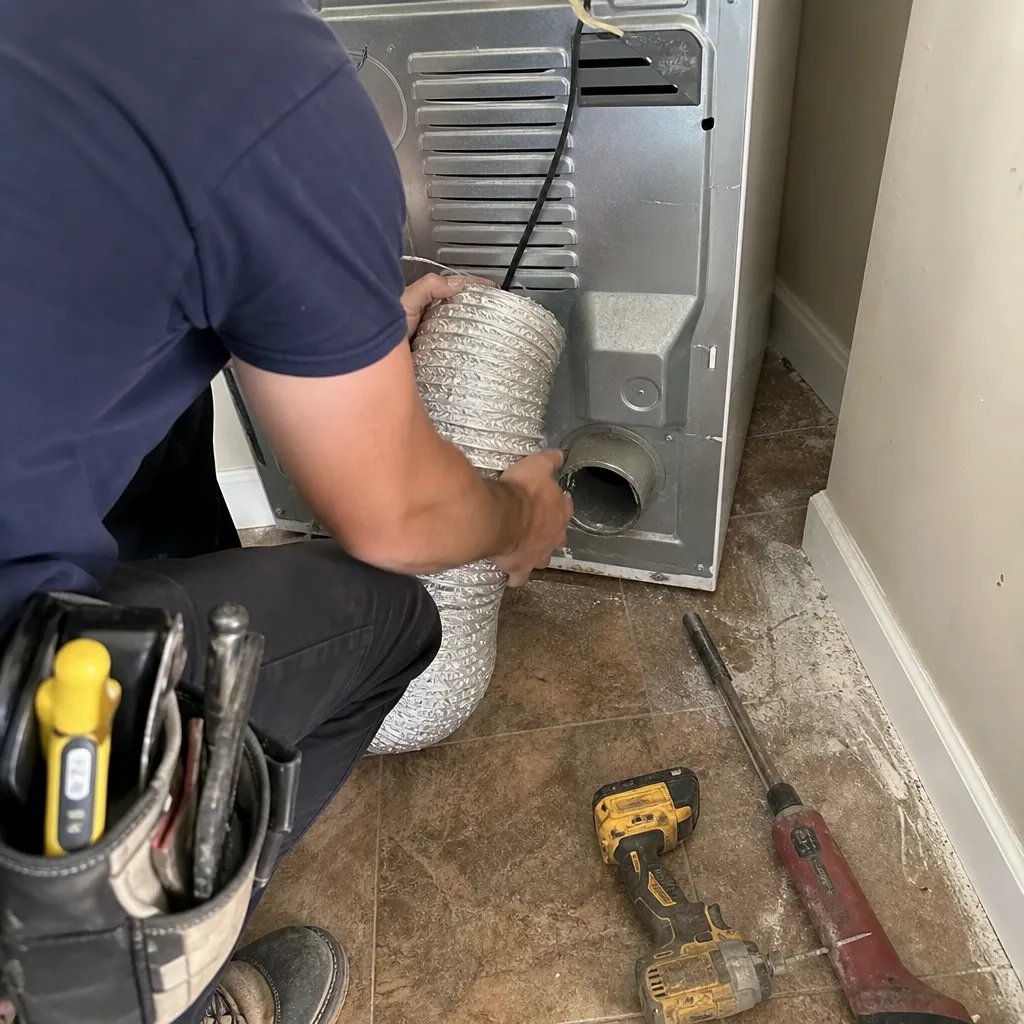
Professional air duct cleaning in Atlanta typically ranges from $400-$600 for a single-family home between 1,500-2,500 square feet, and $550-$850 for larger homes up to 4,000 square feet with dual systems. Condos and townhomes with limited duct runs generally fall in the $300-$450 range. These are whole-system prices with documented photo records, not per-vent teaser rates. Call (470) 495-9370 for a written estimate specific to your home - estimates are free and include no obligation.
The $79-$149 coupon prices common in Atlanta market advertising typically cover only a visual inspection and surface vacuuming of accessible registers, not full-system cleaning. The low initial price is designed to enable upselling once the technician is in the home - often to $500-$800 or more for “discovered” contamination. CleanRun’s Haven Standard Clause 1 prohibits this practice: the written price delivered before work starts is the complete price for the agreed scope, with no per-vent add-ons or post-arrival revisions.
Request before-and-after documentation of every duct run, not just a verbal report or a single representative photo. CleanRun’s standard deliverable includes the Documented Photo Record - interior images of every supply and return run, dated and labeled, showing the condition before agitation and after extraction. If a company cannot or will not provide this, the cleaning cannot be verified. We established this practice in 2013 and have maintained it across 52,000+ jobs.
For most Atlanta homes with proper filtration and no specific contamination events, professional cleaning every 3-5 years is adequate. Homes with multiple pets, recent renovation, or occupants with respiratory sensitivities may benefit from 2-3 year intervals. Atlanta’s pollen density and cooling-dominant climate create faster accumulation than drier, heating-dominant markets, so the 5-year maximum is more relevant here than in northern climates. The hybrid maintenance approach described above can extend these intervals by reducing debris loading between professional services.
A shop vac can effectively clean grilles, registers, and the first 6-12 inches of accessible boot interior, but cannot clean past the first elbow in flex duct or generate sufficient airflow to extract dislodged debris from full duct runs. The suction pressure of consumer vacuums is 6-10 times lower than professional negative-pressure systems. For the three genuinely effective DIY tasks - grille cleaning, straight dryer vent runs, and accessible boot insulation - a shop vac is appropriate. For duct interior cleaning, it is not.
Professional service should use truck-mounted or portable negative-pressure extraction systems from recognized manufacturers, with HEPA filtration and mechanical agitation tools sized to duct type. CleanRun’s equipment roster includes Rotobrush and Nikro for agitation and extraction, Abatement Technologies for containment and air scrubbing, and Honeywell and Aprilaire for filtration and indoor air quality components. Technicians should be able to name their equipment and explain its function - vague references to “commercial-grade tools” without specifics are a warning sign.
The Bottom Line
The DIY versus professional question for Atlanta homeowners resolves to a matter of physical access and verification, not cost or willingness. Consumer tools can maintain the visible, accessible portions of your air distribution system - grilles, boots to arm’s length, and straight dryer vents - and should be used for this purpose on a regular schedule. They cannot clean the interior of flex-duct runs that comprise most Atlanta residential systems, cannot verify their own effectiveness without expensive rental equipment, and carry meaningful risk of connection damage that creates larger problems.
Professional service fills the gap with measurable capability: sustained negative pressure, mechanical agitation matched to duct type, and documentation that proves what was accomplished. The most effective approach is hybrid - homeowner maintenance that extends cleanliness, plus professional service at intervals based on documented condition rather than calendar assumption.
For Atlanta homeowners evaluating their options, CleanRun provides free written estimates with no call-for-quote requirement. Every estimate includes scope, equipment, and price in writing before any work begins.
Written by Tomas Reyes, Owner at CleanRun Air Duct Cleaning Atlanta, serving Atlanta since 2013.