
Last updated September 23, 2026
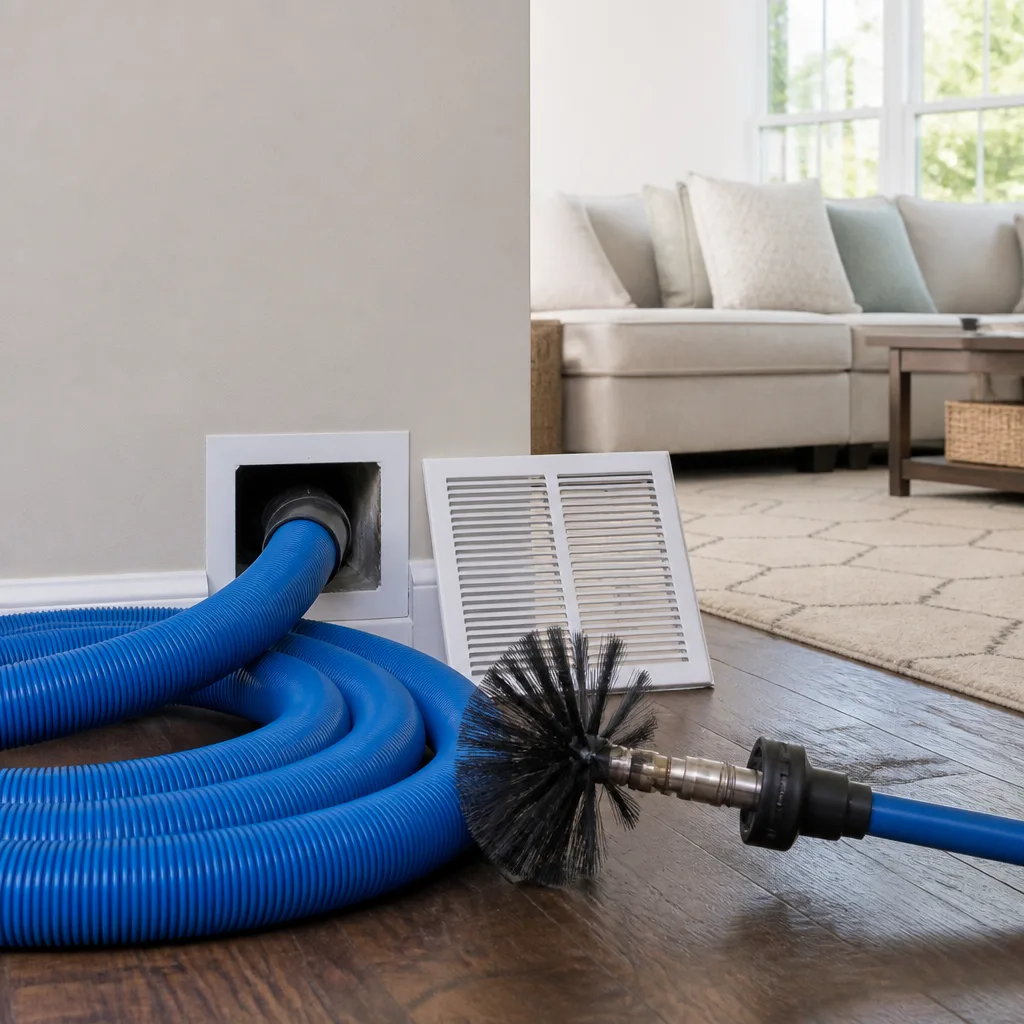
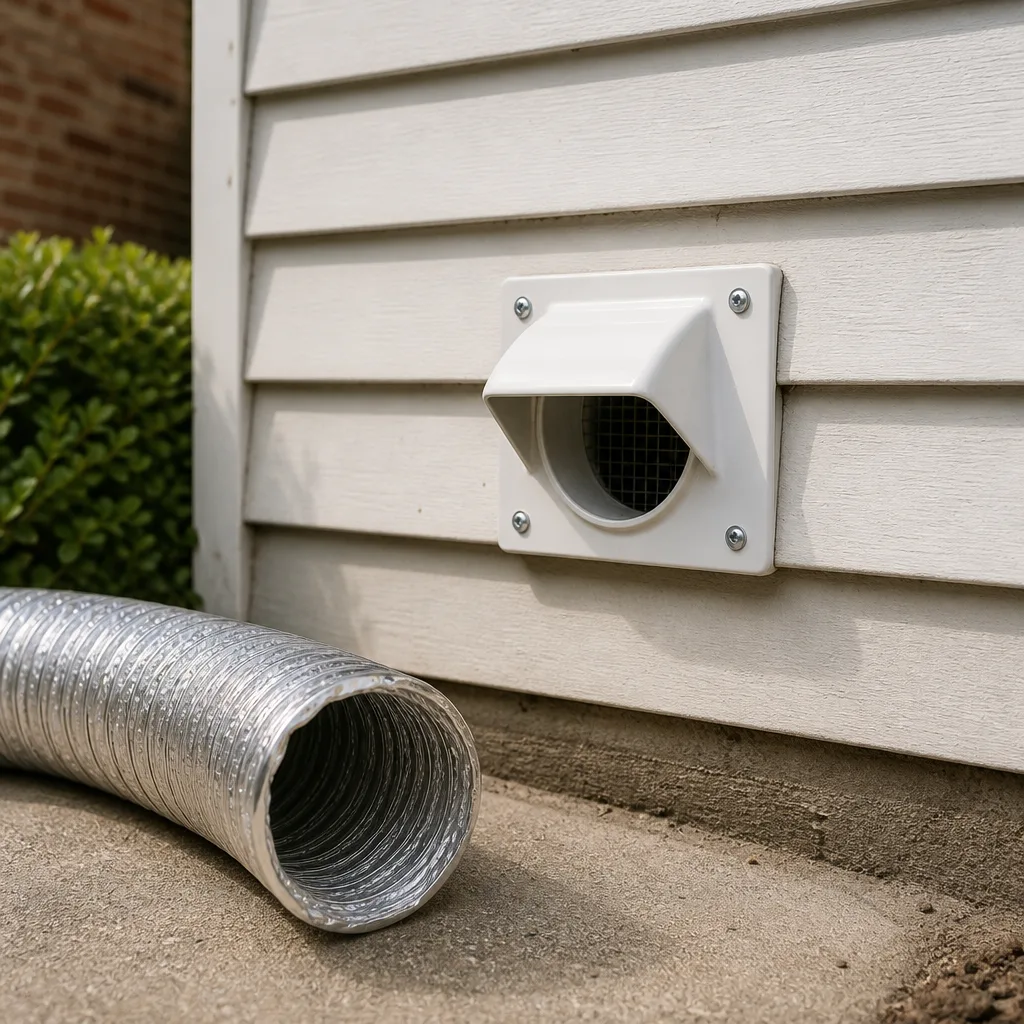
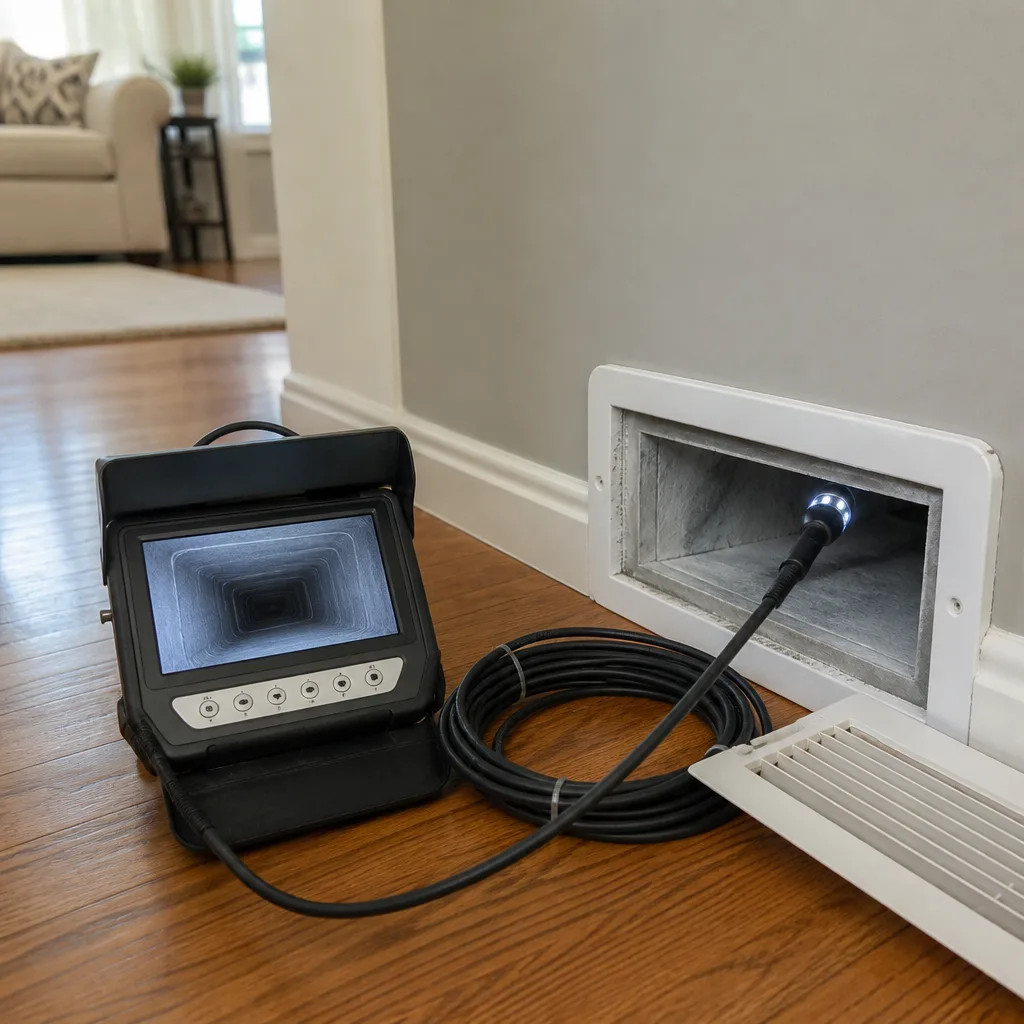
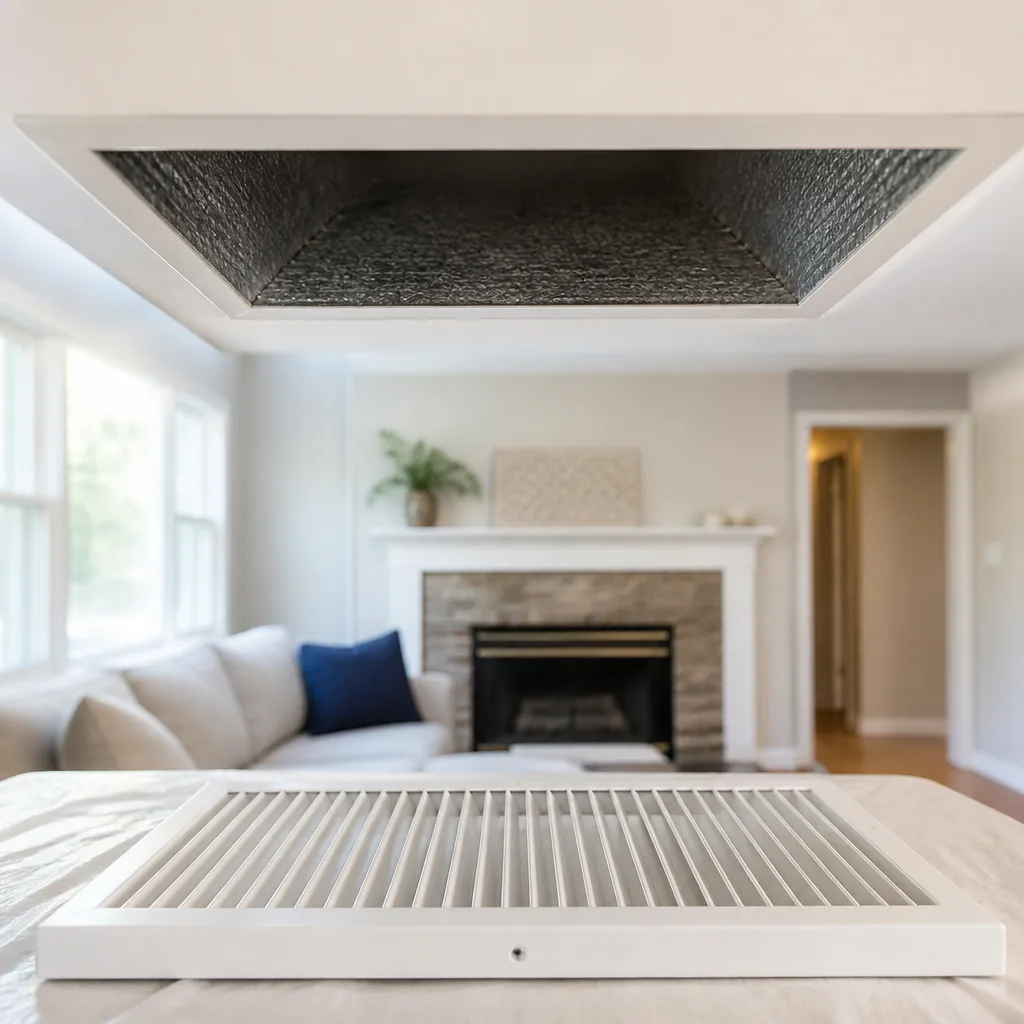
Whole-system duct and dryer vent check with before-and-after photos - you see exactly what came out of your vents
That "$99 whole-house special" is a bait ad - the real number appears once they are in your hallway, or the "clean" is a shop-vac at the register. We photograph the inside of your ducts before and after instead.
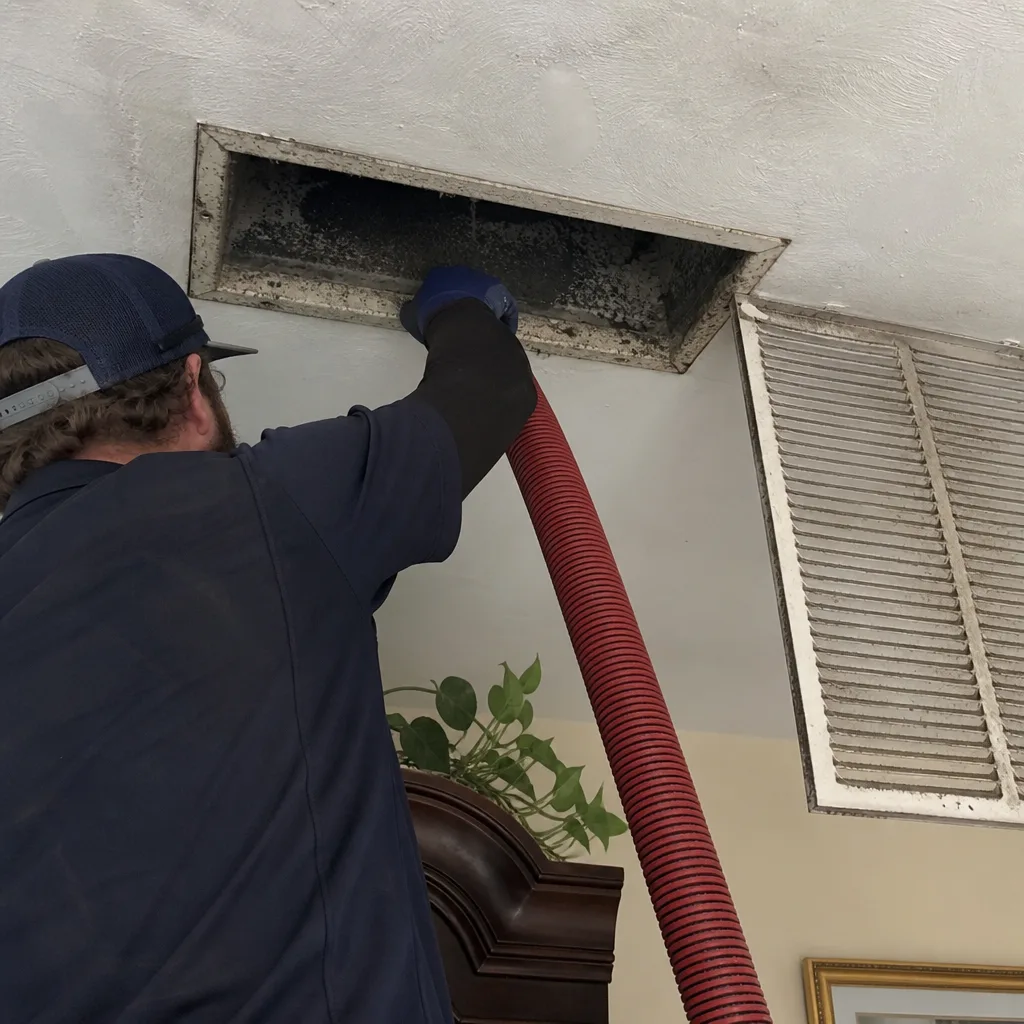 Before
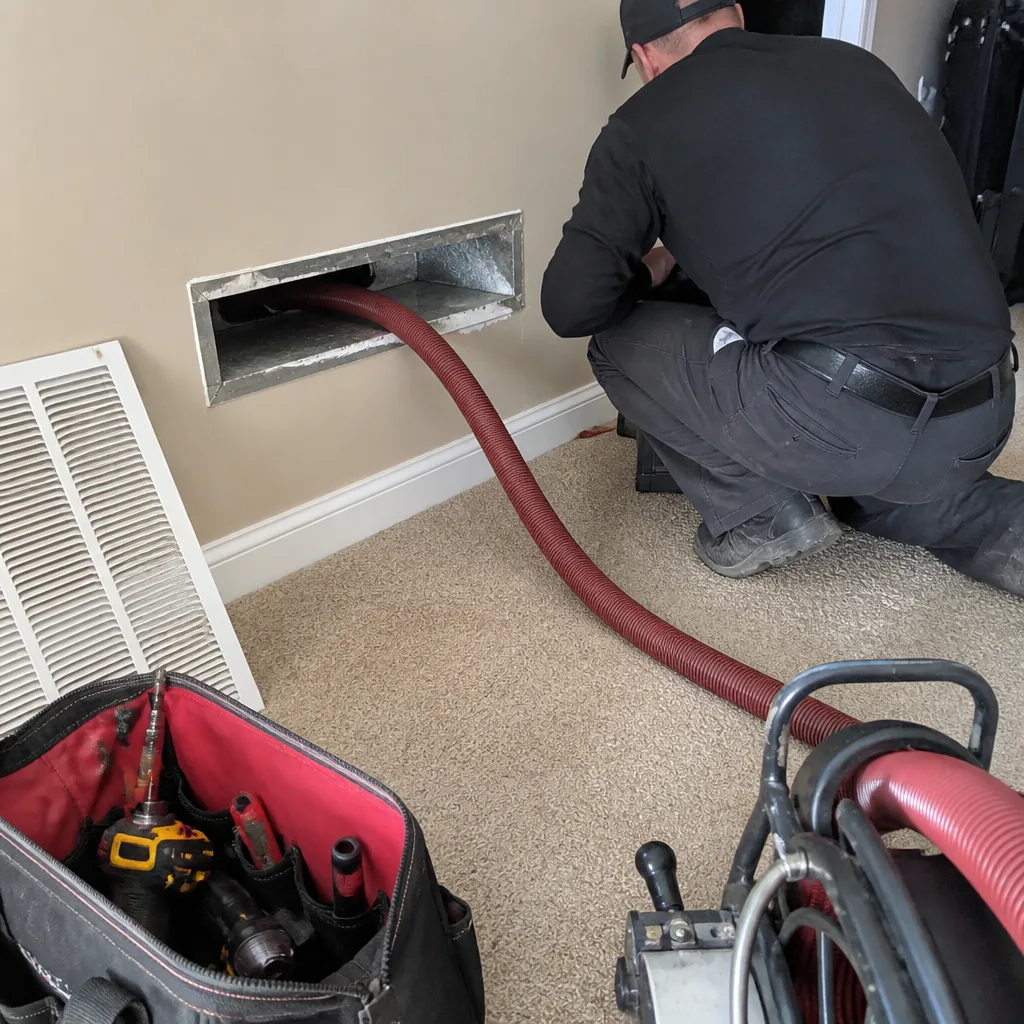 After
After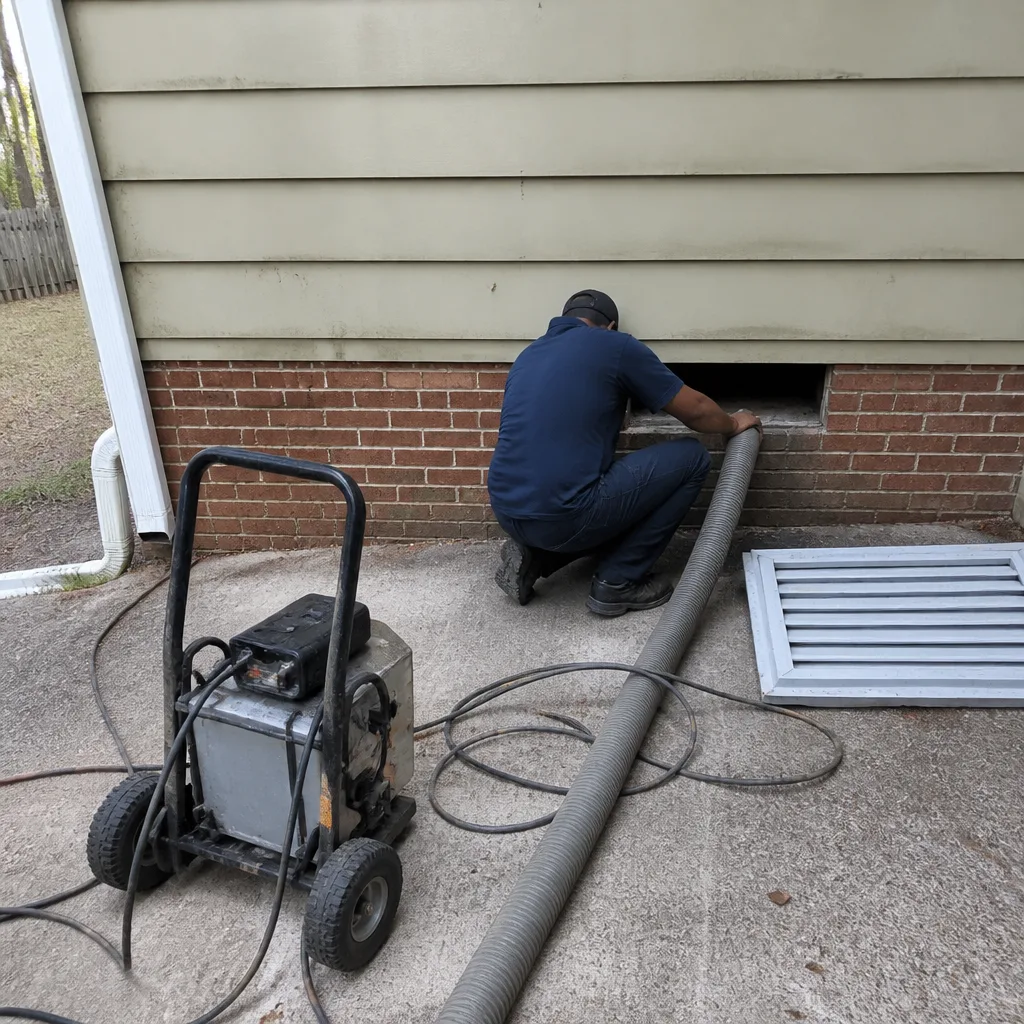 Before
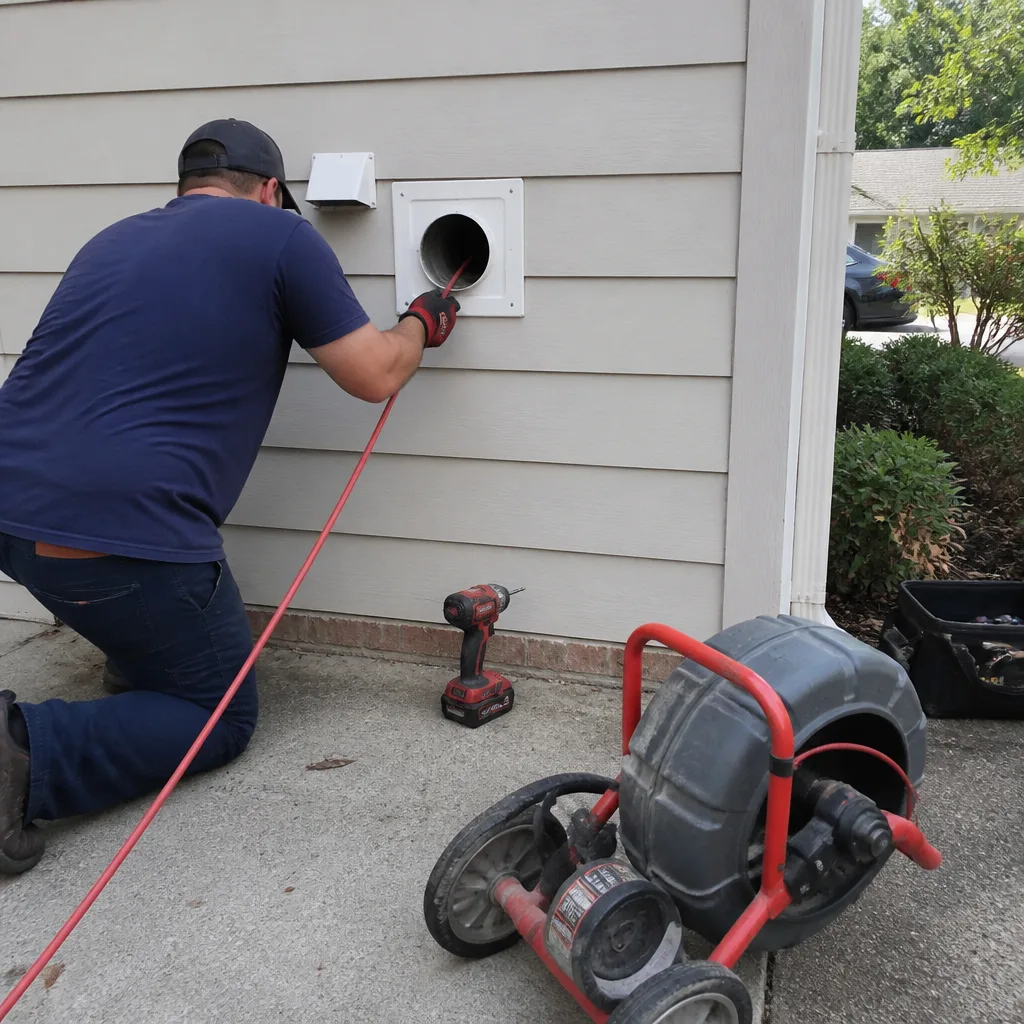 After
After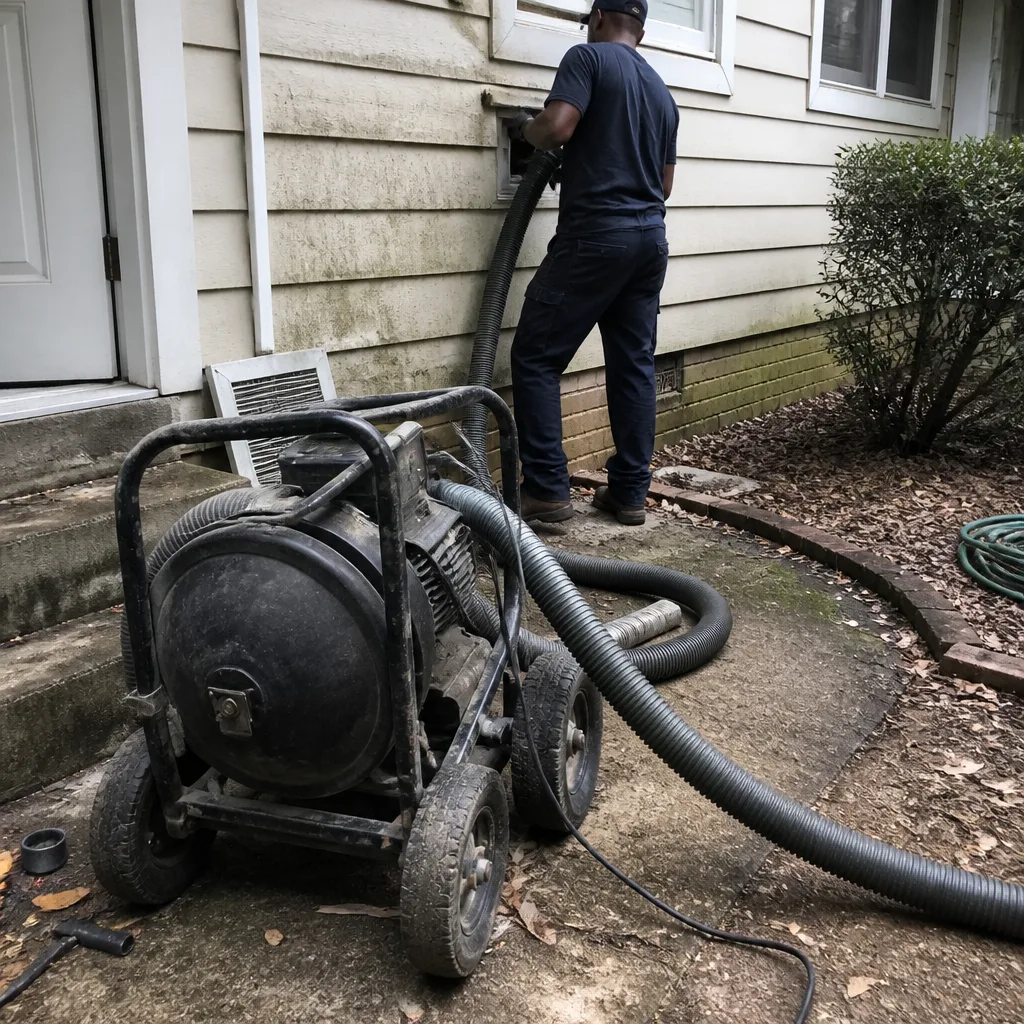 Before
 After
AfterHow to Hire a Air Duct Cleaning Contractor in Atlanta: A Step-by-Step Guide
Atlanta’s air duct cleaning market has more unverifiable $79 coupon operators per capita than almost any Southern metro, and the standard hiring advice fails to screen out the ones doing real damage. Asking a contractor “are you NADCA certified?” is less useful than asking them to show you the last three before-and-after photo sets from jobs in your ZIP code - because certification is a credential, and photographs are evidence. In this Air Duct Cleaning guide, you’ll learn a vetting sequence built around documented deliverables, not credentials that are easy to fake, so you can hire with confidence in Atlanta’s crowded market.
Quick Answer
To hire a legitimate air duct cleaning contractor in Atlanta, request a written price for your specific system before booking, ask to see dated before-and-after photos from recent local jobs, and confirm the equipment make, model, and rated CFM. Never agree to “we’ll assess on-site” pricing, and insist on a written scope that lists every vent, the air handler, and any conditions that trigger extra charges.
Table of Contents
- Why Atlanta’s Duct Cleaning Market Is Different
- The Five Questions to Ask Before Booking
- How to Verify Equipment Claims Before They Arrive
- What a Written Scope of Work Must Include
- Atlanta-Specific Red Flags to Watch For
- How to Structure a Callback If Work Is Unsatisfactory
- Common Mistakes to Avoid
- When to Call a Professional
- Frequently Asked Questions
- The Bottom Line
BeforeAfterWhy Atlanta’s Duct Cleaning Market Is Different
Atlanta’s combination of rapid new construction, high turnover in the housing market, and a climate that runs HVAC systems hard for nine months a year creates perfect conditions for low-grade duct cleaning operators. The metro added roughly 800,000 residents between 2010 and 2020, and many of those homes were built with flex duct systems that are especially vulnerable to aggressive or improper cleaning methods. When a contractor damages flex duct in a crawl space or attic, the homeowner often does not discover it until energy bills spike or a room stops conditioning properly.
The $79 coupon model thrives here because Atlanta’s suburban sprawl makes it easy to operate without a fixed local reputation. A company based in one county can run Google Ads targeting another, dispatch uninsured subcontractors, and simply rotate phone numbers when complaints accumulate. The Air Duct Cleaning in Atlanta market is particularly saturated in corridors like I-85 northeast through Gwinnett, I-75 northwest through Cobb, and the I-20 east zone through Rockdale and Newton counties.
Atlanta’s climate also means ducts here accumulate biological growth risks that northern markets simply do not face. Our summer dew points regularly hit 70°F, and attic temperatures in July and August can exceed 140°F. When a cooling system shuts off, residual moisture in the ductwork creates conditions for microbial growth that a superficial vacuum pass will not address. A legitimate Atlanta contractor should be able to explain how their process handles this specific regional challenge, not just recite a generic cleaning script.
The standard credential-checking advice - verify insurance, check reviews, look for NADCA certification - is not wrong, but it is incomplete. Insurance can lapse between the certificate date and your job date. Reviews can be purchased in bulk. NADCA membership is a paid subscription, not a government license. What cannot be easily fabricated is a dated, geotagged photograph from inside a duct run in your neighborhood, with a matching after photo showing the same register and the same duct geometry.
The Five Questions to Ask Before Booking
These five questions are designed to surface whether a contractor operates on documented evidence or on verbal promises. The answers you receive, and the contractor’s comfort level in providing them, will tell you most of what you need to know.
Question 1: What is your written price for a system with X supply vents and Y return vents?
A legitimate contractor can answer this without visiting your home. The variables are countable: number of supply vents (the ones that blow conditioned air into rooms), number of return vents (the ones that pull air back to the air handler), whether the system includes a main trunk line, and whether the air handler and evaporator coil are included in scope. If a contractor says “we need to see it first,” that is a pricing strategy, not a technical necessity. The only legitimate reason for a site visit before pricing is if your system includes unusual components - a zoned damper system, for example, or ductwork in a finished basement with limited access.
At CleanRun Air Duct Cleaning Atlanta, we deliver a written price before any work starts on every job, under Haven Standard Clause 1. The price is based on a vent count you provide, and it does not change unless you add scope after seeing the written breakdown.
Question 2: Do you photograph inside each duct run before and after?
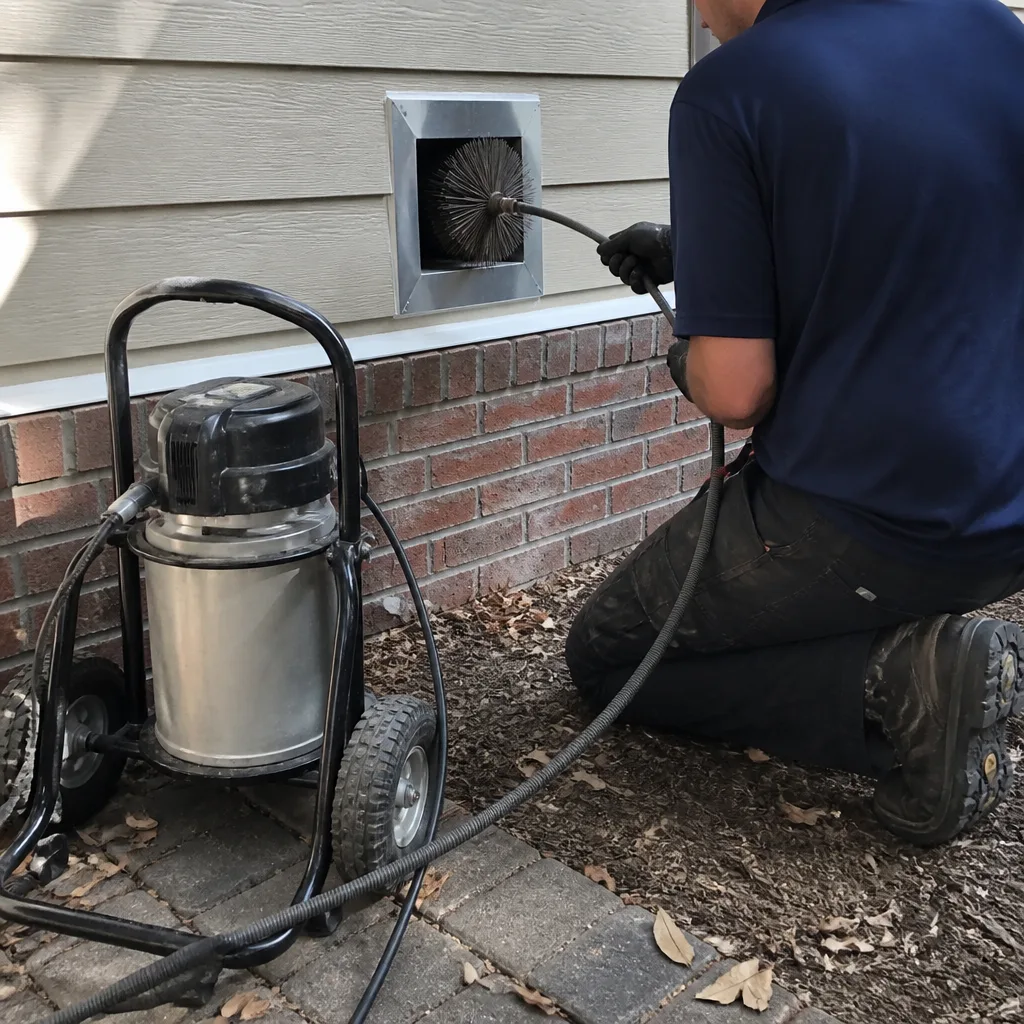
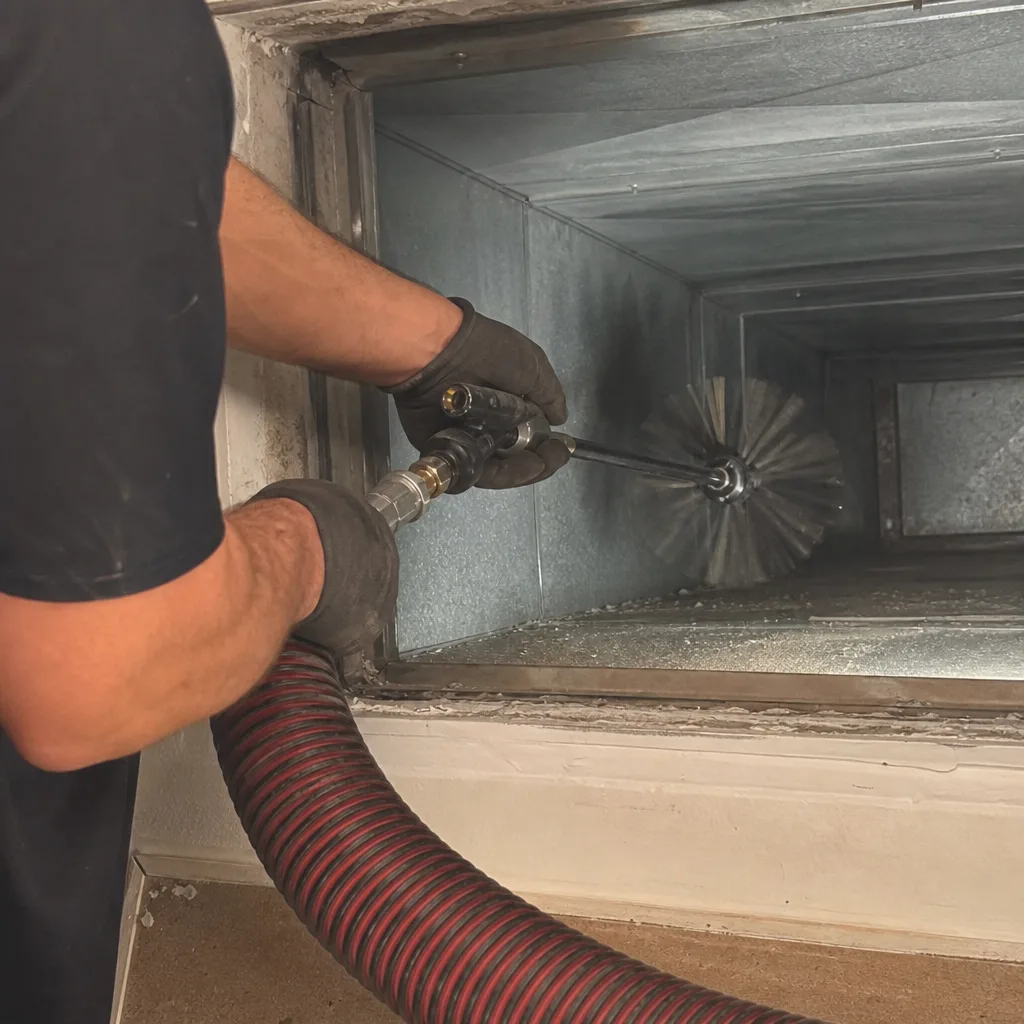
This question separates vacuum-noise operators from actual cleaning professionals. A photo from inside the duct - not a smartphone pointed at a floor register, but a camera pushed past the boot into the duct run itself - is the only way to verify that the interior surface was cleaned. Ask to see examples from recent jobs in Atlanta zip codes. If the contractor shows you stock images, or photos where the “before” and “after” appear to be from different houses, that is your answer.
Since 2013, we have photographed inside every duct run on every visit. The customer receives these as part of the standard job record, not as an optional add-on.
Question 3: What equipment make, model, and rated CFM will be used on my job?
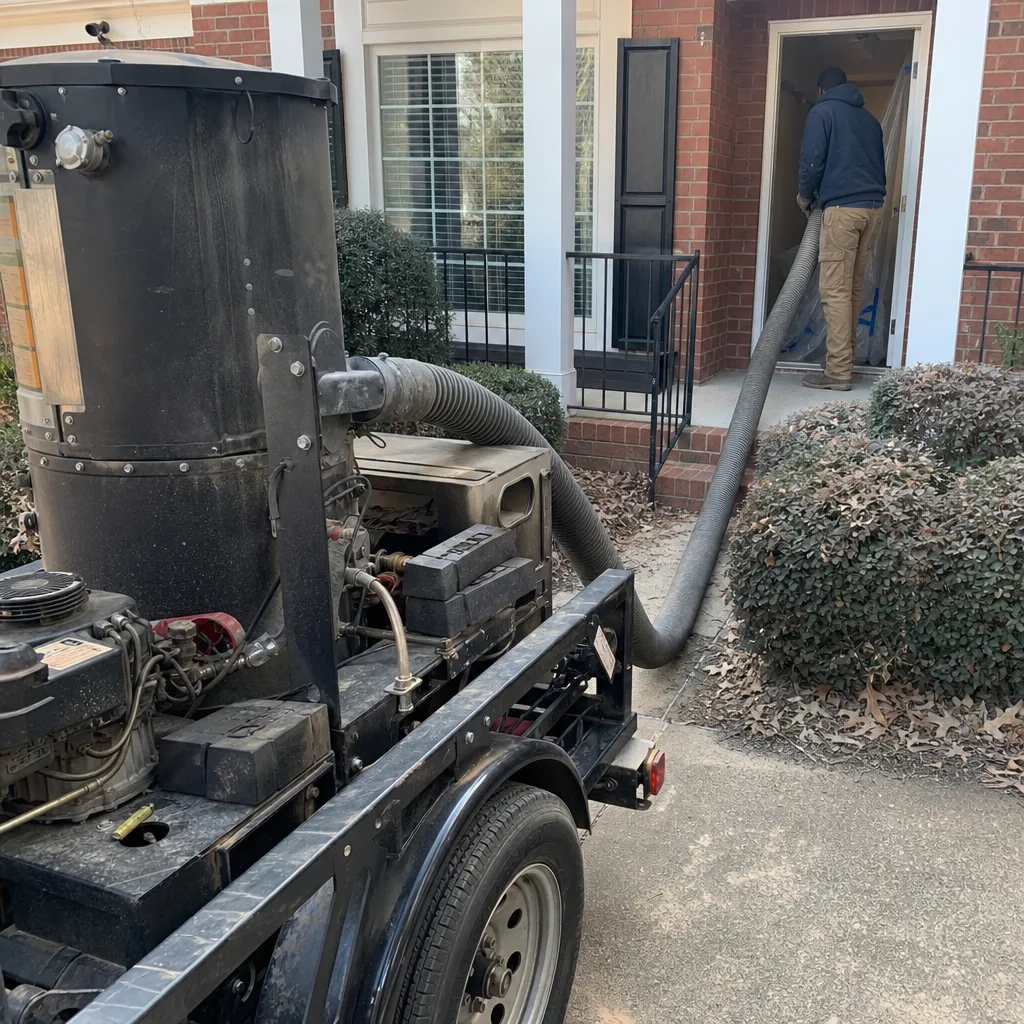
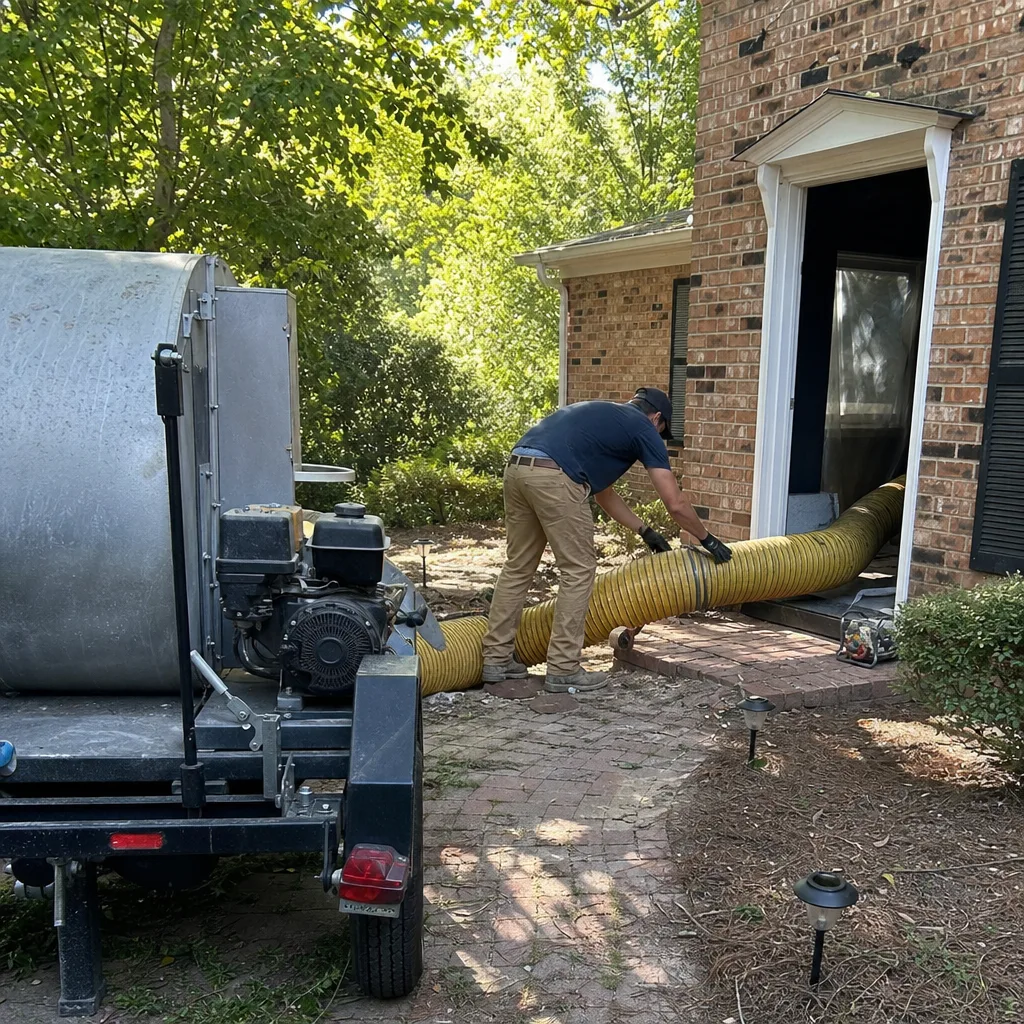
Professional duct cleaning requires negative-pressure extraction equipment capable of pulling sufficient airflow to dislodge and capture debris without damaging ductwork. A truck-mounted system from Nikro, Abatement Technologies, or a comparable manufacturer will have a rated CFM (cubic feet per minute) that the technician should be able to state without checking notes. Portable shop vacuums and rotary brush systems without vacuum extraction are not adequate for whole-system cleaning, though they have legitimate uses for spot maintenance or dryer vent lines.
Question 4: Will the air handler and evaporator coil be included in the written scope?
In Atlanta’s climate, the air handler and coil are where the most consequential accumulation occurs. The evaporator coil sits in a dark, wet environment for months each year, and the plenum (the central distribution box attached to the air handler) is where debris aggregates before being distributed to individual rooms. A scope that only covers “vents” leaves these critical components untouched. The written scope should explicitly state whether the coil, plenum, and blower assembly are included, and what the additional charge is if they require separate access.
Question 5: What does your warranty cover, and what documentation do I receive?
The answer should be specific and in writing. “Satisfaction guaranteed” is not a warranty. A legitimate warranty specifies the duration, the conditions that trigger it, and the remedy. At CleanRun, the 365-Day Done Right Promise means that if the work is not right, we make it right - and this is backed in writing on every job, not just stated in marketing copy. You should receive a written warranty document as a deliverable, not a verbal assurance.
How to Verify Equipment Claims Before They Arrive
Equipment verification is where many Atlanta homeowners get stuck. They know to ask about “professional equipment,” but they do not know what specific answers to look for. Here is how to structure the conversation.
- Ask for make and model. A legitimate contractor using professional-grade equipment will name the manufacturer and model without hesitation. Common legitimate names in this market include Nikro, Abatement Technologies, and Rotobrush. If the answer is “commercial-grade truck-mounted system” without a manufacturer name, press further.
- Ask for rated CFM. Truck-mounted negative-pressure systems used for residential duct cleaning typically operate between 5,000 and 15,000 CFM, depending on the unit and the hose configuration. The technician should know this number. A contractor using inadequate equipment will deflect or claim the number is “proprietary.”
- Ask whether the equipment is truck-mounted or portable. Truck-mounted systems are generally preferred for whole-house cleaning because they generate higher suction and exhaust captured debris outside the home. Portable units have legitimate applications - tight access, high-rise condos, certain commercial settings - but a contractor relying primarily on portable equipment for single-family homes in Atlanta suburbs may not be delivering the extraction power the job requires.
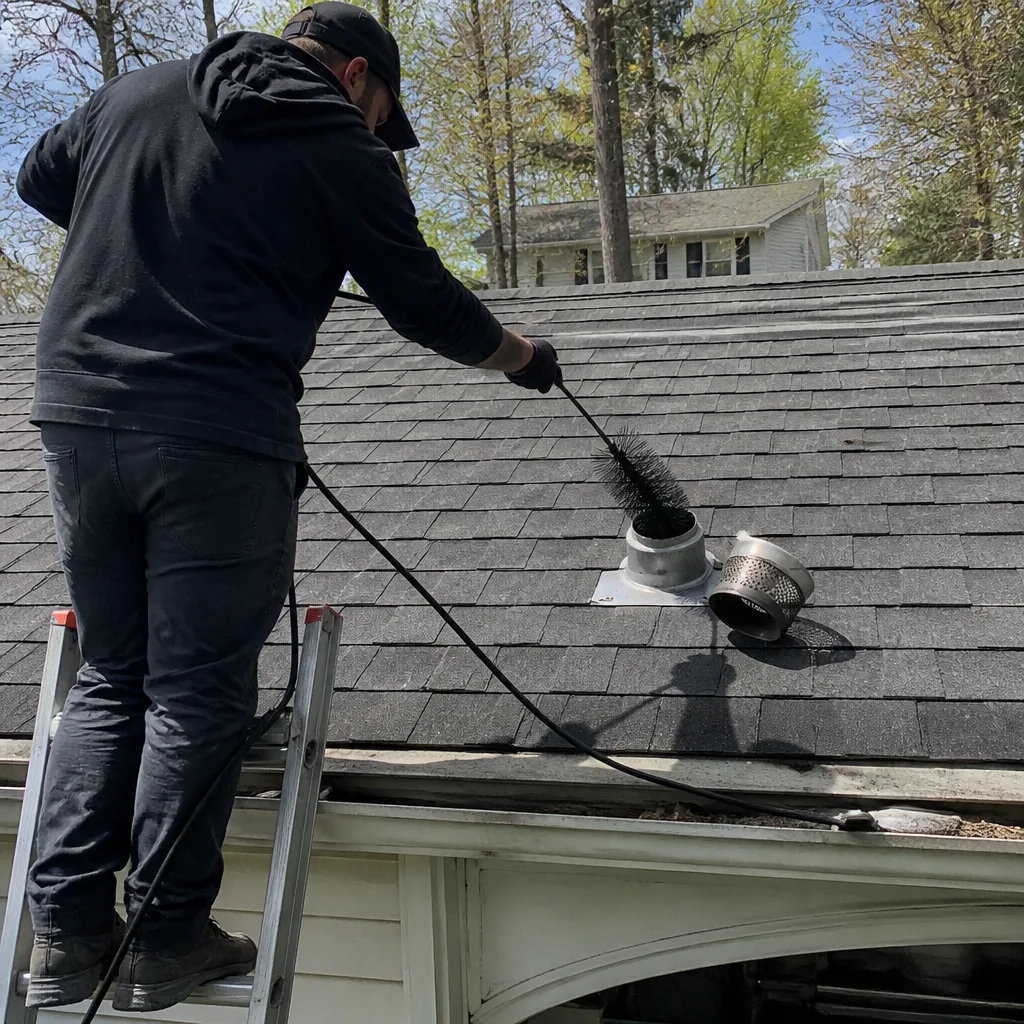
- Ask about agitation method. Negative pressure alone does not clean duct walls. The system needs a mechanical agitation component - compressed air whips, rotary brushes, or similar - to dislodge adhered debris so the vacuum can capture it. Ask what agitation method is used and whether it is included in the base price.
- Request a photo of the actual equipment. A contractor who cannot produce a photo of their own truck and equipment, with identifying marks visible, is operating with something to hide. This is a reasonable request, and a professional should accommodate it.
The equipment roster at CleanRun Air Duct Cleaning Atlanta includes Nikro and Abatement Technologies truck-mounted systems, with rated specifications available on request. We also use Honeywell and Aprilaire components for air quality and sanitizing applications where the scope includes those services.
What a Written Scope of Work Must Include
The written scope is your only protection against the “assess on-site” bait-and-switch. Before any work begins, you should receive a document that includes all of the following. If any element is missing, the scope is incomplete.
- Line-item pricing for each component. This means separate prices for supply vent cleaning, return vent cleaning, trunk line cleaning, air handler access, coil cleaning if applicable, and any sanitizing or sealing services. A single lump-sum price with no breakdown prevents you from comparing apples to apples and creates room for post-arrival upsells.
- Exact count of vents included. The scope should state: “Price includes cleaning of [X] supply vents and [Y] return vents.” If your home has more vents than the base count, the additional charge per vent should be stated in writing before work starts.
- Explicit inclusion or exclusion of the air handler and coil. Do not assume these are included. The scope must state whether the blower assembly, evaporator coil, and plenum are in scope, and what the charge is if access requires additional labor.
- Conditions that trigger additional charges. Examples include: flex duct damage discovered during cleaning requiring repair access, rodent or pest debris requiring specialized handling, or excessive buildup requiring extended agitation time. These conditions should be defined with specificity, not left open-ended.
- Equipment to be used. The scope should reference the negative-pressure extraction system and agitation method, ideally with manufacturer names.
- Documentation deliverables. The scope should state what you will receive after the job: before-and-after photos, written completion summary, warranty document, and any test results (pressure differential, particle counts, etc.).
- Total price and payment terms. The full amount due, any deposit required, and when payment is expected. At CleanRun, the written price is the full price - no deposits for residential work, payment due only upon completion and your review of the documentation.
Haven Standard Clause 1 requires this written scope on every job before any panel is removed or any hose is connected. If a contractor will not put these elements in writing, they are not operating under a standard that protects you.
Atlanta-Specific Red Flags to Watch For
These warning signs are particularly common in the Atlanta market and should disqualify a contractor from consideration.
Same-day coupon pressure. The $79 coupon that “expires today” or “only 3 slots left this week” is a classic high-pressure tactic. Legitimate duct cleaning is a scheduled service, not an impulse purchase. The urgency is manufactured to prevent you from researching the company. In Atlanta’s climate, ducts that need cleaning have needed it for months; another week of research will not change the condition.
Refusal to provide a written quote before arrival. Any contractor who will not commit to a written price based on a vent count you provide over the phone is preserving the option to raise the price once they are in your home. This is the core mechanism of the bait-and-switch. The phrase “we’ll assess on-site” is a substitute for a price, not a supplement to one.
Stock photos in marketing materials. If a company’s website or social media shows duct photos without dates, addresses, or any indication they were taken in Atlanta, they may not have real documentation to show. Look for specific local markers: Atlanta-area architecture, recognizable neighborhood streetscapes, or dated photo metadata.
Claiming to “sanitize” without explaining the method. Sanitizing is a legitimate service when done with EPA-registered products applied according to label directions. It is not legitimate when performed with untested “fogging” compounds or essential oil mixtures with no documented efficacy against duct contaminants. Ask for the product name and EPA registration number.
No local physical address or verifiable business history. A contractor operating from a PO box or virtual office, with no record in Georgia business filings, can disappear after a job goes wrong. Verify the business entity through the Georgia Secretary of State’s office. CleanRun has operated from the same Atlanta-area base since 2013, with a published license and a record you can verify independently.
Subcontractor dispatch without disclosure. Some coupon companies book jobs and dispatch uninsured subcontractors who have no relationship to the brand you researched. Ask whether the technician who arrives will be a direct employee, background-checked, and identifiable by name before arrival. Haven Standard Clause 3: Verified Crews requires this disclosure.
How to Structure a Callback If Work Is Unsatisfactory
Even with careful vetting, problems occur. The difference between a resolvable problem and a permanent loss is the documentation you maintain from the start. Here is how to structure a callback that produces results.
- Document the condition before calling. Photograph any visible issues: debris left at registers, dust discharge after the crew left, damage to surrounding surfaces, or discrepancies between the scope and what was performed. Note dates and times of the original service and your discovery of the issue.
- Review your written scope and warranty. The callback should reference specific clauses: “Haven Standard Clause 1 promised a written price before work; the crew added a $340 charge not in the original scope.” Or: “The 365-Day Done Right Promise covers incomplete cleaning of the return trunk line, which the after photos show was not accessed.”
- Request a written response. A legitimate contractor will put their position in writing: what they will do, by when, and under what warranty provision. Verbal promises over the phone are not enforceable. If the contractor refuses to respond in writing, that is itself a signal.
- Preserve all communications. Email is preferable to phone for the initial callback because it creates a timestamped record. If you do speak by phone, follow up with an email summarizing what was discussed and requesting confirmation.
- Define the remedy specifically. “Come back and fix it” is vague. State: “The return trunk line from the air handler to the master bedroom was not cleaned; the before photo shows debris at the first elbow, and the after photo does not show access to that location. I am requesting re-cleaning of that specific run, with new before-and-after photos, at no charge under the warranty.”
- Set a reasonable deadline. Ten business days is standard for scheduling a warranty callback in the Atlanta market. If the contractor does not respond or does not perform within that window, you have documentation for dispute resolution.
A contractor with a genuine warranty process will not resist this structure. They will appreciate the specificity because it allows them to dispatch the right technician with the right equipment. A contractor without a real warranty process will become evasive, and that evasion is your answer.
Common Mistakes to Avoid
- Equating review count with quality. A company with 4,000 reviews is not necessarily more competent than one with 200. Review volume can be purchased, and review platforms do not verify that the reviewer actually hired the company. Look for detailed reviews that mention specific deliverables: photos received, written scope provided, warranty honored.
- Booking based on price alone. The $79 coupon and the $800 whole-house quote are both warning signs if they lack documentation. The legitimate price for a complete residential system in Atlanta typically falls between $400 and $900 depending on system size and components included. Prices outside this range require extra scrutiny.
- Assuming NADCA certification guarantees quality. NADCA is a trade association with membership dues, not a government regulatory body. A NADCA member can still use inadequate equipment, subcontract to uninsured crews, or refuse written pricing. Use certification as one data point, not a decision shortcut.
- Neglecting to verify the air handler and coil are included. Many Atlanta homeowners receive a “complete” duct cleaning that never touches the component where the most significant accumulation occurs. Always confirm inclusion in writing.
- Accepting verbal warranties. A warranty that exists only in a phone conversation is not a warranty. The written document should specify duration, coverage, and remedy. The 365-Day Done Right Promise is provided in writing on every CleanRun job for this reason.
- Failing to check for Atlanta-specific experience. A contractor experienced only in dry climates may not understand the microbial growth risks of Atlanta’s humid summers. Ask about local job history, and request photos from Atlanta-area homes specifically.
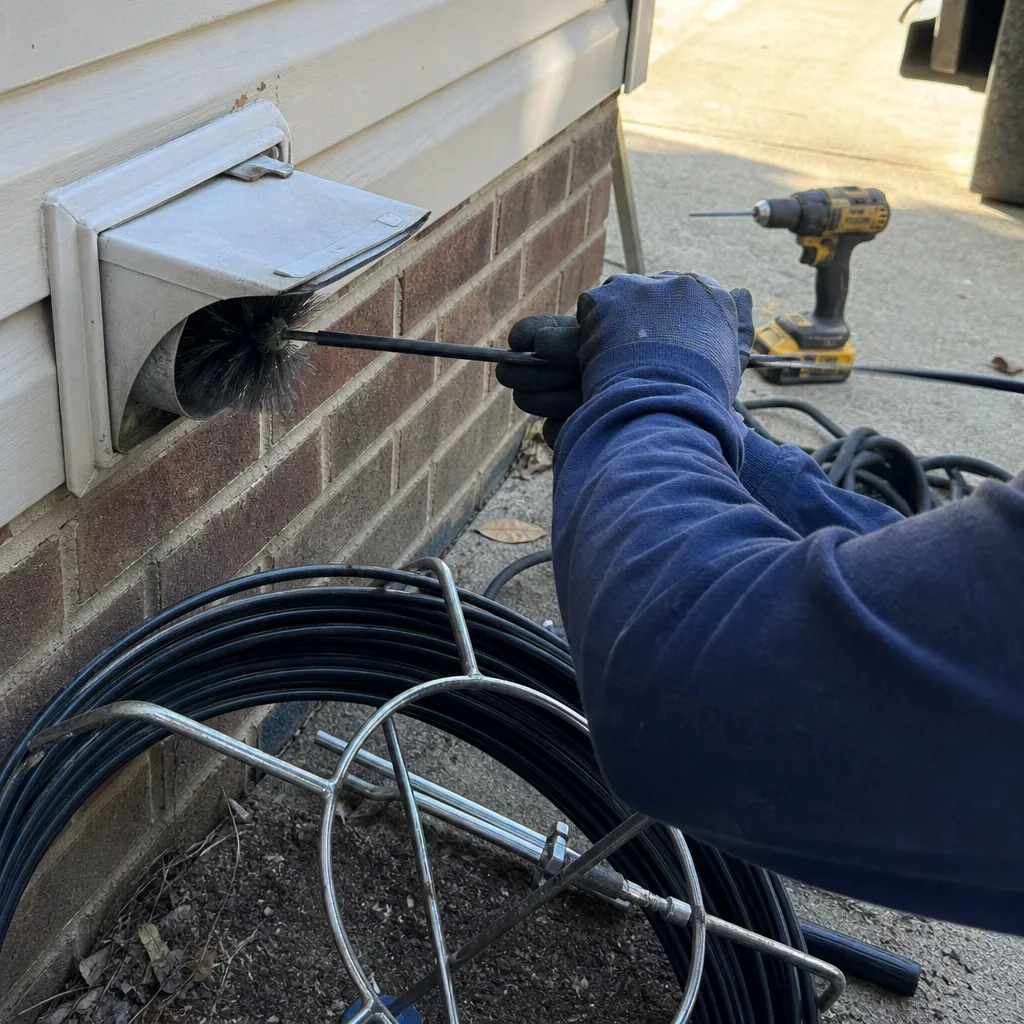
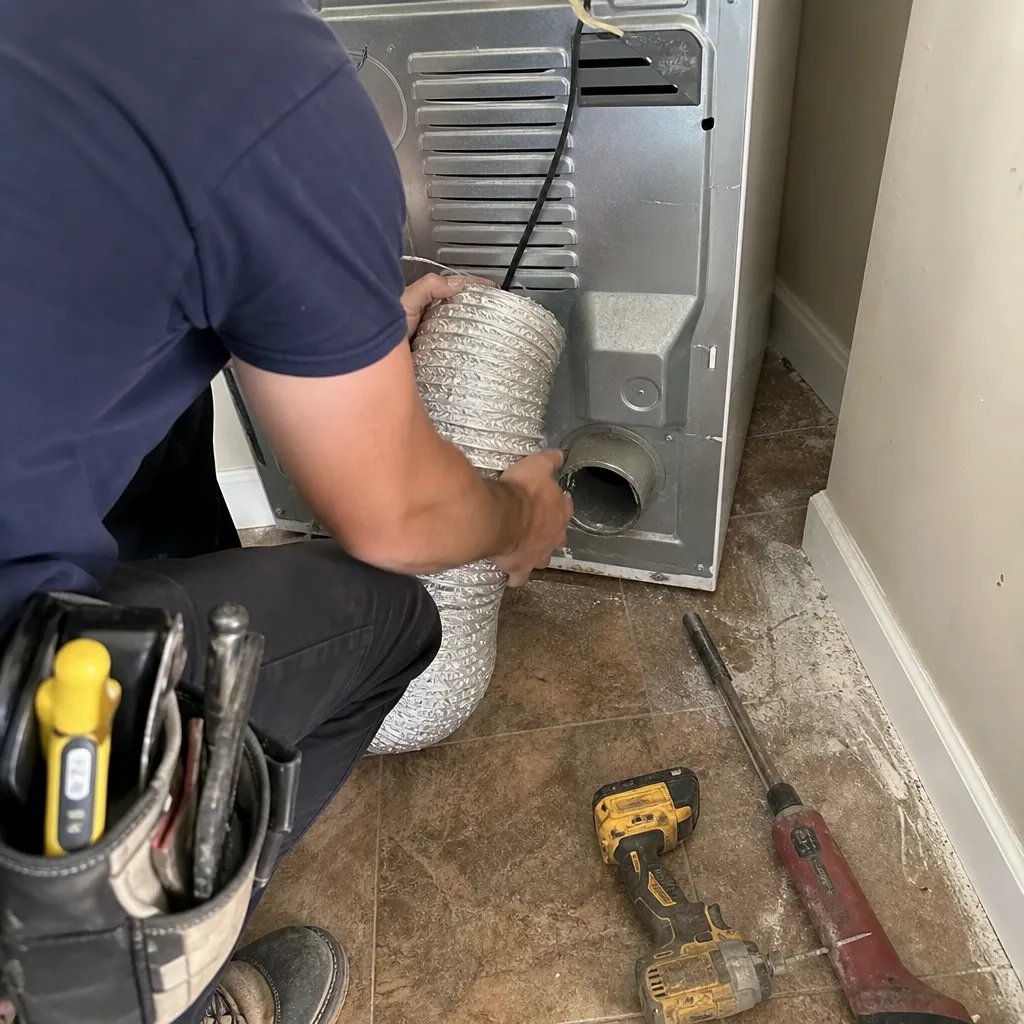
- Not asking about dryer vent cleaning coordination. Many Atlanta homes need both services, and scheduling them together can reduce total cost and prevent cross-contamination. CleanRun offers Dryer Vent Cleaning in Atlanta as a coordinated service with documented photo records for both systems.
When to Call a Professional
Certain conditions indicate that duct cleaning should be scheduled promptly rather than deferred. Visible mold growth inside hard-surface ducts or on other HVAC components requires professional assessment - do not disturb it yourself, as this can release spores into the living space. Persistent musty odors when the system runs, despite filter changes, often indicate biological growth in the coil or plenum. Insect or rodent debris in or around registers signals contamination that requires specialized handling and sealing. And if your home was built between 2015 and 2025 in Atlanta’s rapid-growth corridors, construction debris in new ductwork is more common than builders acknowledge.
For HVAC Cleaning in Atlanta that includes full system assessment, or to discuss whether your system needs cleaning, repair, or sealing, CleanRun Air Duct Cleaning Atlanta home offers free estimates throughout the metro. Call (470) 495-9370 to schedule a written quote with no obligation.
Frequently Asked Questions
A complete residential system in Atlanta typically ranges from $400 to $900, depending on the number of vents, whether the air handler and coil are included, and the accessibility of the ductwork - see our Air Duct Cleaning Cost Breakdown: The Atlanta Homeowner’s Reference for 2026 for detailed pricing factors. Prices below $300 for a whole system usually indicate incomplete scope or bait-and-switch tactics. Call (470) 495-9370 for a written quote based on your specific vent count - estimates are free.
The low quotes are almost always missing scope. A $79 coupon may cover only a visual inspection or a single register, with every additional component priced separately once the crew arrives. The legitimate contractor builds the full scope into the written price upfront. Ask what is included, not just what the initial number is.
Insist on dated, location-specific before-and-after photographs from inside the duct runs, not just floor register shots. The photos should show the same duct geometry, the same register pattern, and a visible difference in interior surface condition. You should receive these as a standard deliverable, not upon request after the crew leaves.
For most Atlanta homes, every 3 to 5 years is adequate under normal conditions. Homes with pets, recent renovation, or occupants with respiratory sensitivities may benefit from more frequent service. The specific interval depends on filter maintenance, system runtime, and local pollen and dust loads - Atlanta’s spring pollen season is particularly demanding on filtration systems. For maintenance timing tips, see our Seasonal Air Duct Cleaning Care for Atlanta: Year-Round Homeowner’s Guide.
Improper cleaning can damage flex duct, dislodge connections, or contaminate the coil with dislodged debris. This risk is minimized by using adequate negative-pressure extraction (to capture debris rather than redistribute it) and proper agitation methods matched to duct material. Ask your contractor how they prevent these specific problems.
Decline to book. A contractor who will not commit to a written price based on information you can provide over the phone is preserving the option to increase the price once they have leverage - your time, your schedule, and their presence in your home. This is the fundamental mechanism of the bait-and-switch, and it is endemic in the Atlanta market.
The Bottom Line
Hiring an air duct cleaning contractor in Atlanta comes down to one principle: evidence beats credentials. A written price before work starts, dated before-and-after photos from local jobs, specific equipment you can verify independently, and a warranty in writing - these are the deliverables that separate legitimate operators from the coupon-driven rotation. The standard advice of checking reviews and insurance is a starting point, not a screen. Use the five questions, verify the equipment, insist on the written scope, and know how to structure a callback if something goes wrong. For more guides & resources, visit our blog. The contractors who welcome this scrutiny are the ones worth hiring.
Written by Tomas Reyes, Owner at CleanRun Air Duct Cleaning Atlanta, serving Atlanta since 2013.