
Last updated September 23, 2026
Whole-system duct and dryer vent check with before-and-after photos - you see exactly what came out of your vents
That "$99 whole-house special" is a bait ad - the real number appears once they are in your hallway, or the "clean" is a shop-vac at the register. We photograph the inside of your ducts before and after instead.
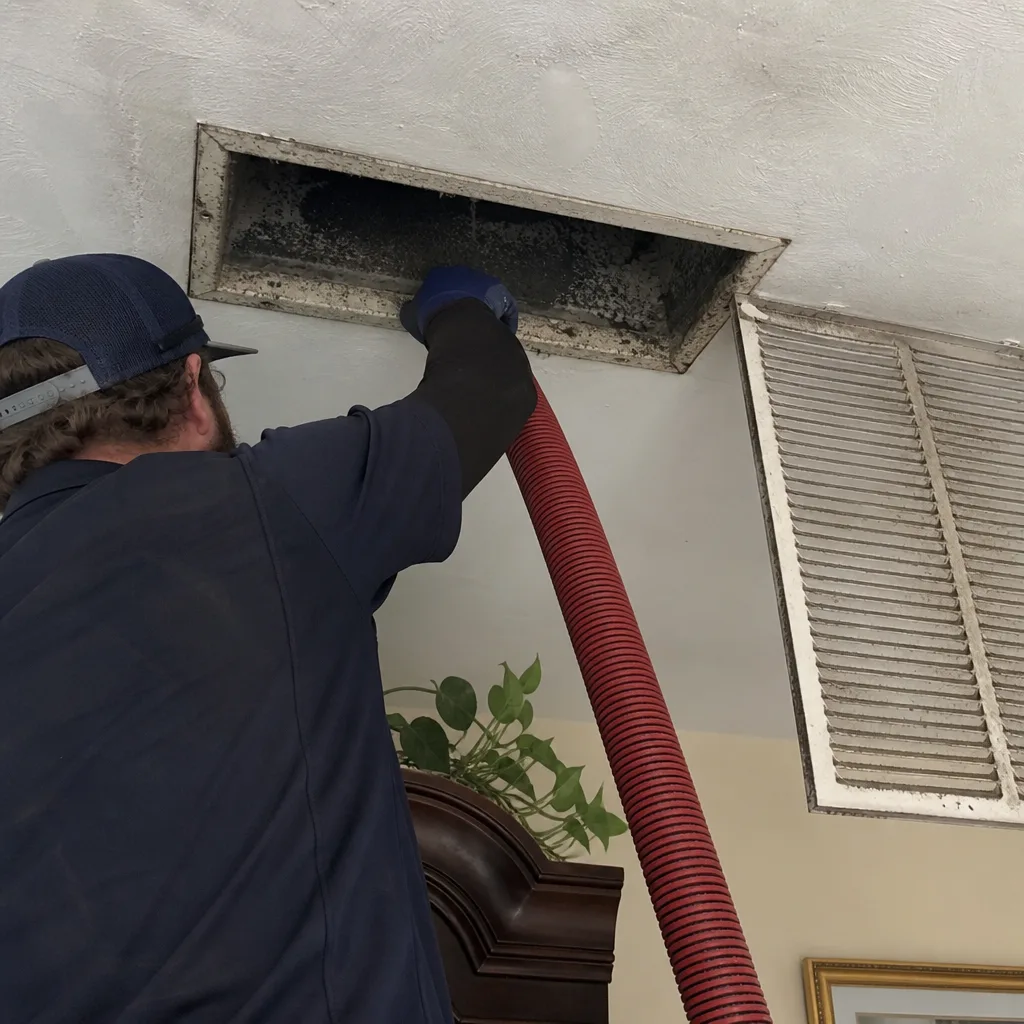 Before
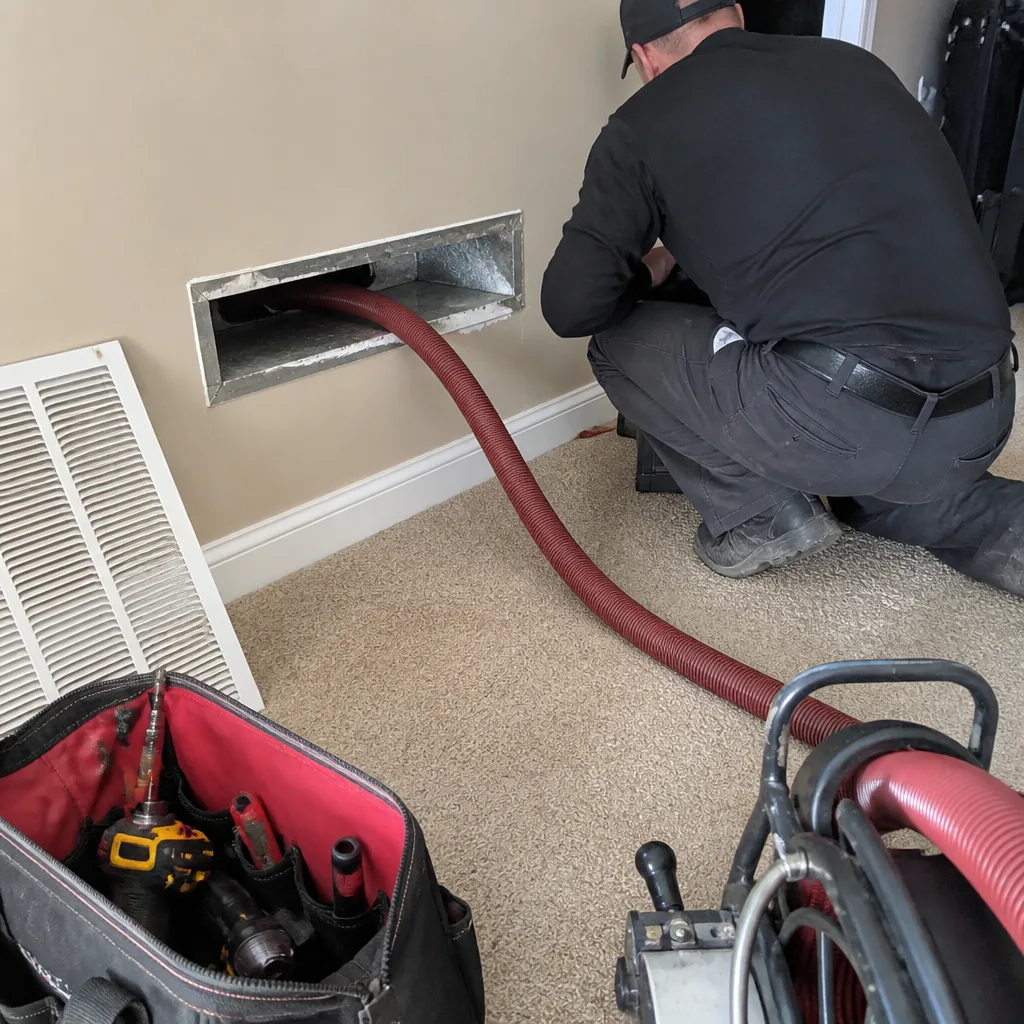 After
After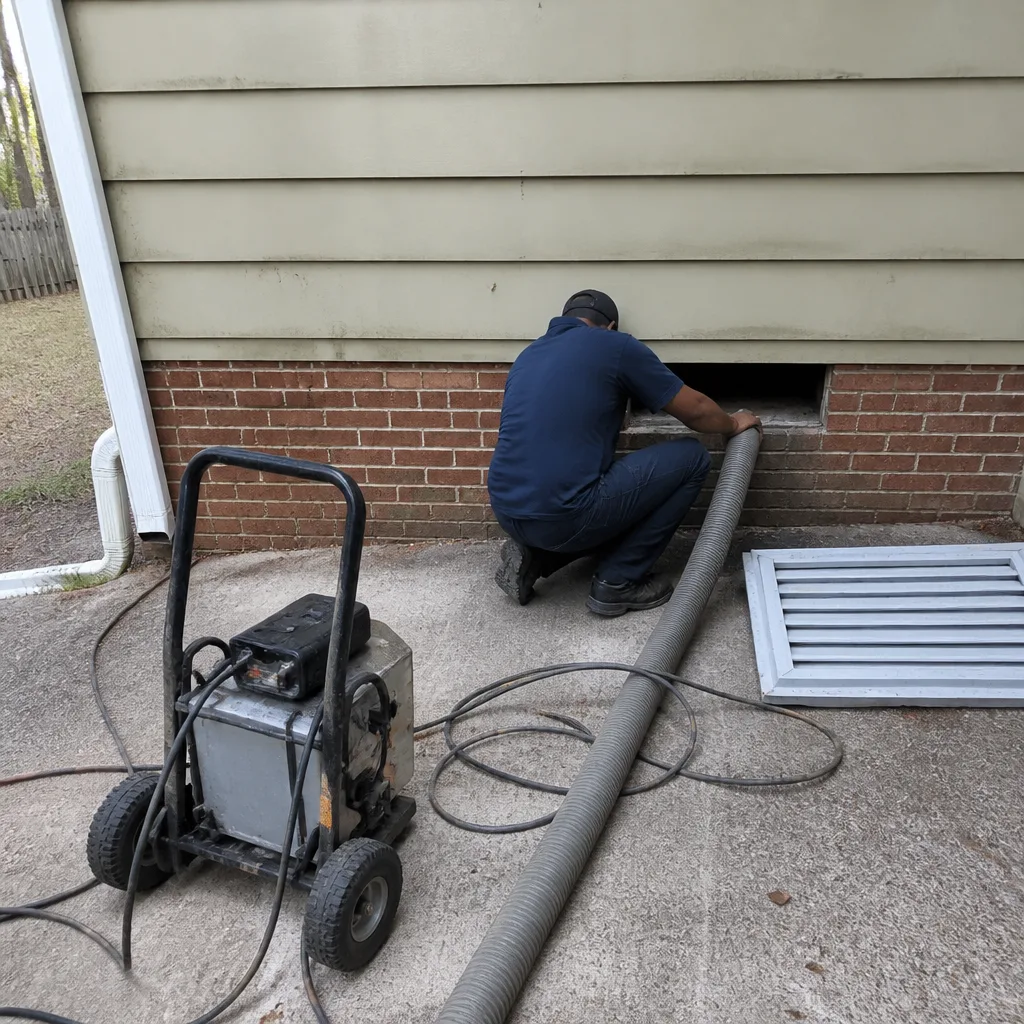 Before
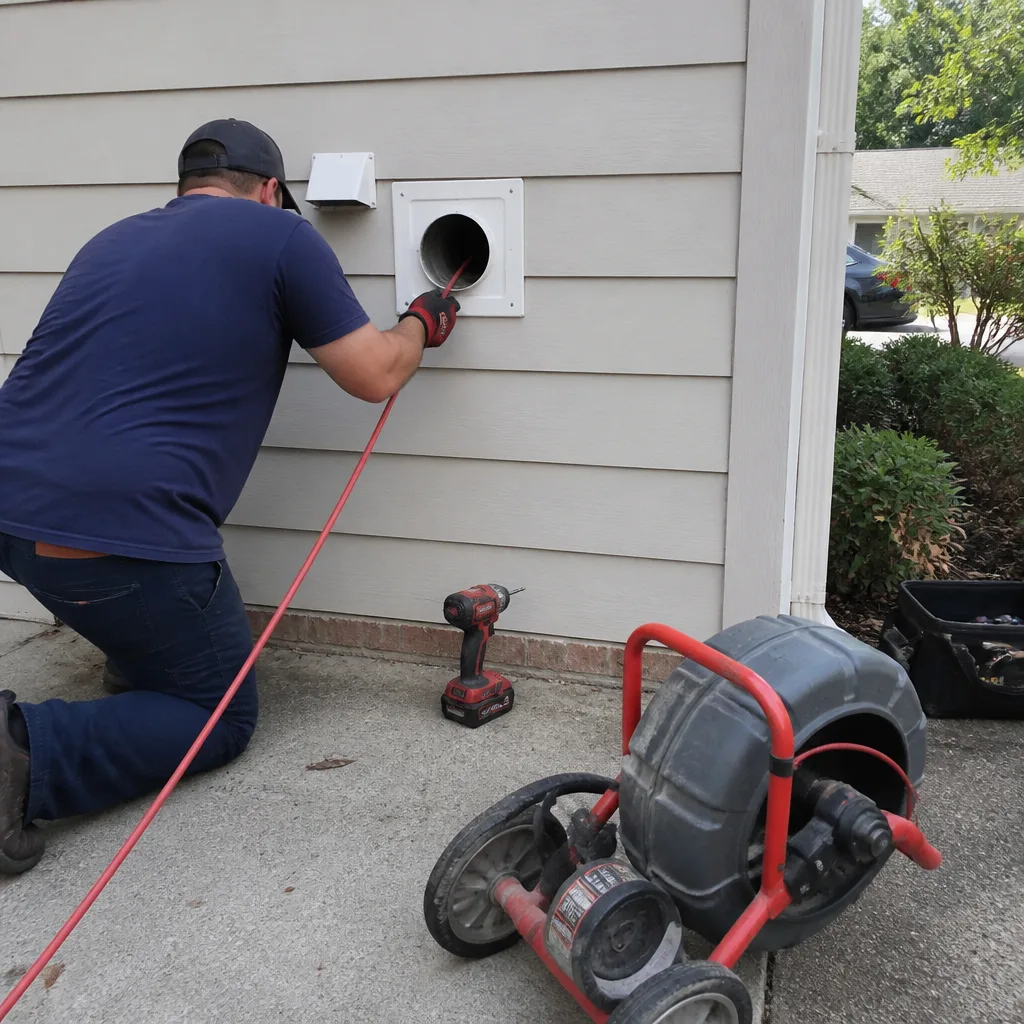 After
After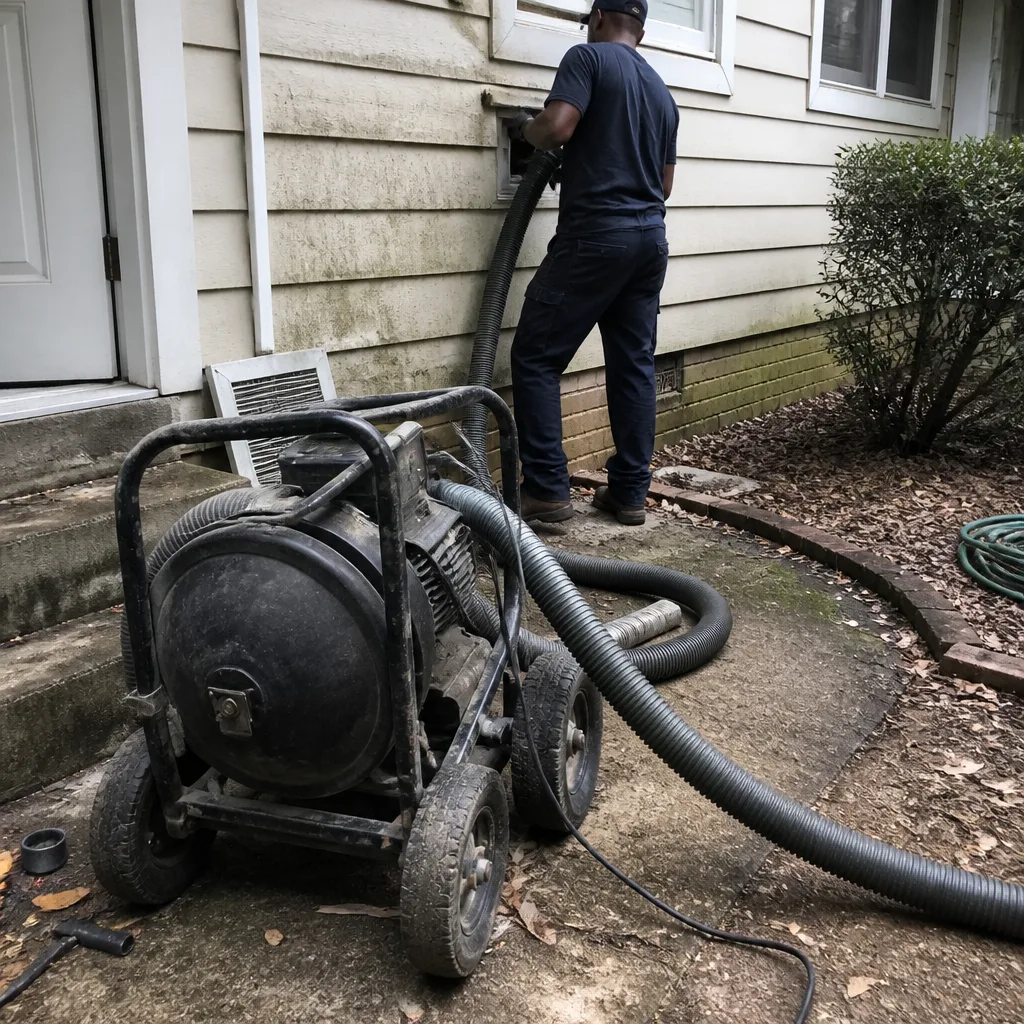 Before
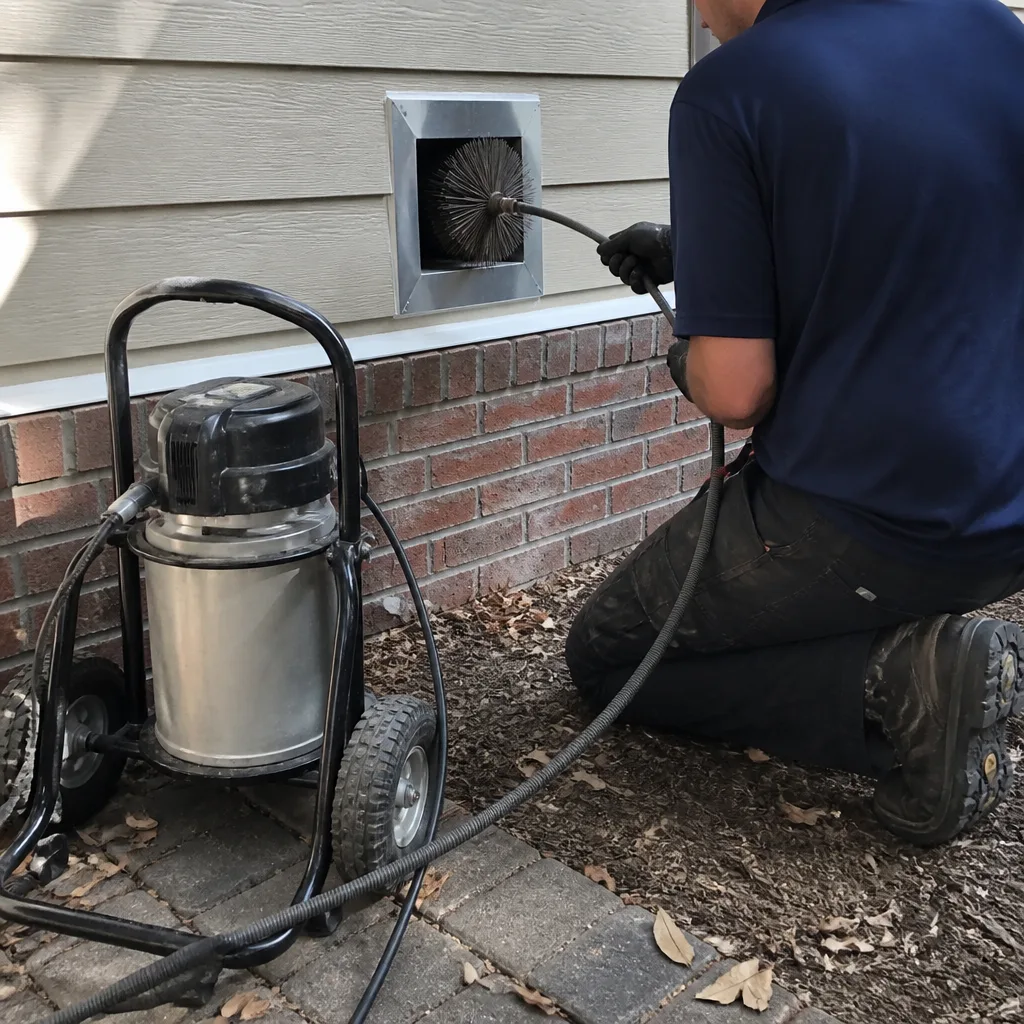 After
AfterThe Complete Guide to Air Duct Cleaning in Atlanta
A standard Atlanta home built between 1985 and 2005 has an average of 6-8 flex-duct runs, and in documented inspections, more than half show visible microbial growth at the boot connections before the first cleaning - a fact no coupon mailer will put in writing. In this guide, you’ll learn what Atlanta’s red-clay soil, eight-month cooling season, and humidity patterns actually deposit inside ductwork, how to distinguish legitimate cleaning from vacuum noise, and what a documented job looks like from first inspection to final photo. For more guides & resources, see our blog. This is written for homeowners who research before calling, who want prices in writing, and who expect proof that work was performed.
Quick Answer
Professional Air Duct Cleaning in Atlanta removes built-up debris, microbial growth, and construction-era contaminants from your HVAC ductwork using negative-pressure extraction equipment. A legitimate job costs between $450 and $950 for a typical 2,000-3,500 square foot home, includes pre- and post-cleaning camera documentation of every duct run, and should never begin without a written price agreed upon in advance. In Atlanta’s climate, most homes benefit from inspection every 3-5 years, with cleaning performed when visible contamination is documented.
Table of Contents
- What’s Actually Inside Atlanta Ductwork
- Flex Duct vs. Sheet Metal: How Atlanta’s Soil Changes What Builds Up
- The Professional Cleaning Process, Step by Step
- How to Read an Air Duct Inspection Report
- Equipment That Actually Matters: Negative-Pressure vs. Portable Units
- Why Duct Cleaning Without Coil Inspection Misses the Point
- What Air Duct Cleaning Costs in Atlanta
- Common Mistakes to Avoid
BeforeAfterWhat’s Actually Inside Atlanta Ductwork
Atlanta’s Piedmont clay doesn’t stay outside. During construction, silica-heavy red clay dries to a fine dust that infiltrates wall cavities and duct boots before the home is sealed. We’ve photographed this residue in homes from Decatur to Sandy Springs, often appearing as a uniform rust-colored film at the first elbow of flex-duct runs, sometimes 15 years after the build date. It doesn’t look like household dust. It looks like brick dust because, chemically, that’s close to what it is.
The second contaminant pattern is humidity-driven. Atlanta averages 70% relative humidity for much of the year, and ductwork passing through unconditioned attics experiences condensation cycles that paper-based duct liner absorbs. Once the liner’s facing separates, the fiberglass core becomes a substrate for microbial growth. In our documented inspections, boot connections - where flex duct meets the supply plenum - show the highest concentration of visible growth, particularly on north-facing roof pitches where morning dew lingers longest.
The third pattern is less obvious: pollen and organic debris from Atlanta’s dense tree canopy. Oak, pine, and birch pollen enter through return air pathways, especially in homes with outdated filter racks that don’t seal properly. This material doesn’t distribute evenly. It accumulates at low-velocity points - the last register on a long duct run, or the underside of horizontal trunk lines - where airflow drops below the threshold needed to keep particles suspended.
What we’ve found in Atlanta homes, documented by camera:
- Drywall dust and silica from original construction, still present after 10+ years in homes that have never been cleaned
- Microbial growth at flex-duct boot connections, visible as dark spotting on the duct interior
- Collapsed or separated inner duct liner, reducing airflow to specific rooms
- Pet hair and dander accumulation in return ductwork, often forming dense mats at filter bypass points
- Evidence of previous rodent activity in older intown homes, particularly in Grant Park and Virginia-Highland basements
None of this is hypothetical. Every item above appears in photo records we’ve delivered to Atlanta homeowners since 2013.
Flex Duct vs. Sheet Metal: How Atlanta’s Soil Changes What Builds Up
Atlanta’s housing stock is split between two duct types, and the contamination patterns differ materially between them. Understanding which system you have explains what a technician should find - and what “clean” should look like afterward.
Flex Duct: The Suburban Standard
Flex duct - the insulated, wire-reinforced tubing common in homes built 1985-2010 - dominates Atlanta’s suburbs: Alpharetta, Johns Creek, Marietta, the newer phases of Dunwoody. The inner liner is a smooth plastic film, but the spiral wire ribbing creates turbulence points where debris drops out of airflow. At year 5, documented inspections typically show a thin, even coating of household dust with some construction residue at boots. At year 15, without prior cleaning, we’ve measured debris build-up of 2-4 millimeters at the first elbow, often compacted by humidity into a clay-dust paste that doesn’t vacuum loose without agitation.
The critical failure point is the boot connection. Flex duct attaches to sheet metal boots with plastic or metal clamps. These seals degrade; when they do, attic air - hot, humid, carrying red-clay dust - enters the duct system. We’ve photographed this in Buckhead renovations where the original 1990s flex was never replaced: the boot interior shows rust-colored staining extending 6-12 inches past the connection, while the duct run beyond remains relatively clean. This pattern is diagnostic. It tells you where the problem started.
Sheet Metal: The Intown Older Home
Sheet metal ductwork, common in Atlanta homes built before 1980 and in some higher-end construction through the 1990s, behaves differently. Without internal insulation, metal surfaces don’t absorb moisture. Contamination tends to be thinner, harder, and more evenly distributed - a fine grit that we describe as “polishing compound” texture in inspection reports. The exception is unlined metal in basements or crawl spaces, where condensation produces a different pattern: thin, even rust at low points, sometimes with associated microbial staining.
In Virginia-Highland and Grant Park, we’ve documented sheet metal systems with original galvanized coating still intact after 50 years, and others where standing water in basement trunks has produced pitting corrosion that requires section replacement, not cleaning. The inspection matters because cleaning cannot restore metal that’s structurally compromised.
What “Clean” Looks Like for Each
For flex duct, post-cleaning photos should show the smooth inner liner visible through its entire length, with no debris visible at ribbing points and no discoloration at boot connections. For sheet metal, the standard is bare metal visible at inspection camera range, with no grit residue that smears when touched with a gloved finger. We deliver both sets of photos to every Atlanta customer as part of our standard job record.
The Professional Cleaning Process, Step by Step
A legitimate air duct cleaning job follows a sequence that can be verified at each stage. Any company that cannot explain what happens at each step, or that resists documentation, is not performing source removal - they’re making noise near your vents.
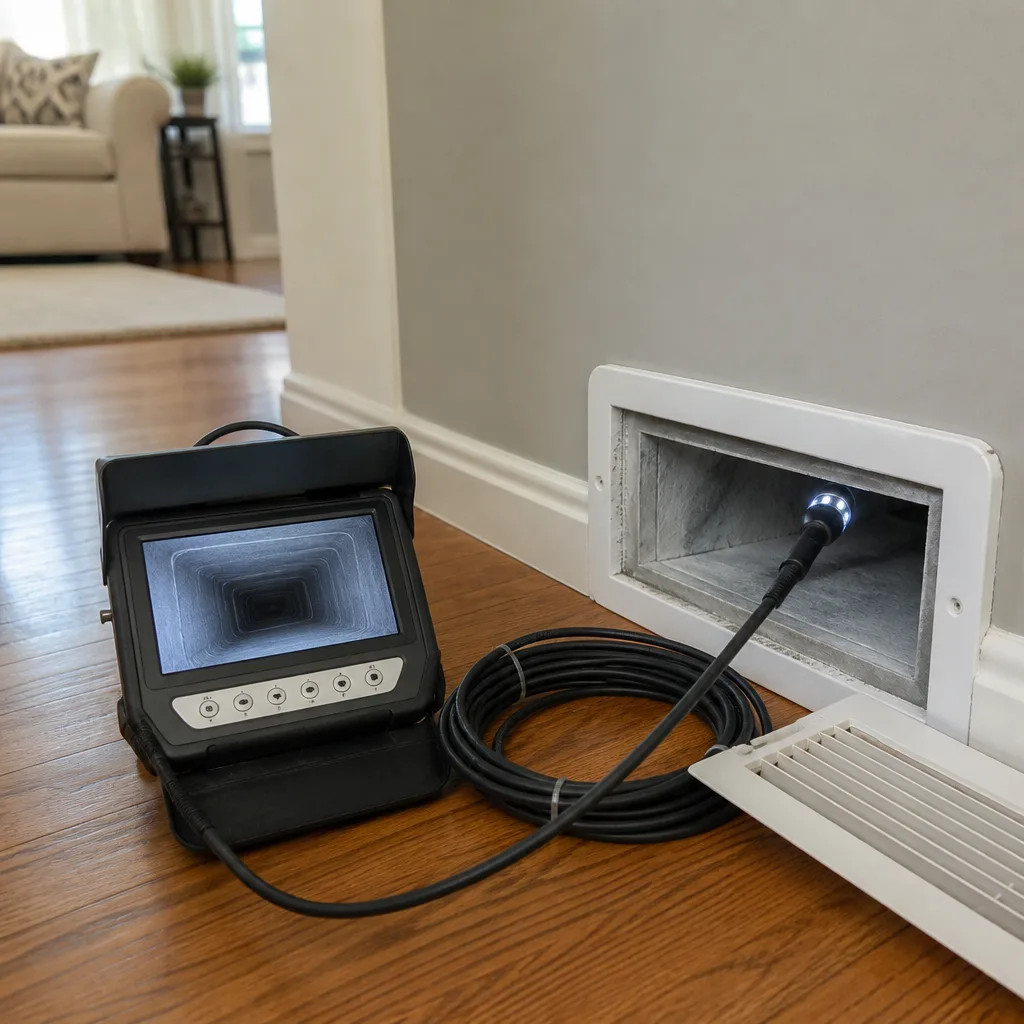
- Pre-cleaning inspection and camera documentation. Before any equipment enters the home, a technician accesses the supply and return plenums with a borescope camera and records the interior condition of every duct run. This establishes baseline contamination and identifies damage - collapsed liner, disconnected boots, corrosion - that cleaning alone won’t fix. The customer receives these photos before work begins.
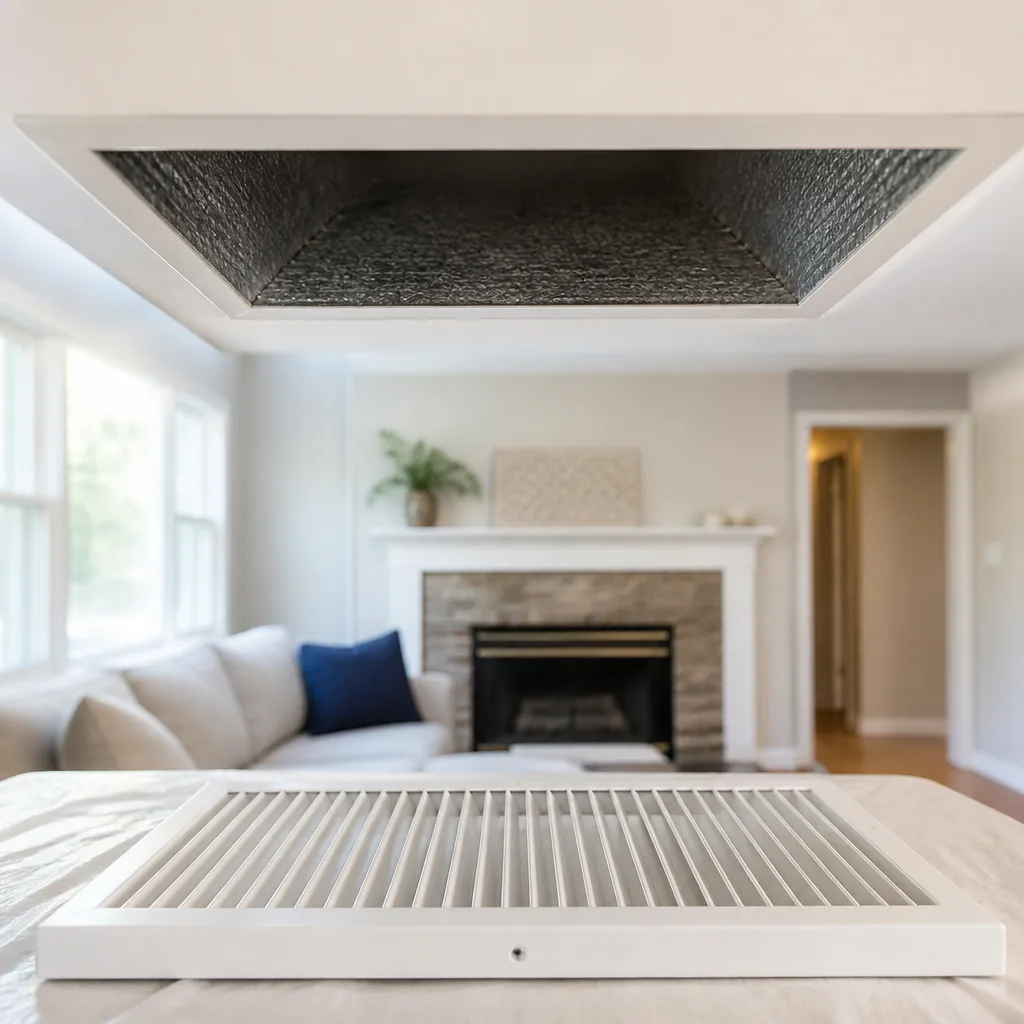
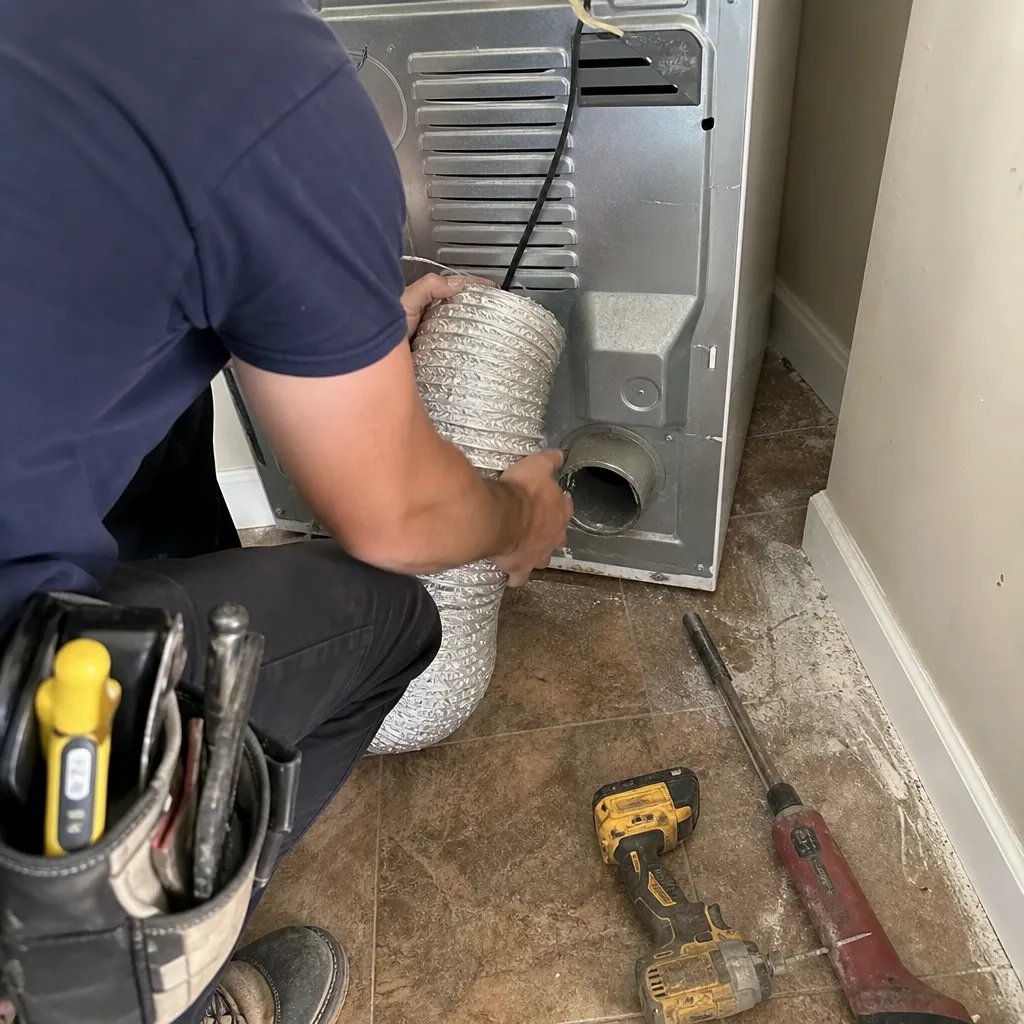
- System protection and access creation. Registers and grilles are removed. Protective coverings are placed on flooring and furnishings. Access ports are cut into the ductwork at strategic points - typically the supply and return plenums, and at mid-run locations in longer systems - to allow tool insertion. These ports are sealed after cleaning; in our work, we use sheet metal patches secured with foil tape, not temporary plugs.
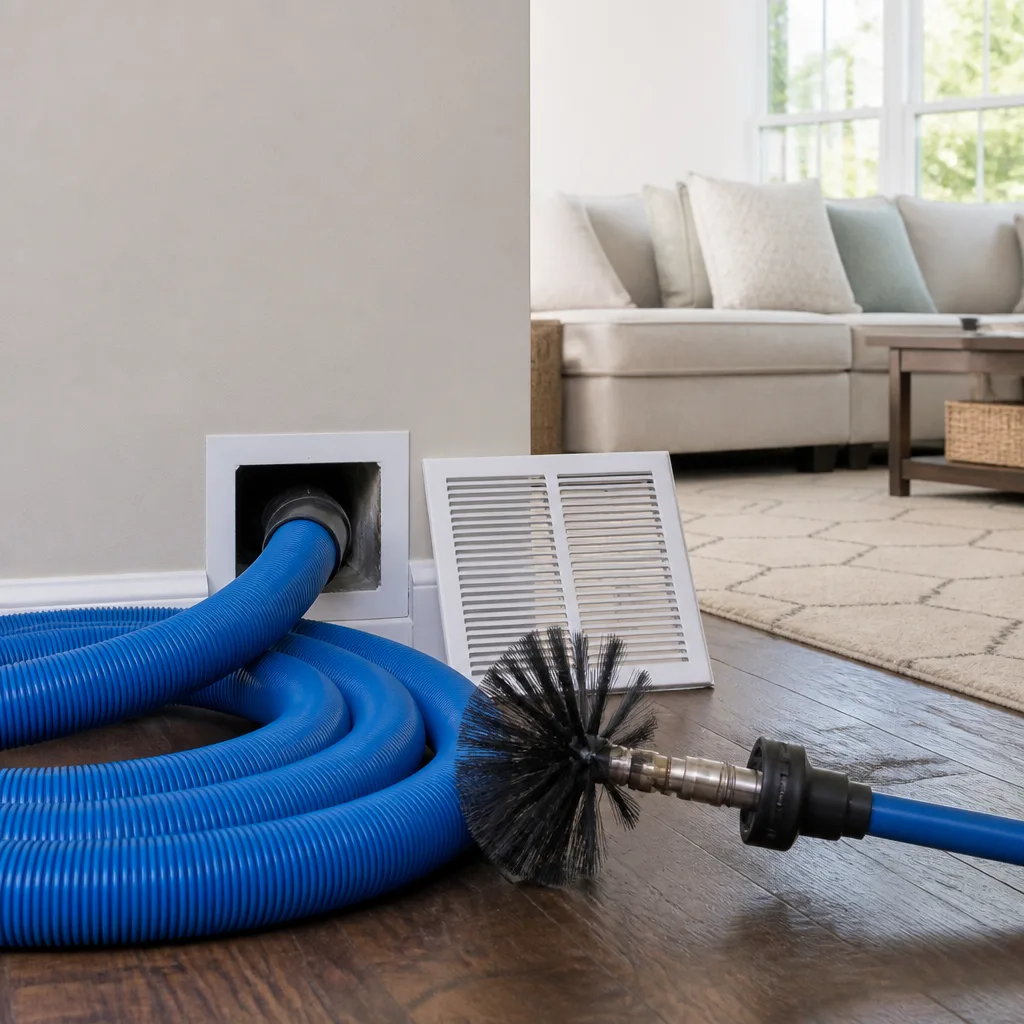
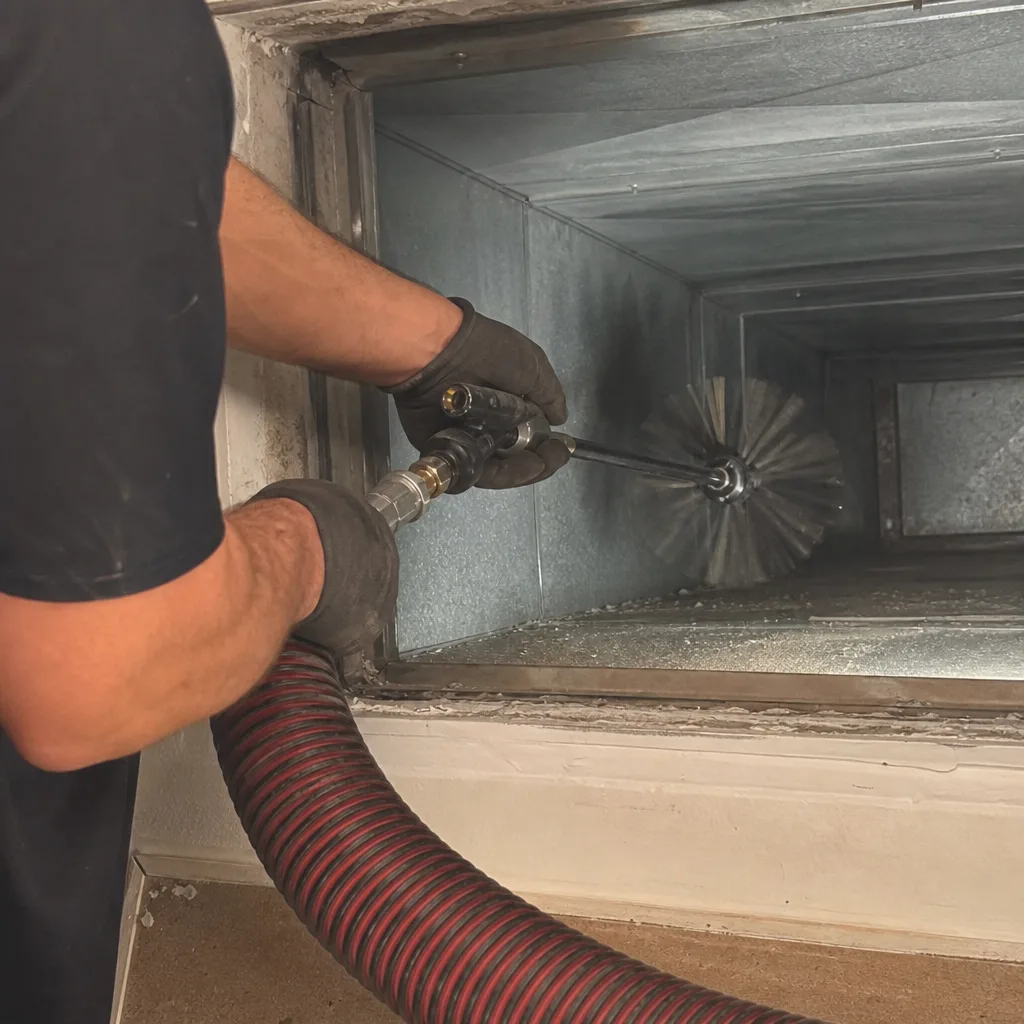
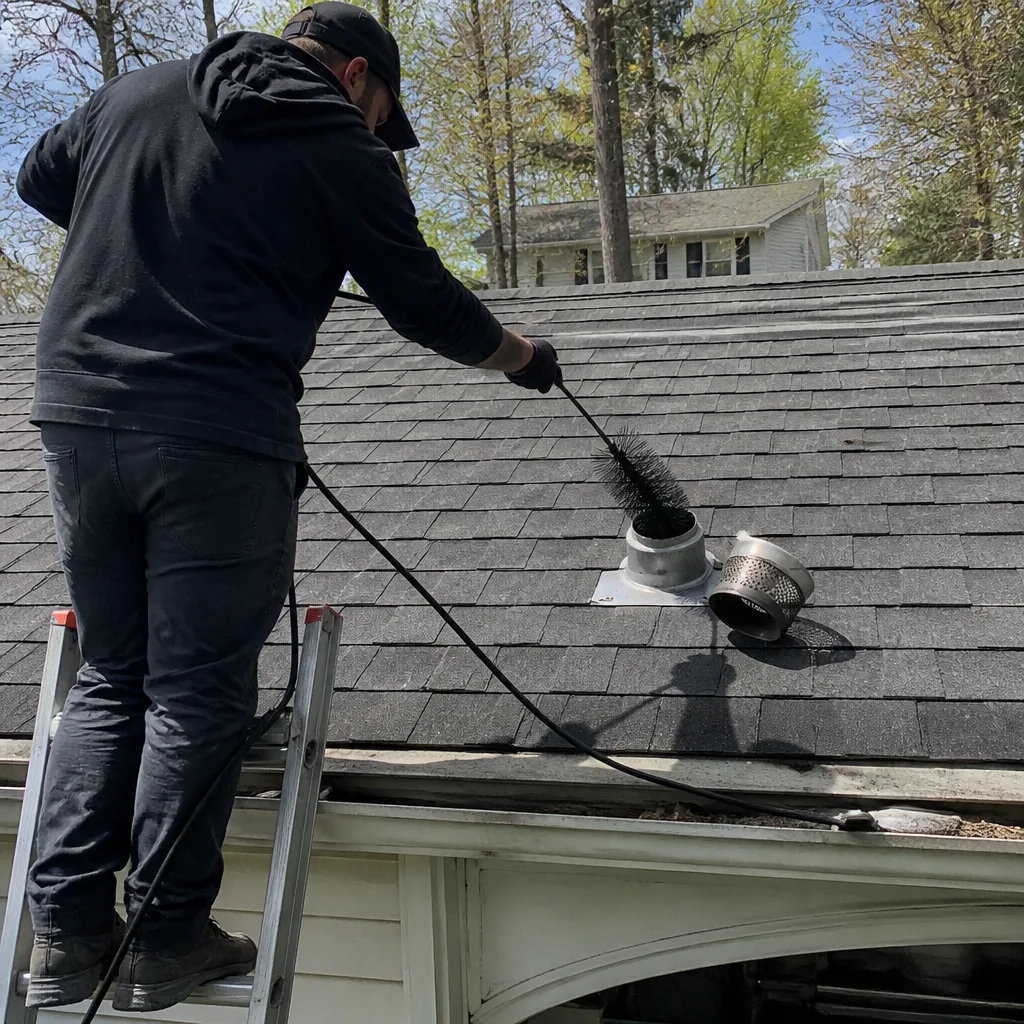
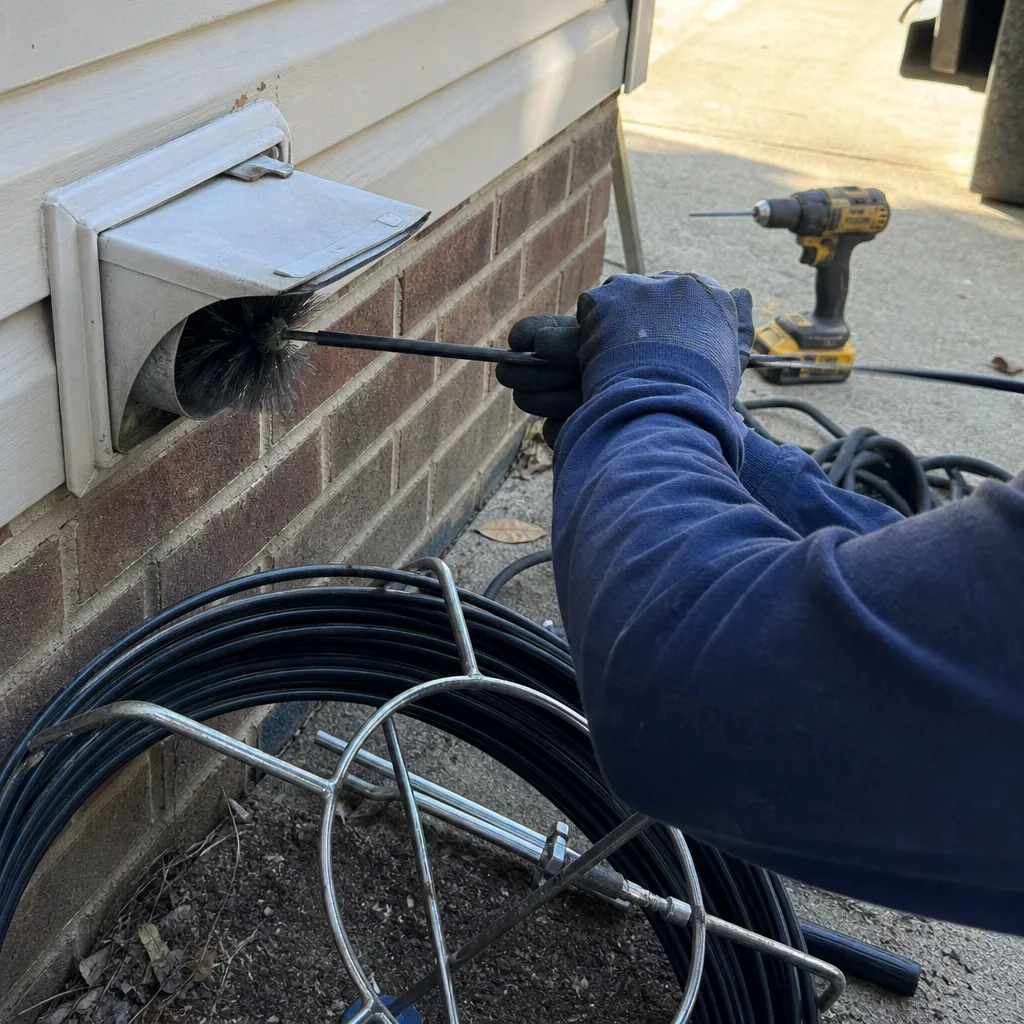
- Negative-pressure source removal. A vacuum collection device - either truck-mounted or high-CFM portable - is connected to the duct system to create negative pressure. This is the “source removal” step: agitation tools (powered brushes, air whips, or compressed-air skip balls) dislodge debris while the vacuum captures it at the collection point. The critical detail: agitation and extraction happen simultaneously. A tool that knocks debris loose without concurrent vacuum capture simply redistributes it.
- Component-level cleaning. The blower motor, evaporator coil, and drain pan are inspected and cleaned if accessible. In Atlanta’s climate, this step is not optional - coil contamination is often the primary source of system-wide microbial issues. We address this separately in the section below.
- Post-cleaning verification and photo documentation. The borescope camera re-enters every duct run. Photos are taken at the same locations as the pre-cleaning inspection. The customer receives a second set of images showing the post-cleaning condition. Without this step, no one can prove work was performed.
- System restoration and written closeout. Access ports are sealed. Registers are reinstalled. The system is powered on and verified for operation. A written invoice, scope summary, and photo record are delivered to the customer. At CleanRun, this package also includes the 365-Day Done Right Promise in writing.
Steps 1 and 5 are where most coupon operations cut corners. Pre-cleaning photos expose how little work is needed; post-cleaning photos expose how little work was done. A company that won’t document both has something to hide.
How to Read an Air Duct Inspection Report
After inspection, a technician should deliver a written report with specific terminology. Here’s what the common terms mean in plain language, and what each implies for next steps.
Trace contamination: A light, even coating of dust visible on duct surfaces, typically less than 1 millimeter thick. No microbial growth detected. Next step: often monitor rather than clean, unless occupants have specific respiratory sensitivities or the system has never been cleaned since construction.
Moderate contamination: Visible debris accumulation of 1-3 millimeters, with possible localized build-up at elbows, boots, or low-velocity points. May include pollen mats, pet hair accumulation, or construction residue. Next step: source-removal cleaning recommended. This is the most common finding in Atlanta homes at first inspection.
Heavy contamination: Debris build-up exceeding 3 millimeters, or dense accumulation covering more than 50% of duct surface area. Often includes compacted material that requires aggressive agitation. Next step: cleaning required; may require multiple agitation passes or section replacement if liner is damaged.
Microbial growth: Visible staining or growth on duct surfaces, typically dark or discolored patches. This is not “dirt” - it indicates active biological colonization, often at humidity points. Next step: cleaning plus antimicrobial treatment of affected areas; identification and correction of moisture source (duct leak, insulation failure, or coil drainage issue).
Collapsed liner: The inner insulation layer of flex duct has separated from the outer jacket, creating airflow blockage and a debris trap. Next step: section replacement, not cleaning. Cleaning a collapsed liner forces debris into the insulation cavity where it cannot be extracted.
Disconnected boot or trunk: Mechanical separation between duct components, typically at connection points. Next step: reconnection and sealing; this is a repair, not a cleaning issue, though it explains why certain rooms never condition properly.
Be wary of reports that use vague language (“ducts need attention”) without specifying which runs, what was found, and what the photographic evidence shows. Haven Standard Clause 1 requires written pricing before work begins; it also requires that the scope of work be defined with enough specificity that a third party could verify completion.
Equipment That Actually Matters: Negative-Pressure vs. Portable Units
The equipment a technician brings to your driveway predicts the outcome more reliably than any sales claim. Here’s what the categories mean in terms you can verify.
Truck-Mounted Negative-Pressure Systems
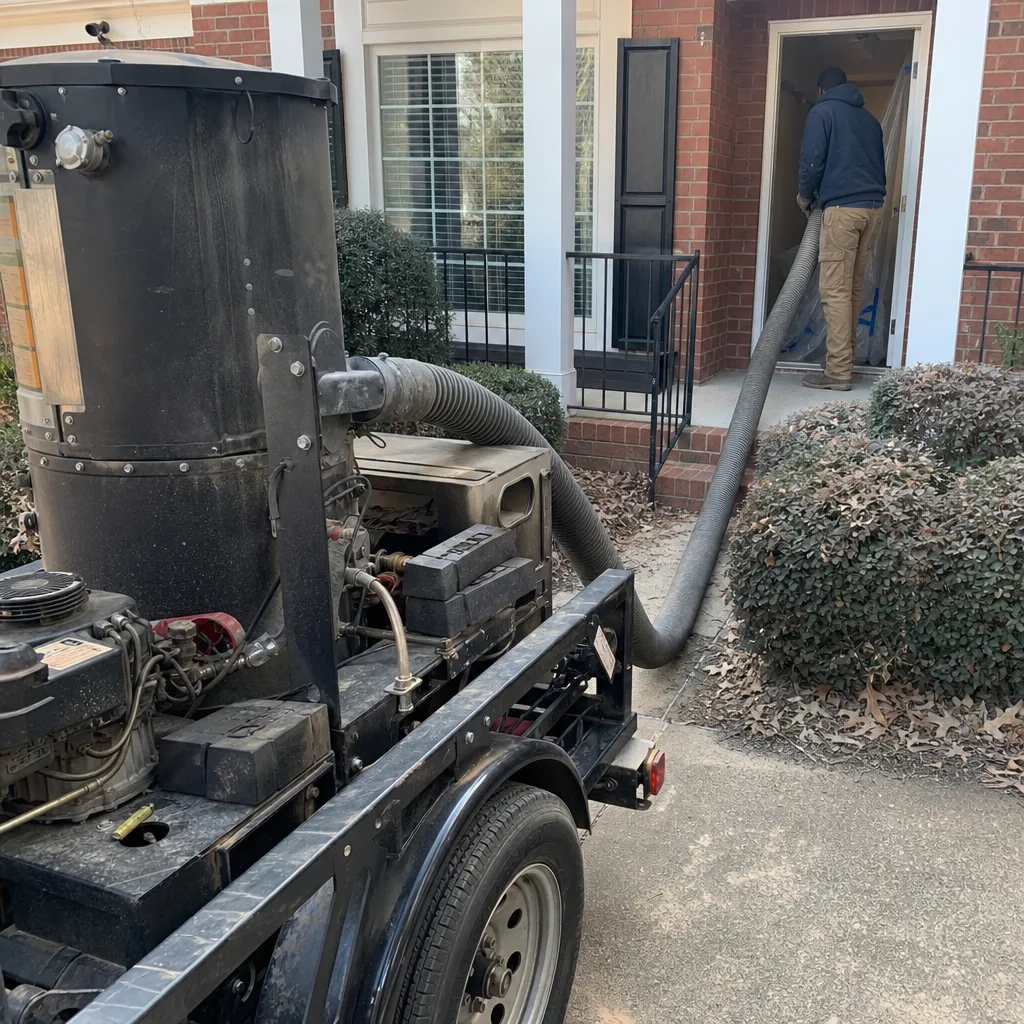
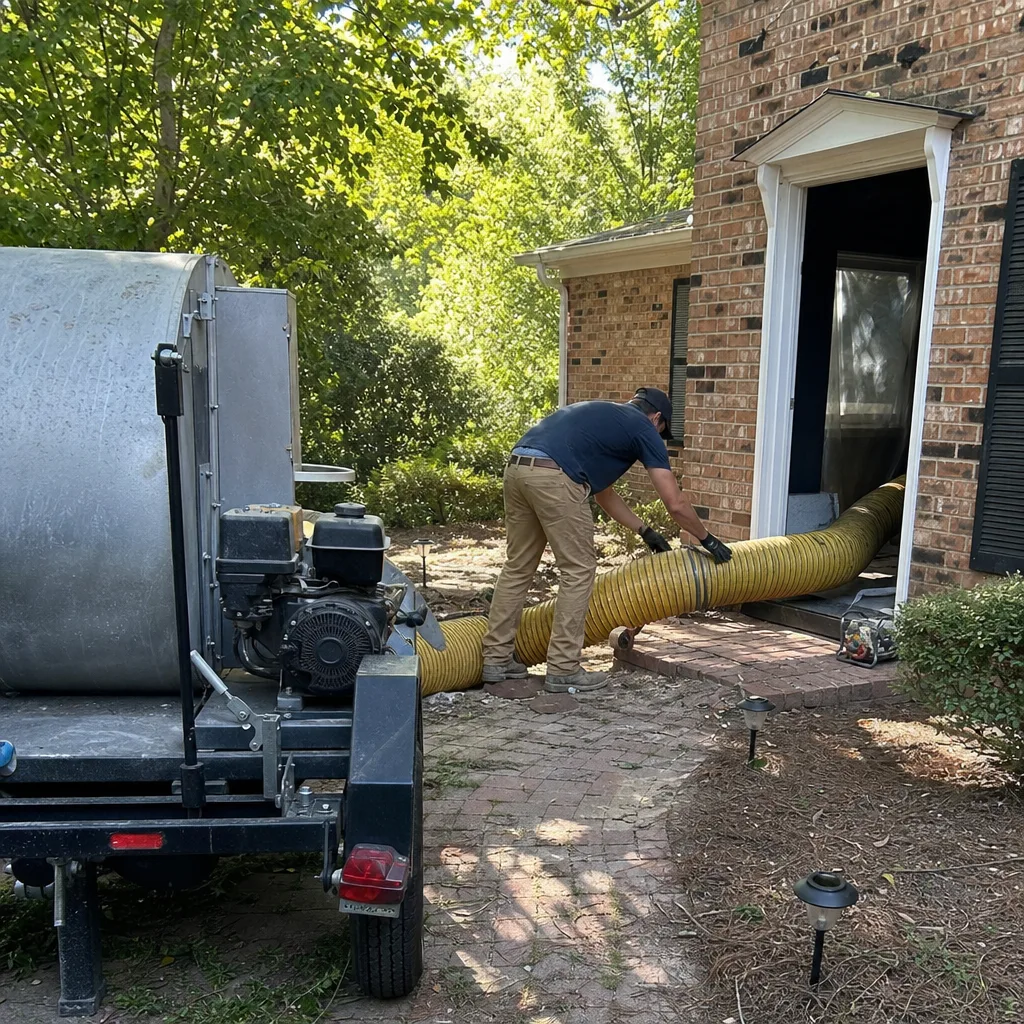
These are gasoline-powered vacuum collectors mounted in a service vehicle, connected to the home’s duct system via an 8-10 inch hose. CFM ratings typically range from 5,000 to 15,000, with water lift (suction strength) of 150-250 inches. The high volume allows the system to maintain negative pressure across the entire duct network while agitation tools operate at individual registers.
For a 2,200 square foot ranch in Smyrna with a single air handler and 6-8 duct runs, a truck-mounted system is generally the most efficient choice. The shorter duct runs and single zone mean the vacuum can maintain adequate negative pressure throughout without supplemental equipment.
High-CFM Portable Units
Electric-powered portable collectors, such as the Nikro HP20 or Abatement Technologies PREDATOR 1200, deliver 1,500-3,000 CFM with HEPA filtration. They’re essential for homes where truck access is limited - multistory buildings in Midtown, townhomes with no driveway access, or properties with HOA restrictions on commercial vehicle parking.
For a 4,000 square foot two-story in Alpharetta with dual systems and 14+ duct runs, portable units are often deployed in pairs: one on the upstairs system, one on the downstairs, working simultaneously. The CFM per run is lower, but the ability to isolate zones and work methodically produces equivalent results. We’ve used this configuration in Atlanta homes where the alternative was no cleaning at all due to access constraints.
What Doesn’t Work
Shop vacuums (typically 100-200 CFM), rotary brushes without vacuum capture, and compressed-air blow guns without containment - the risks we cover in our DIY vs Professional Air Duct Cleaning: The Atlanta Homeowner’s Decision Guide. These tools dislodge debris without removing it from the system. We’ve been called to Atlanta homes where a “cleaning” consisted of a shop vacuum at the register and a brush on a drill - the customer paid $199 for what amounted to dust redistribution and register polishing.
The brands we deploy - Rotobrush for targeted agitation in residential flex duct, Nikro and Abatement Technologies for portable negative-pressure collection - are published so customers can verify specifications independently. We don’t ask for trust; we provide the information to verify.
Why Duct Cleaning Without Coil Inspection Misses the Point
Atlanta’s cooling season runs roughly from late March through November. In most homes, the air handler operates 2,000+ hours annually, with the evaporator coil serving as the primary dehumidification surface. This creates a condition that duct-only cleaning cannot address: coil contamination as the source of system-wide microbial issues.
The coil sits downstream of the filter and upstream of the supply plenum. Air passing through a contaminated coil carries microbial debris into every duct run that follows. Cleaning the ducts without inspecting the coil is like replacing a dirty air filter while leaving a moldy sponge in the airflow path.
In our Atlanta inspections, we document coil conditions using the same borescope that inspects ductwork. Common findings include:
- Biological fouling: A mat of microbial growth across coil fins, reducing heat transfer and restricting airflow. This is visible as dark, slimy coating between the aluminum fins.
- Dust and fiber accumulation: Filter bypass allows household debris to embed in coil condensate, forming a paste that standard cleaning chemicals won’t dissolve without extended contact time.
- Drain pan contamination: Standing water or slow drainage in the pan below the coil, often with associated staining or odor. In Atlanta’s humidity, a drain pan that doesn’t fully empty between cycles becomes a reservoir for microbial growth.
A complete job includes coil inspection and, if indicated, cleaning with foaming agents followed by rinse extraction. The drain pan is treated and the condensate line verified for clear flow. We document coil condition with before-and-after photos, included in the standard job record.
Some Atlanta homes - particularly those with coils installed in 2005-2010, when certain manufacturers used epoxy-coated fins prone to delamination - show corrosion that limits cleaning effectiveness. In these cases, we recommend coil replacement rather than cleaning, and we state this in writing with photographic evidence.
What Air Duct Cleaning Costs in Atlanta
Honest pricing for air duct cleaning in Atlanta follows the home’s system complexity, not a per-vent formula designed to escalate at the door. Here’s what whole-system cleaning actually costs, based on documented jobs we’ve performed since 2013.
| Home Size / System Type | Typical Range | What’s Included |
|---|---|---|
| 1,200-1,800 sq ft, single system, 4-6 duct runs | $450-$650 | Full supply and return cleaning, register/grille removal and cleaning, pre/post photo documentation, written scope |
| 2,000-3,000 sq ft, single system, 6-10 duct runs | $650-$850 | Above plus coil inspection, drain pan treatment, access port installation and sealing |
| 3,500-5,000 sq ft, dual system, 12-18 duct runs | $850-$1,200 | Above applied to both systems, with zone-isolation cleaning for optimal negative pressure |
| Coil cleaning (when indicated, added to duct cleaning) | $150-$300 | Foaming chemical application, dwell time, rinse extraction, drain pan treatment, post-cleaning photo |
| Duct repair: boot reconnection, section replacement | $200-$500 per repair | Materials, labor, sealing, photo documentation of repair |
These ranges reflect what CleanRun has charged for documented, photographed work in Atlanta homes. They do not reflect the $79-$129 coupon prices that dominate mailers and online ads. Those prices are designed to get a technician inside your home, at which point the scope expands dramatically.
The pricing model we operate under, Haven Standard Clause 1, requires a written price before work begins - every job, no exceptions. The price is for the whole system, not per vent, not per “additional service” discovered after arrival. If inspection reveals conditions that change the scope (collapsed liner requiring replacement, for example), we present the finding with photo evidence and a revised written price before proceeding. The customer approves or declines. There is no “while we’re here” pressure.
Our Free Second Opinion policy applies here: bring a competitor’s written estimate, and we’ll put our number next to it with no charge. The comparison is useful because it reveals what’s actually included. A $199 quote that covers only supply registers, with returns and coil as “recommended add-ons,” is not comparable to a whole-system price that includes both plenums, all runs, and verification photography.
Common Mistakes to Avoid
- Booking based on a per-vent price. Per-vent pricing is a classic bait-and-switch structure. The advertised rate covers a minimal scope; every “additional” vent, return, or plenum carries a surcharge that typically triples the final invoice. Legitimate pricing is whole-system, agreed in writing before work starts.
- Accepting a verbal quote over the phone. Without inspection, no one can know what your system contains. A company that quotes $199 without seeing your ductwork is either planning to escalate on arrival or planning to perform minimal work. Haven Standard Clause 1 exists specifically to prevent this.
- Ignoring the photo record. If a company won’t show you pre-cleaning photos of your actual ducts, or won’t commit to post-cleaning verification, you have no proof of work performed. We include this documentation as standard because without it, the customer has only the technician’s word.
- Scheduling duct cleaning without coil inspection. In Atlanta’s climate, the evaporator coil is the most likely source of system-wide contamination. A duct-only job that ignores the coil leaves the primary problem unaddressed.
- Hiring a company that won’t name its equipment. “Professional-grade equipment” is meaningless. The specific brands and models - Rotobrush, Nikro, Abatement Technologies - have published specifications you can verify. A company that won’t name its tools is hiding something, usually that they’re using consumer-grade equipment.
- Expecting cleaning to fix airflow problems. Cleaning removes debris; it does not repair disconnected ducts, collapsed liner, or undersized returns. If certain rooms have never conditioned properly, inspection should identify mechanical issues before cleaning is quoted.
- Waiting for visible dust at registers. By the time debris reaches the register, the duct system is heavily contaminated. The earlier indicator is reduced airflow at distant registers, longer cooling cycles, or musty odor when the system first activates - all signs that inspection is warranted.
When to Call a Professional
Call for inspection when you notice uneven heating or cooling between rooms, musty odor on system startup, visible debris at registers, or if your home has never had ductwork inspected since construction. In Atlanta’s climate, homes built during the 2003-2007 construction boom are now reaching the age where original flex-duct liner begins to degrade - a condition cleaning cannot fix, but inspection can identify before it affects air quality.
CleanRun Air Duct Cleaning Atlanta offers free estimates in Atlanta - call (470) 495-9370. Every estimate includes borescope inspection of accessible ductwork, a written scope and price before any work is authorized, and no obligation to proceed. If you’ve received a written estimate from another company, we provide a Free Second Opinion under the H.A.V.E.N. Standard, with our number next to theirs for direct comparison.
Frequently Asked Questions
Whole-system air duct cleaning for a typical Atlanta home ranges from $450 for smaller single-system homes to $1,200 for larger dual-system properties, with most 2,000-3,500 square foot homes falling between $650 and $850. This includes supply and return ductwork, register cleaning, pre- and post-cleaning photo documentation, and the written 365-Day Done Right Promise. Call (470) 495-9370 for a written estimate specific to your home - estimates are free and include borescope inspection.
Low quotes typically use per-vent pricing that excludes returns, plenums, and coil inspection, or they deploy minimal equipment (shop vacuums, brushes without vacuum capture) that redistributes debris rather than removing it. The $79-$129 coupon price is designed to secure entry; the average final invoice after upsells exceeds $600. A legitimate quote specifies the full scope in writing before work begins. Our Free Second Opinion lets you compare any written estimate against our whole-system pricing with no charge.
Demand pre- and post-cleaning photos of every duct run, taken with a borescope camera and delivered as part of your job record. Without photographic evidence, you have only the technician’s assertion. At CleanRun, the Documented Photo Record is standard on every visit - not an upgrade, not available upon request - because proof of work is a core requirement under the H.A.V.E.N. Standard.
Most Atlanta homes benefit from inspection every 3-5 years, with cleaning performed when documented contamination exceeds moderate levels. Homes with pets, recent construction, or occupants with respiratory sensitivities may need more frequent attention. The “every year” recommendation some companies promote is not supported by NADCA guidelines or our documented findings. Inspection first, cleaning when indicated.
Humidity increases the risk of microbial growth in ductwork, particularly at boot connections and in unconditioned attic spaces, but it does not automatically accelerate debris accumulation. What Atlanta’s climate does mean: when microbial growth is present, it progresses faster than in drier climates, and the moisture source (duct leak, coil drainage issue, or insulation failure) must be identified and corrected, not just cleaned. Our inspections specifically note humidity-related patterns so the underlying cause is addressed.
Air duct cleaning addresses the supply and return ductwork that distributes conditioned air. HVAC cleaning includes the air handler components - blower motor, evaporator coil, drain pan, and sometimes the cabinet interior. In Atlanta’s cooling-dominant climate, coil contamination is often the primary issue, and duct cleaning without coil inspection misses the source. We offer both services and specify in writing which components are included in any quoted scope. HVAC Cleaning in Atlanta covers the full system approach.
Consumer-grade equipment cannot achieve the negative pressure and concurrent agitation required for source removal. A shop vacuum at the register removes surface debris only; it does not clean the duct interior. More importantly, ductwork in Atlanta homes often contains microbial growth that requires professional assessment - disturbing it without containment and proper PPE can release spores into living space. For documented, contained, verifiable cleaning, professional equipment and training are necessary. Call (470) 495-9370 to discuss what inspection would involve for your specific system.
The Bottom Line
Atlanta’s red-clay construction residue, eight-month cooling season, and humidity patterns create duct contamination that generic national advice doesn’t address. A legitimate cleaning job inspects first, documents with photos, uses negative-pressure extraction with verifiable equipment, and delivers proof of work afterward. The price is agreed in writing before any panel comes off. Anything less - a phone quote, a per-vent price, a job without photo verification - is not a complete cleaning. It’s a transaction designed to close quickly, with accountability that ends when the truck leaves.
Since 2013, CleanRun has served 52,000+ Atlanta-area homes with one standard: written price first, documented photo record last, and the 365-Day Done Right Promise in between. If you’re researching before you call, you’re the customer we built this for.
Written by Tomas Reyes, Owner at CleanRun Air Duct Cleaning Atlanta, serving Atlanta since 2013.