
Whole-system duct and dryer vent check with before-and-after photos - you see exactly what came out of your vents
That "$99 whole-house special" is a bait ad - the real number appears once they are in your hallway, or the "clean" is a shop-vac at the register. We photograph the inside of your ducts before and after instead.
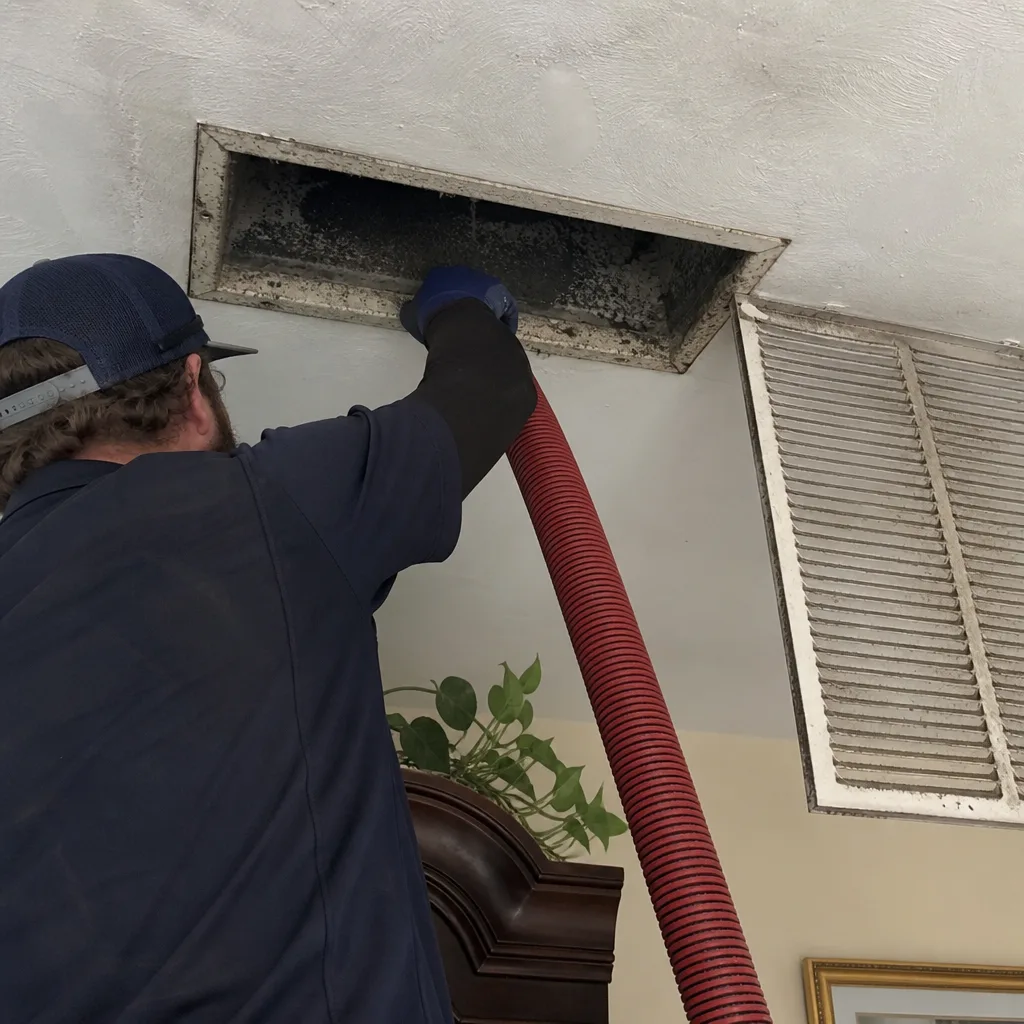 Before
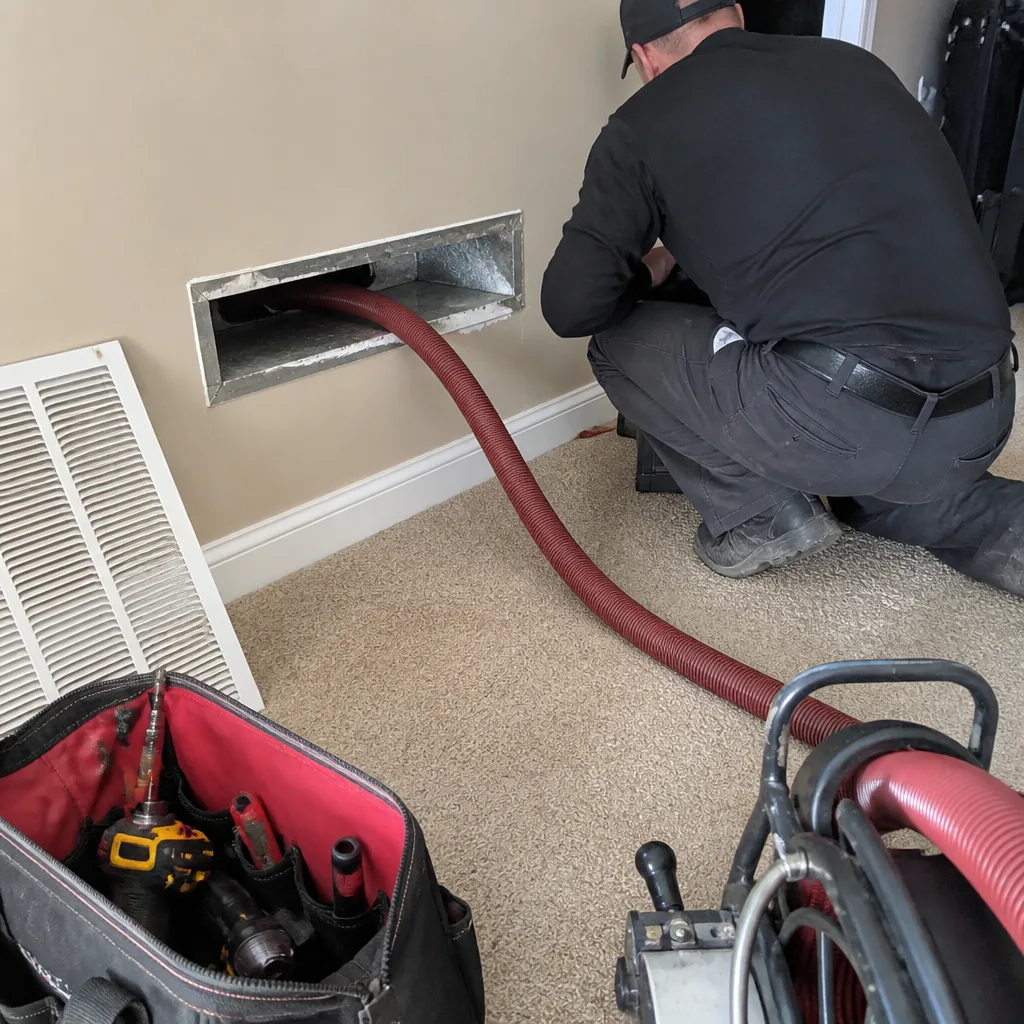 After
After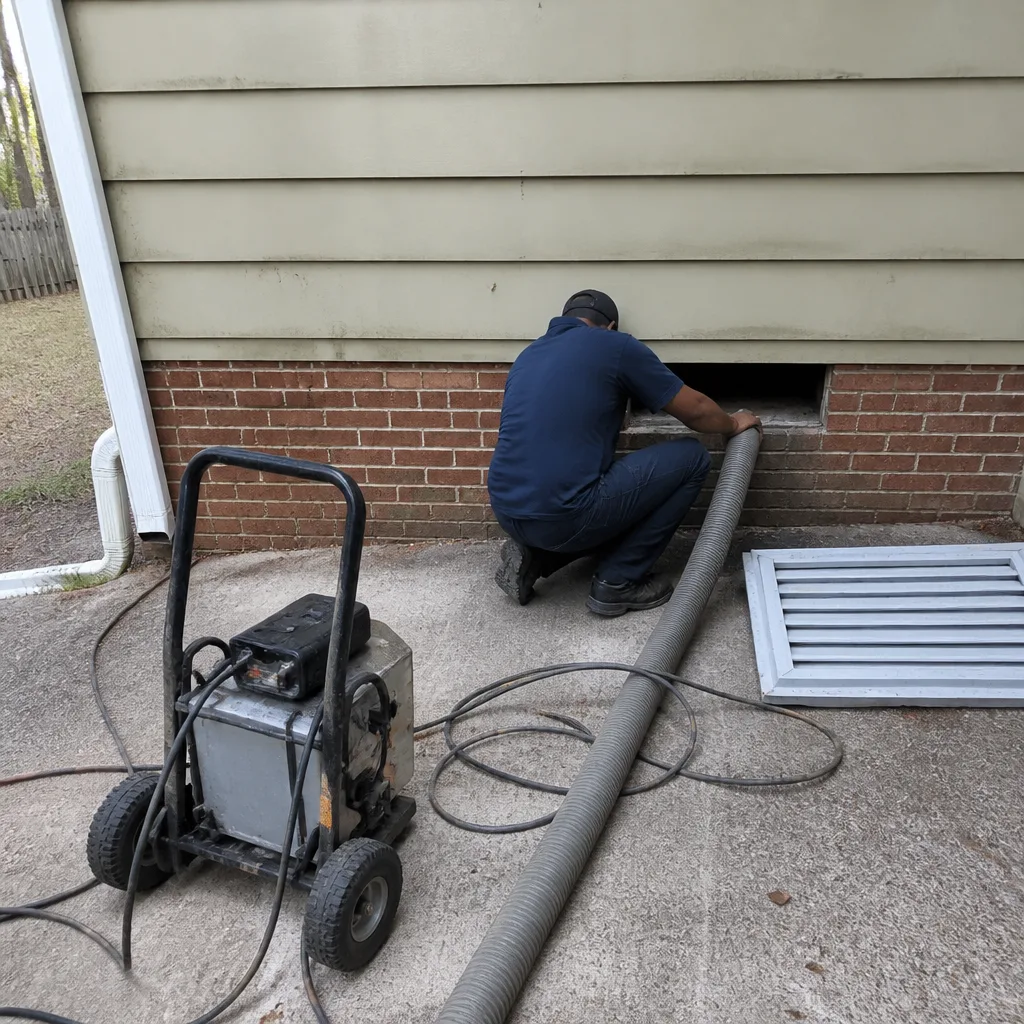 Before
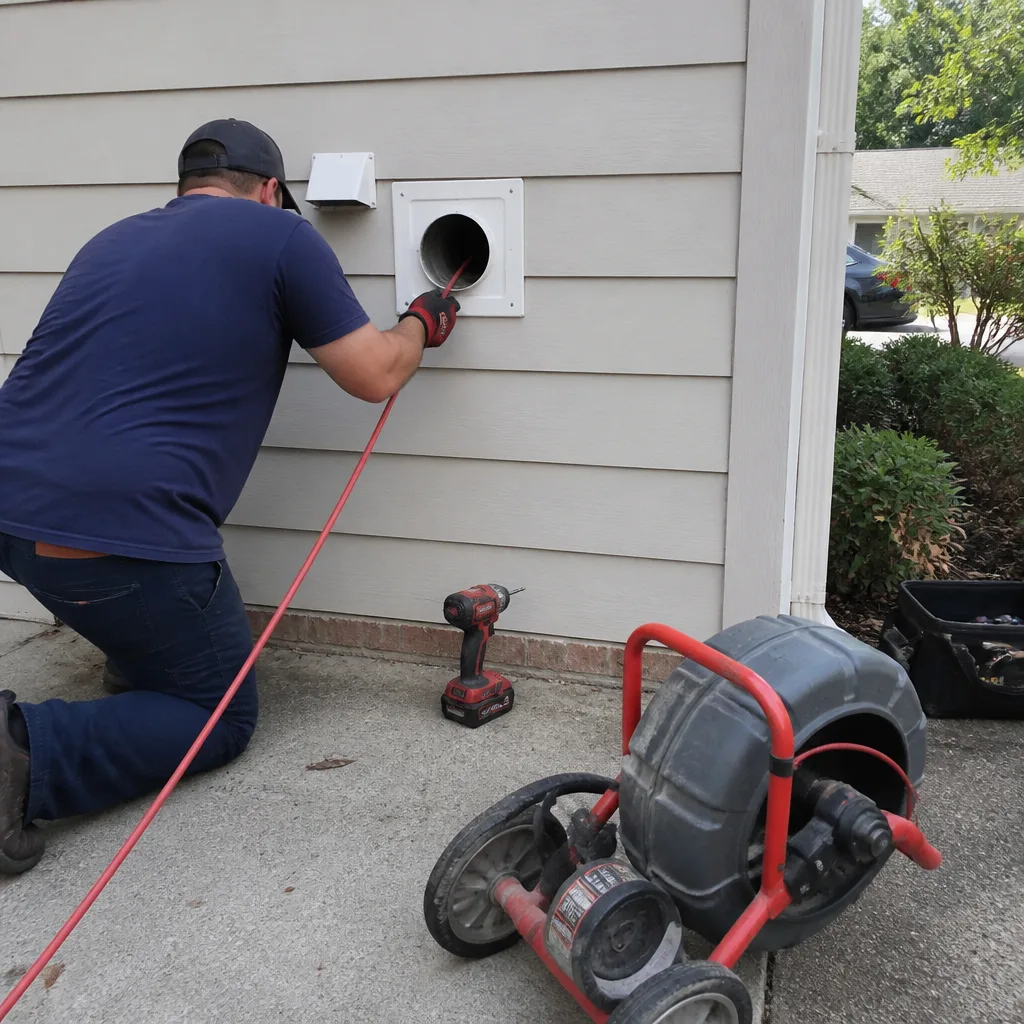 After
After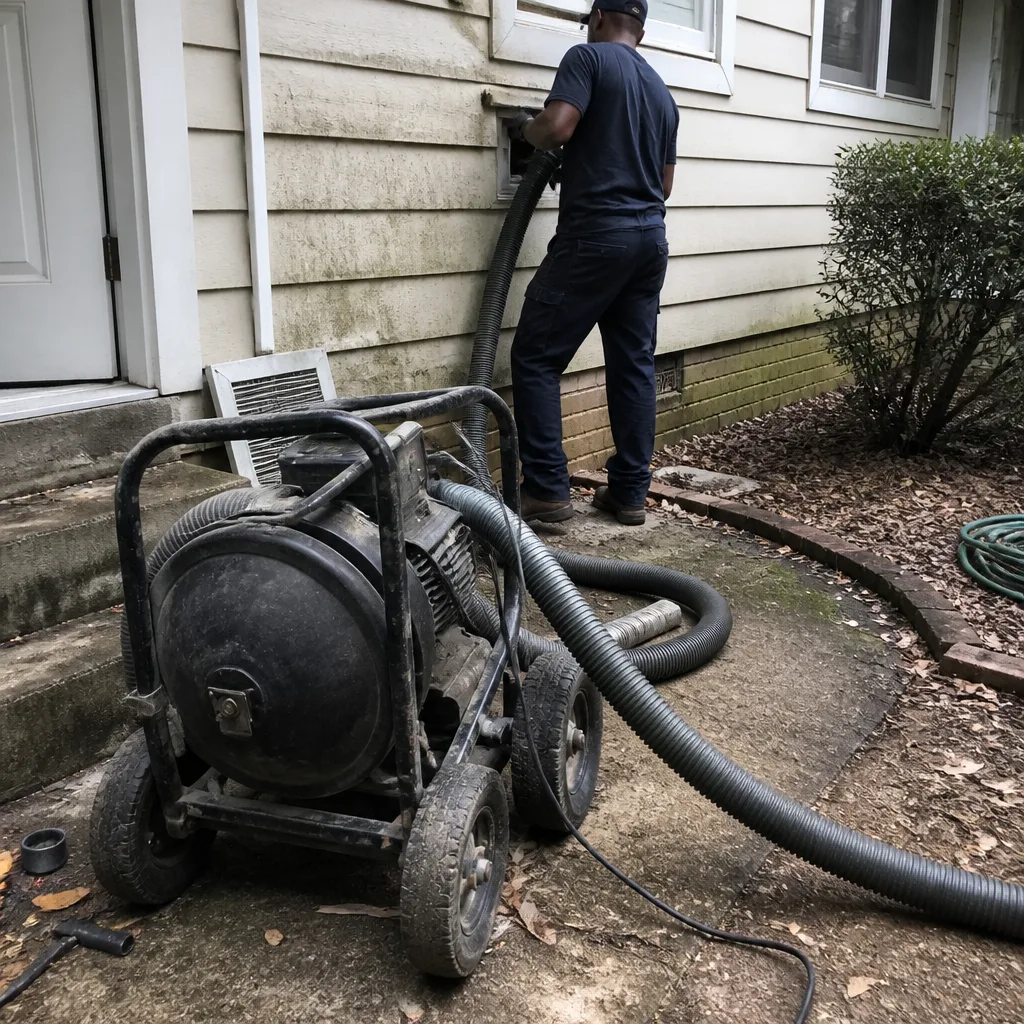 Before
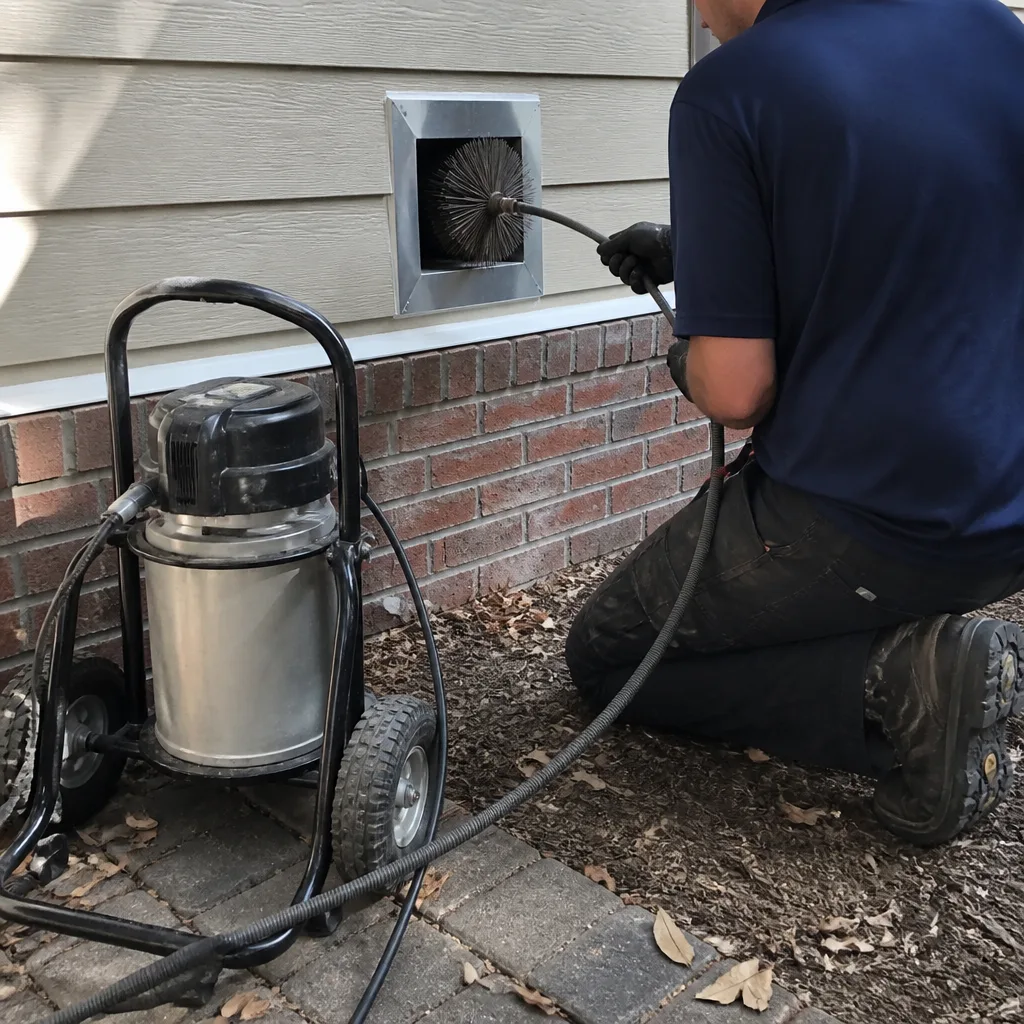 After
AfterCommercial Duct Cleaning in Atlanta, GA
Commercial duct cleaning in Atlanta typically runs between $800 and $4,500 depending on the size of the system, the number of air handlers, and how long the ducts have gone without service. Most Atlanta commercial jobs are completed in a single visit, and every one starts with a written price – no estimates over the phone, no surprise line items at the end.
CleanRun Duct Repair & Cleaning has been photographing the inside of duct systems before and after every job since 2013. That documentation practice started on Residential Duct Cleaning work and carries directly into commercial jobs – every run is captured, every access point is photographed, and the full record is handed to the building manager or owner when the crew leaves. If you’ve been shopping around and gotten quotes that don’t include that kind of accountability, call us at (470) 495-9370 and we’ll put a written number next to theirs.
Commercial HVAC ductwork in Atlanta faces conditions that residential systems don’t. The city’s high-humidity summers push condensation into supply and return plenums – the main distribution chambers that branch into individual duct runs. Offices in Buckhead and Midtown with dense occupancy accumulate particulate matter faster than most facility managers expect. Restaurants along the Beltline and in the Old Fourth Ward deal with grease migration from kitchen exhaust into nearby supply ducts. Warehouses and light-industrial spaces in the Westside and near the airport corridor collect construction dust and debris at a rate that clogs dampers within 18 to 24 months. None of that shows up in a $79 coupon inspection. It shows up on camera.
This page covers commercial duct cleaning specifically. For context on how the same documented process applies to residential systems, see our Air Duct Cleaning in Atlanta page.
When You Need Commercial Duct Cleaning
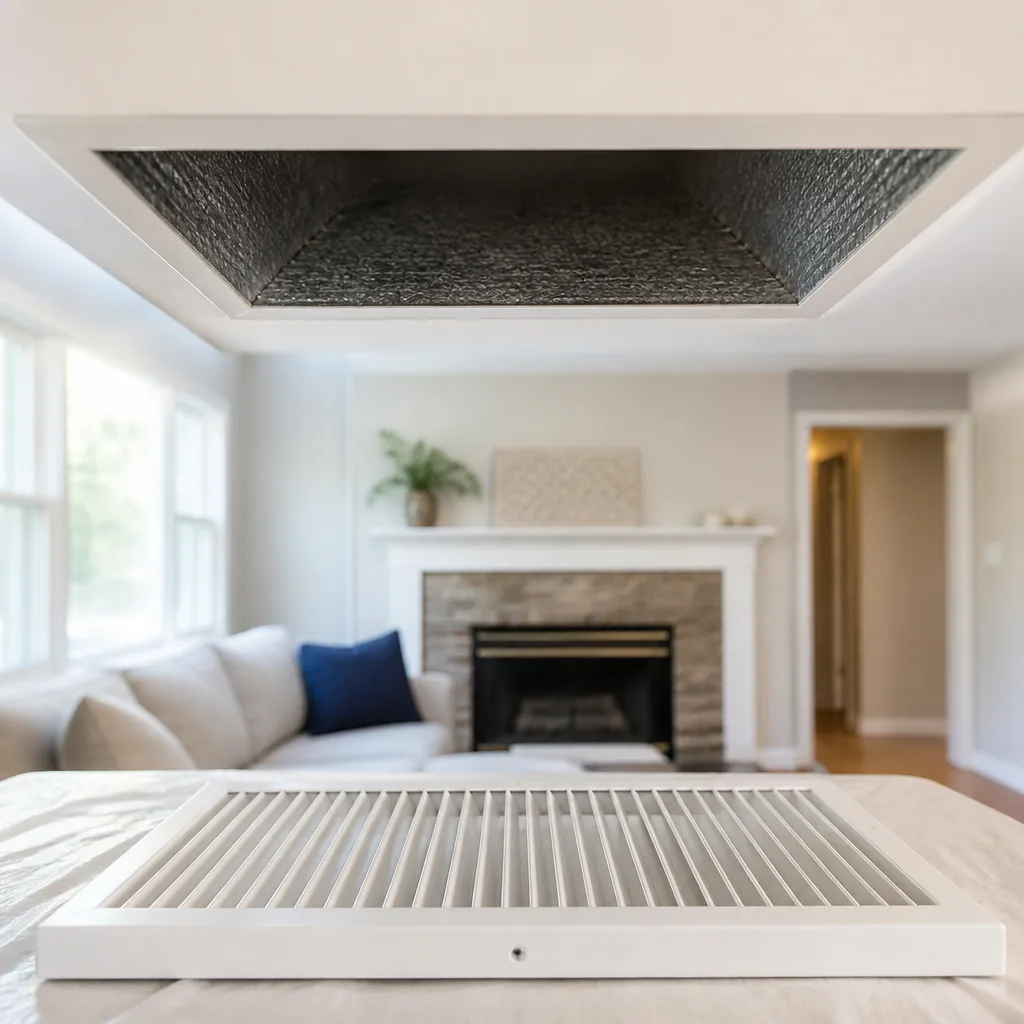
- Visible debris at supply registers. If the diffusers – the louvered vents on the ceiling or wall – show grey or black buildup around the edges, particulate is moving through the duct system and depositing at every outlet. That’s not a surface cleaning issue; it’s a duct issue.
- Unexplained odors in one zone but not others. A musty smell limited to one section of a floor often traces back to a single duct run with standing moisture or biological growth at a joint or elbow. Atlanta’s humidity makes this more common in older commercial buildings in Inman Park, Decatur, and similar neighborhoods where ductwork was installed before modern moisture controls.
- HVAC system running longer cycles without reaching setpoint. When airflow is partially blocked by debris accumulation inside the ducts, the air handler works harder and longer to move the same volume of air. Utility bills go up; comfort goes down. The cause is often a debris plug at a flex-duct transition or a collapsed inner liner – neither of which is visible from the register.
- Recent renovation or construction work in the building. Drywall dust, concrete particulate, and insulation fibers generated during a tenant build-out or building renovation migrate directly into open duct runs if the system isn’t isolated beforehand. Commercial construction in Atlanta’s Downtown and Midtown core has been running continuously for years, and this is one of the most common reasons facility managers call us mid-project or immediately after substantial completion.
- No documented cleaning in the past three to five years. NADCA standards recommend commercial duct cleaning every three to five years under normal occupancy. Atlanta’s climate accelerates that timeline slightly because of the extended cooling season and associated condensation load. If there’s no written record of prior service, assume the system needs attention.
- Employee complaints about air quality or increased allergy symptoms. When multiple people in the same office zone report similar symptoms – fatigue, sinus irritation, eye irritation – the HVAC distribution system is a logical first place to look. A camera inspection costs less than a week of reduced productivity.
Our Commercial Duct Cleaning Process
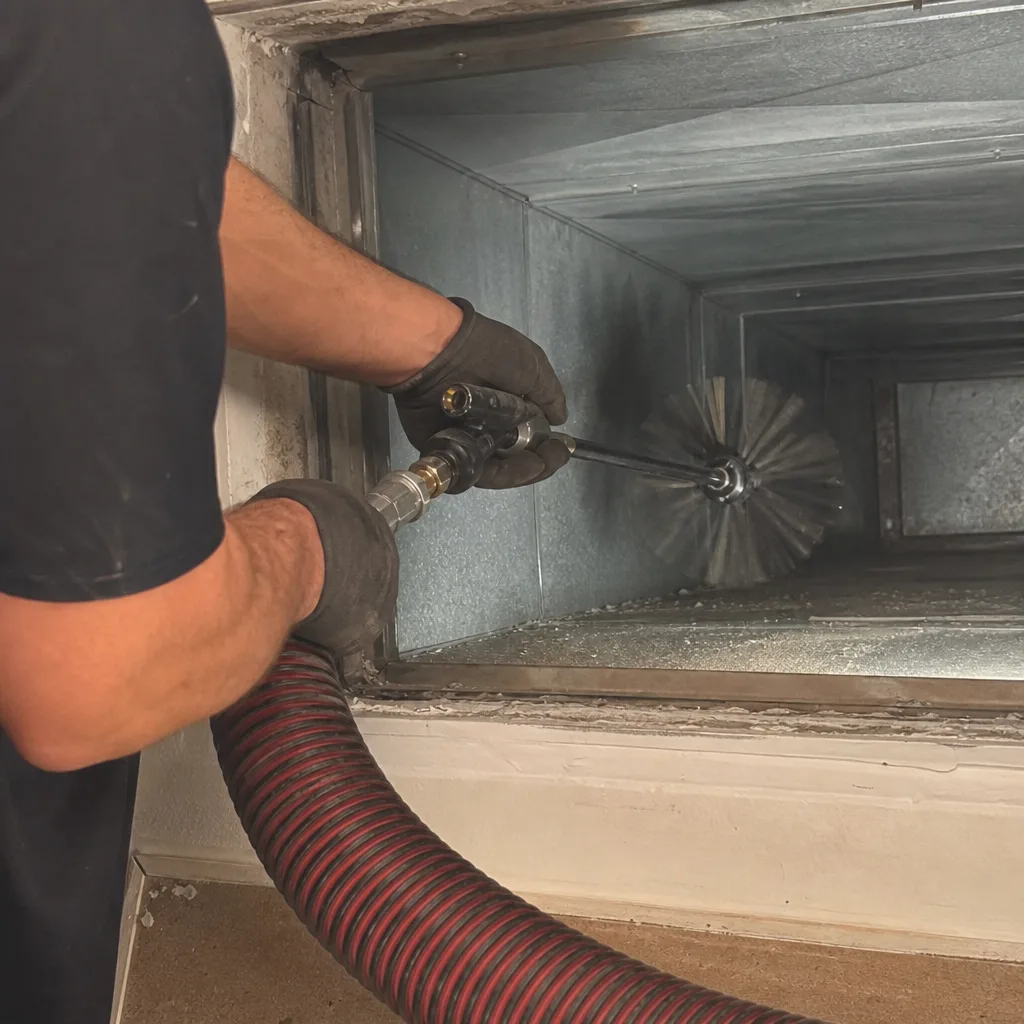
- Pre-job walkthrough and written scope. Before any equipment comes off the truck, one of our technicians walks the mechanical space and each floor or zone with the facility manager. We identify the number of air handlers, the linear footage of duct runs, access point locations, and any areas of known concern. The written price – covering labor, equipment, and the documented photo record – is produced at the end of this walkthrough, not after the work is done. This is Haven Standard Clause 1: the written price is delivered before any panel comes off.
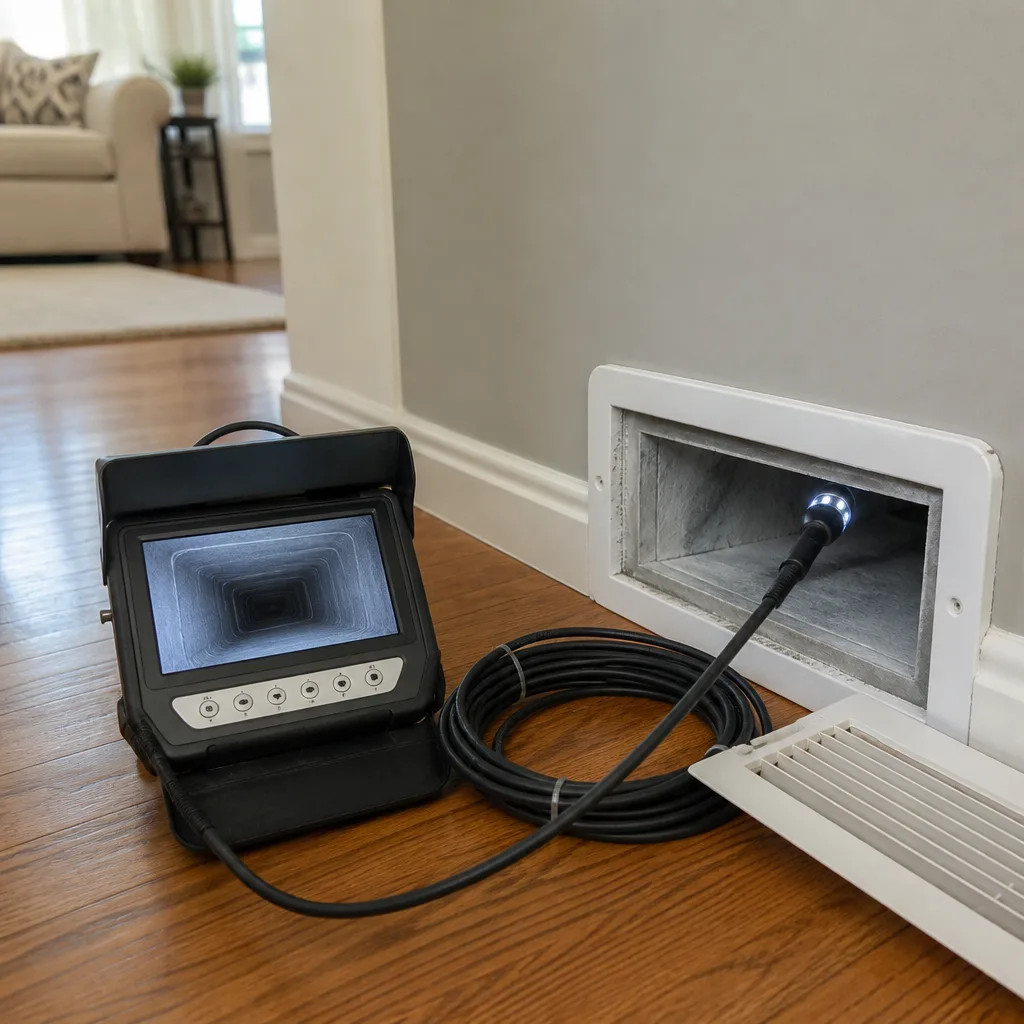
- Camera inspection of every duct run. We run a camera through each supply and return run before we touch anything. What the camera finds determines the cleaning method – a light accumulation of dust calls for a different approach than a run with microbial growth at a joint or a partial obstruction from collapsed flex liner. The pre-cleaning images are saved as part of the job record and handed to you at the end of the visit. You’ll see exactly what was in your ducts before we started.
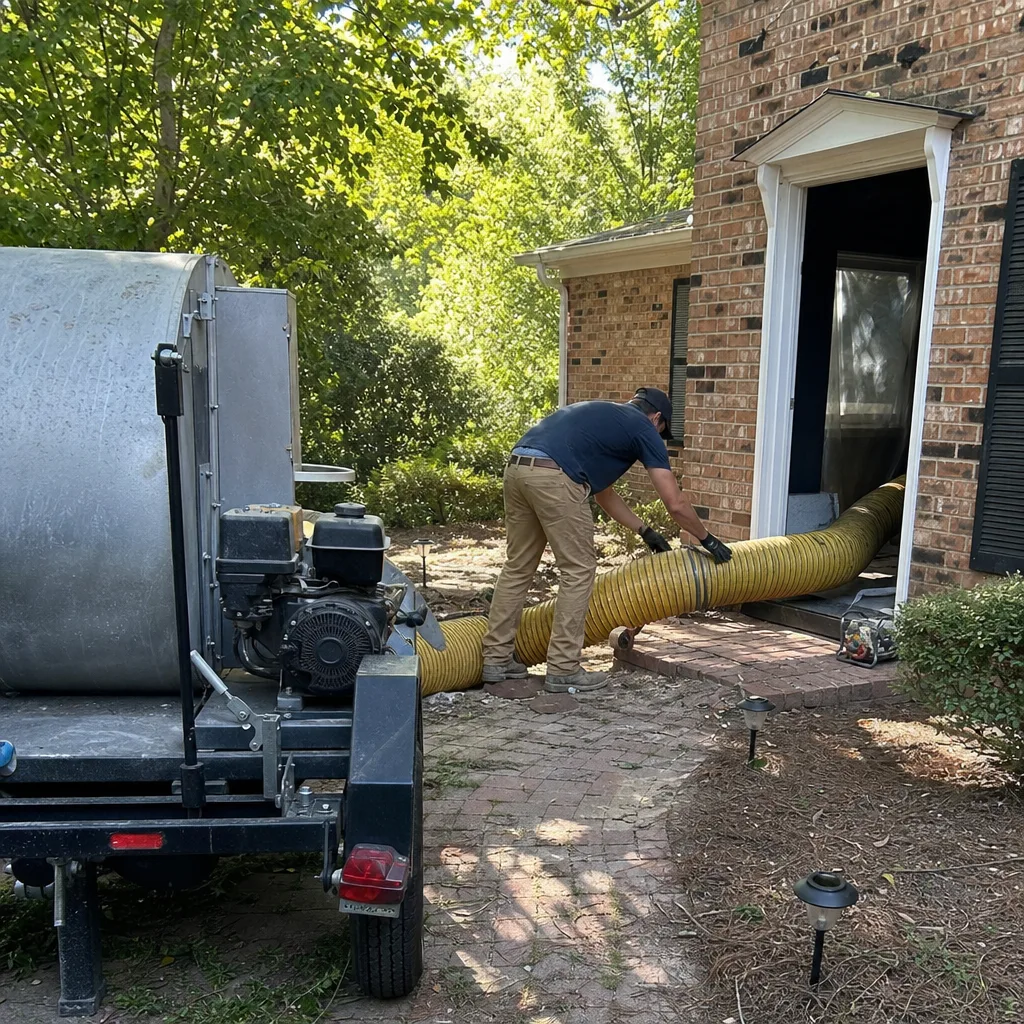
- Negative-pressure extraction setup. Negative-pressure extraction means we attach high-capacity collection equipment – Nikro units on most commercial jobs – to the main trunk lines and create a controlled vacuum across the entire duct system. Air and particulate move toward our equipment, not outward into the building. For larger Atlanta commercial properties with multiple air handlers, we set up collection at each air handling unit before beginning any agitation in the runs. This prevents dislodged debris from redistributing through the space.
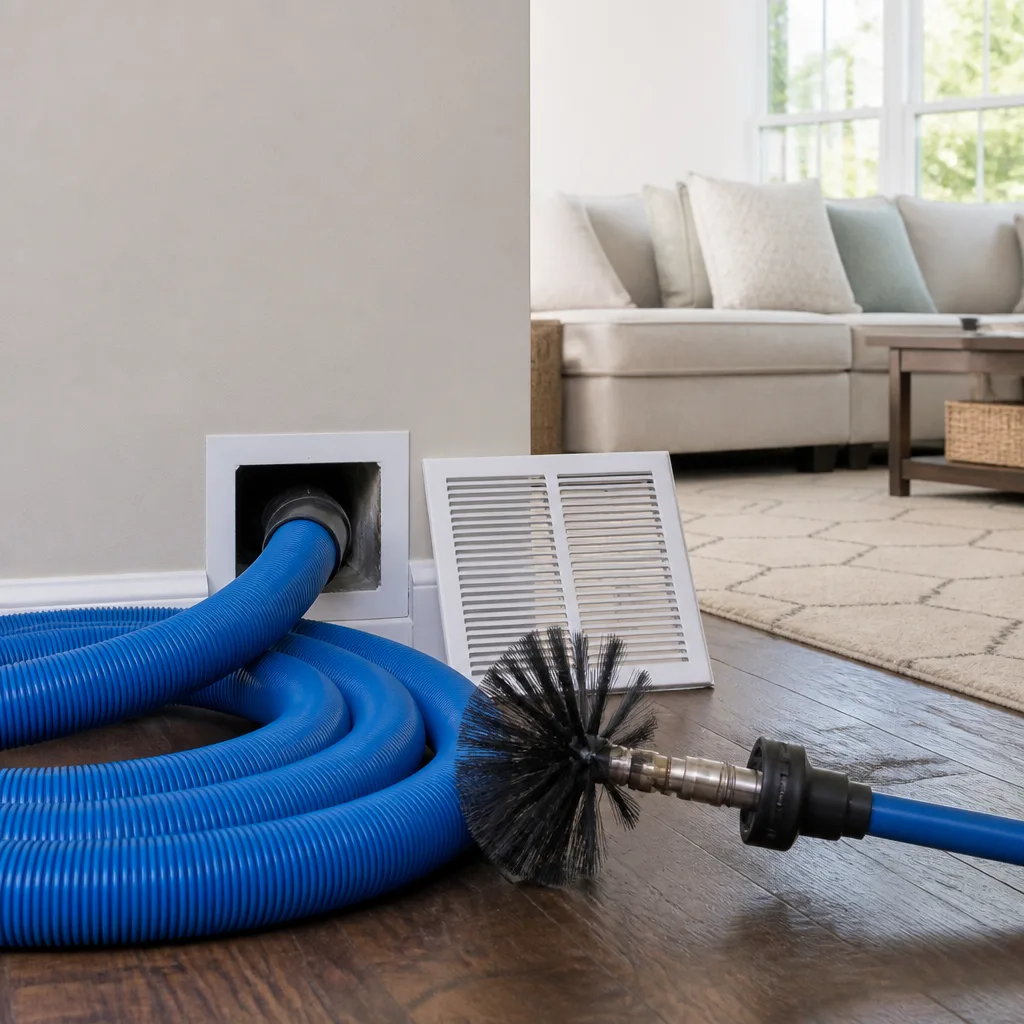
- Mechanical agitation of each duct run. With negative pressure established, we work through each run using rotary brush systems sized to the duct diameter. The brushes break up compacted debris – dust, debris, biological material where present – while the collection equipment pulls it out. On commercial sheet metal ductwork common in Atlanta office buildings, this step typically takes longer than it does in residential flex-duct systems because larger duct cross-sections require multiple passes.
- Air handler and coil inspection. The air handler – the central unit that conditions and circulates air – is inspected after the duct runs are cleaned. The evaporator coil, drain pan, and blower assembly are the most common points of microbial growth in Atlanta commercial systems because they handle the most moisture. We document what we find. If cleaning or repair of the coil or drain pan is warranted, that’s scoped separately with a new written price before any additional work begins.
- Post-cleaning camera pass and documentation handoff. After every run is cleaned, we run the camera again. The before-and-after photos from every access point in every run are compiled into the job record, which is handed to the facility manager or owner before the crew leaves the property. This is the Documented Photo Record – a standard deliverable on every CleanRun job, not an upgrade. The 365-Day Done Right Promise is noted on the job record: if something isn’t right, we come back and make it right.
BeforeAfterCommercial Duct Cleaning Pricing in Atlanta
Air Duct Cleaning in Atlanta is priced by the system, not by a per-vent rate that looks small until the invoice arrives. Every CleanRun commercial quote is written and delivered before work starts – Haven Standard Clause 1 applies to every job, commercial or residential.
| System Type / Building Size | Typical Atlanta Price Range |
|---|---|
| Small commercial space, single air handler (under 3,000 sq ft) | $800 – $1,400 |
| Mid-size office or retail, 1-2 air handlers (3,000 – 8,000 sq ft) | $1,400 – $2,600 |
| Large commercial or multi-tenant, 3+ air handlers (8,000 – 20,000 sq ft) | $2,600 – $4,500 |
| Full duct inspection (camera only, no cleaning) – any size | $350 – $700 |
| Sanitizing / antimicrobial treatment, per air handler zone | $180 – $400 (add-on after cleaning) |
Three things drive the final number on Atlanta commercial jobs more than anything else:
- Number of air handlers and return plenums. Each air handling unit requires its own negative-pressure setup and post-cleaning documentation. A building with four rooftop units takes roughly twice the time and equipment as a building with two, regardless of square footage.
- Duct material and age. Older sheet metal systems common in Atlanta commercial buildings constructed before 1990 – particularly in Downtown, Midtown, and older Buckhead office stock – often have more access restrictions and require more time per linear foot than modern spiral duct or insulated flex systems.
- Contamination level found during the pre-job camera pass. A system with heavy biological growth or construction debris requires more passes and potentially a longer equipment setup time than a system that’s simply overdue for routine maintenance. The camera inspection before any work starts is what makes this determination honest rather than guesswork.
If you’ve received a written estimate from another company, CleanRun’s Free Second Opinion puts our number next to theirs in writing, at no cost. Call (470) 495-9370 to schedule that comparison.
What the H.A.V.E.N. Standard Means on a Commercial Job
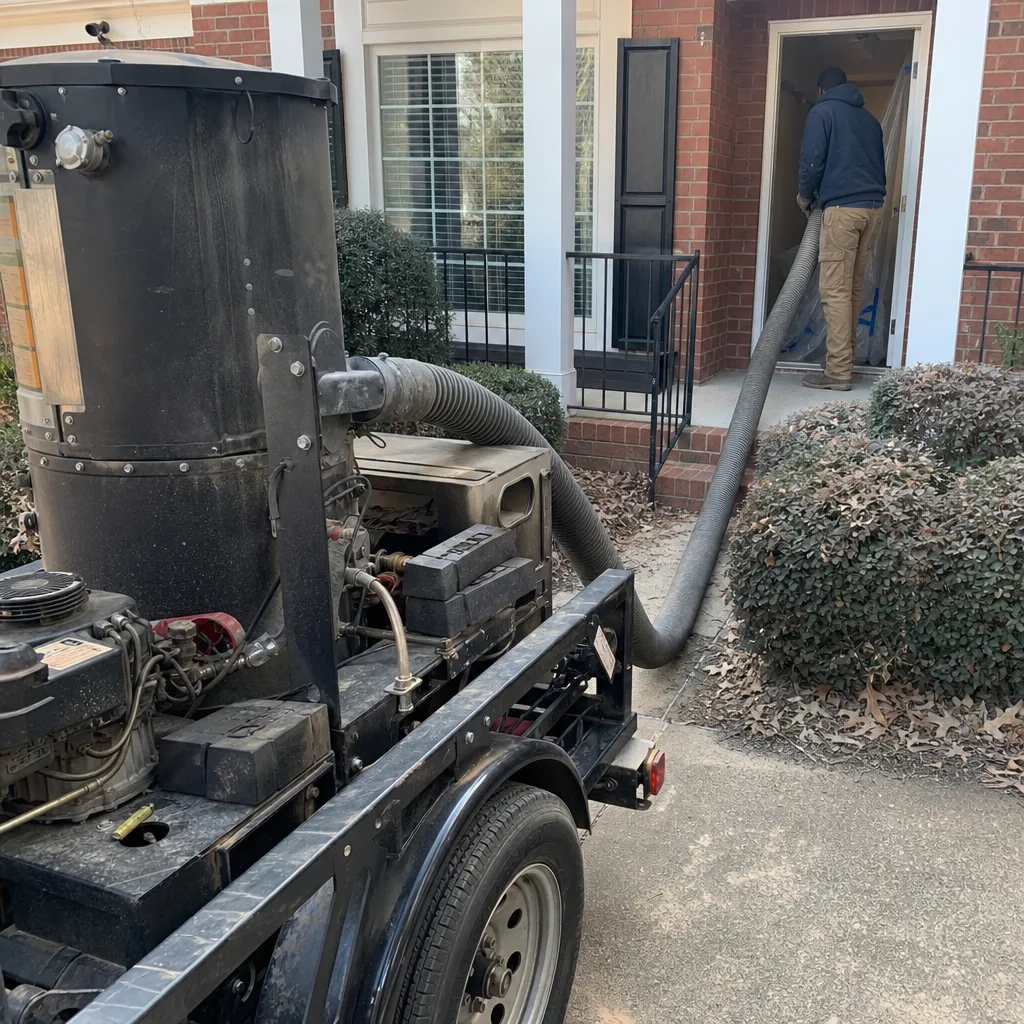
Every CleanRun technician arriving at a commercial property in Atlanta is background-checked, uniformed, and identified by name before the visit – Haven Standard Clause 3: Verified Crews. On a commercial job where a technician may be working in occupied tenant spaces, mechanical rooms, and ceiling plenum areas, that accountability matters to building managers and tenants alike.
The equipment on a commercial job includes Nikro negative-pressure collection units and, depending on air quality concerns identified during the pre-job inspection, Abatement Technologies air filtration equipment for particulate control in occupied spaces during cleaning. These are trade-recognized brands with published specifications. You can look them up independently before agreeing to a price.
The 365-Day Done Right Promise is written into every job record, commercial and residential, as part of our Full System Cleaning commitment. If a duct run wasn’t fully cleaned, if an access panel wasn’t properly resealed, if something wasn’t done right – CleanRun comes back and makes it right. Not subject to manager approval. Written on the job record the technician leaves behind.
Atlanta-Specific Factors That Affect Commercial Ductwork
Atlanta’s climate creates a specific set of conditions that matter when you’re evaluating a commercial duct cleaning timeline or scope.
The Atlanta metro sits in a humid subtropical zone. Summer dewpoints routinely reach the mid-60s Fahrenheit, and commercial HVAC systems running in cooling mode are condensing significant moisture at the evaporator coil every day from May through September. In buildings where insulation on supply duct runs is damaged or where drain pans are partially blocked, that moisture migrates into the duct interior. The camera on a pre-job inspection in a Midtown Atlanta office building often shows moisture staining or biological growth at joints in the first 10 to 15 feet of duct downstream from the air handler – the section that handles the coldest air and sees the most condensation differential.
Atlanta also sits within a high-pollen region. The metro area ranks among the most challenging pollen environments in the southeastern United States, with peak oak, pine, and grass pollen seasons stretching from late February through June. Commercial buildings with high outdoor air intake percentages – required by code for occupancy ventilation – pull that pollen load directly into the duct system. A facility manager who hasn’t had the ducts cleaned in four years and is wondering why the HVAC filter is loading up every three weeks instead of every six: that’s often the answer.
Construction activity in Atlanta has been dense and sustained across the metro for the better part of a decade. The Westside, the Upper Westside, Old Fourth Ward, and the airport corridor all have active commercial development. Buildings adjacent to demolition or new construction – even buildings that aren’t the active project – see elevated particulate migration into HVAC intakes. If your building is within a few blocks of active construction in any of these areas, a camera inspection is worth scheduling even if you’re not yet past the three-year service window.
FAQs – Commercial Duct Cleaning
How much does commercial duct cleaning cost in Atlanta?
Commercial duct cleaning in Atlanta runs between $800 and $4,500 for most building sizes, with small single-air-handler spaces typically at the lower end and large multi-tenant buildings with three or more air handlers at the upper end. The written price is delivered before any work begins on every CleanRun job – there’s no version of this process where you find out the number after the crew is already in your mechanical room. Call (470) 495-9370 to schedule a pre-job walkthrough and get your written quote on site.
How long does commercial duct cleaning take?
Most commercial duct cleaning jobs in Atlanta take between four and eight hours. A small office with a single air handler and straightforward duct layout typically finishes in half a day. A larger multi-floor building with three or more air handlers and older sheet metal ductwork requiring more access points can take a full day or, in rare cases, run into a second day. The pre-job walkthrough produces a time estimate along with the written price before work starts.
Do we need to vacate the building during commercial duct cleaning?
In most cases, no. CleanRun’s negative-pressure extraction setup is designed to contain particulate within the duct system and collection equipment, not release it into occupied spaces. For jobs where a zone has confirmed biological contamination, or where Abatement Technologies air filtration equipment indicates elevated particulate during the cleaning phase, we’ll note which specific areas benefit from temporary clearance. That determination is made during the pre-job walkthrough, not as a surprise on the day of service.
How often should commercial ductwork in Atlanta be cleaned?
NADCA recommends commercial duct cleaning every three to five years under normal occupancy conditions. Atlanta’s humidity and pollen load push many facilities toward the three-year end of that range, particularly buildings with high outdoor air intake percentages or buildings adjacent to active construction zones. If there’s no written record of prior cleaning on file, treat the system as overdue regardless of age – the pre-job camera inspection will give you a documented baseline to work from going forward.
CleanRun Duct Repair & Cleaning serves commercial properties across Atlanta, including Buckhead, Midtown, Downtown, Inman Park, Old Fourth Ward, Decatur, the Westside, and the broader metro area. Every commercial job starts with a written price, ends with a Documented Photo Record, and is backed by the 365-Day Done Right Promise. For a full overview of our residential and commercial duct services, visit the home page.
To schedule a pre-job walkthrough and receive a written commercial duct cleaning quote, call Tomas Reyes and the CleanRun team at (470) 495-9370. A live person answers every call. Estimates are free, written, and delivered before any work begins.
Written by Tomas Reyes, Owner at CleanRun Air Duct Cleaning Atlanta, serving Atlanta since 2013.